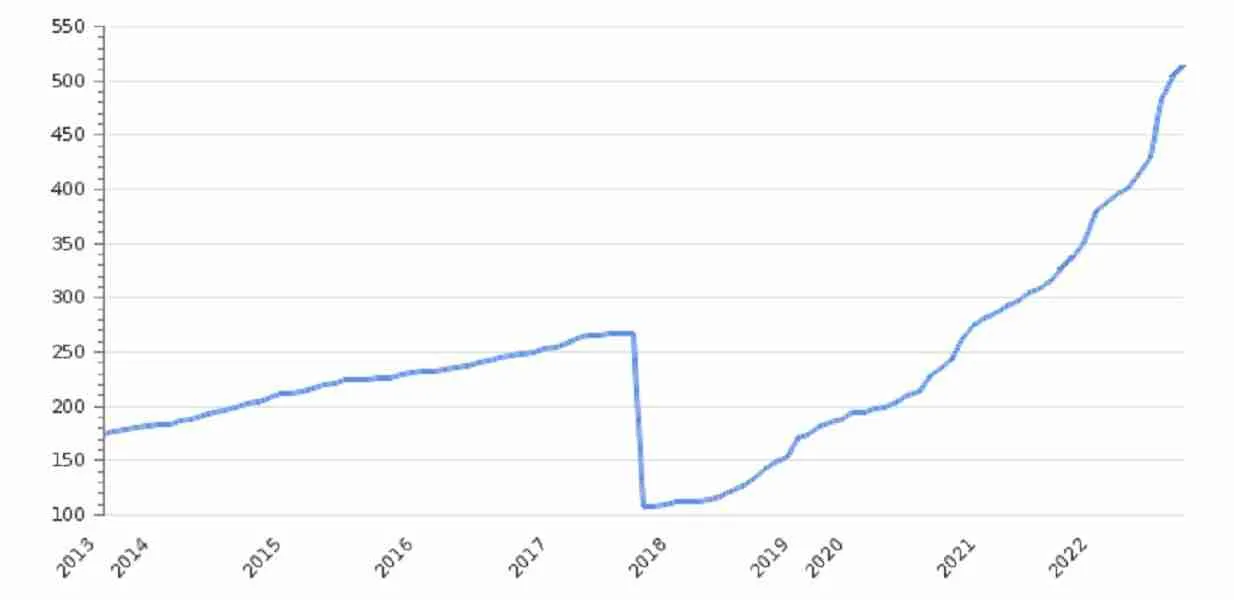
Iran's annual inflation rate has significantly increased to 50.6% by mid-March, reflecting rising economic pressures exacerbated by ongoing political and economic crises. This marks a three percentage point rise from the previous month, according to the official statistics center. The increase highlights the growing economic challenges faced by the country, which have been intensified by persistent political instability and economic turmoil.
Data indicates that inflation in Iran has been on a continuous rise in recent months, significantly impacting the purchasing power of citizens. Iranians are suffering from soaring prices of food and essential goods, which adds to their daily struggles.
Details of the Event
The Iranian statistics center reported a notable rise in the inflation rate, which was recorded at 47.6% the previous month. This increase can be attributed to several factors, including the depreciation of the local currency, the impact of economic sanctions imposed on the country, and the consequences of the ongoing war in the region.
Reports indicate that food prices have risen sharply, with some essential goods experiencing increases of up to 80% compared to last year. This situation places additional pressure on Iranian families, who are already grappling with difficult economic conditions.
Background & Context
Historically, Iran has experienced periods of high inflation, but the current situation is among the worst in recent years. Since the United States withdrew from the nuclear agreement in 2018, strict economic sanctions have been imposed on Iran, leading to a deterioration of the national economy.
The war in Ukraine is considered one of the factors that has complicated the situation, as it has led to rising energy and commodity prices globally, negatively affecting the Iranian economy, which heavily relies on oil exports.
Impact & Consequences
Many economic reports predict that inflation will continue to rise in the coming months, potentially exacerbating the economic and social conditions in the country. This situation may increase public discontent and could lead to new protests against the government.
Additionally, rising inflation may impact foreign investments in Iran, as companies may hesitate to enter a market suffering from economic instability. This could further worsen the economic crises in the country.
Regional Significance
The economic conditions in Iran have a direct impact on the Arab region, as economic crises in Iran could lead to increased tensions in neighboring countries. Furthermore, rising prices of essential goods may affect Arab markets, especially given the increasing reliance on imports.
At the same time, some Arab countries may seek to exploit the economic situation in Iran to strengthen their trade relations with other nations, which could affect the economic balances in the region.
In conclusion, the rise in Iran's inflation rate to 50.6% reflects significant economic challenges facing the country and indicates the urgent need for measures to mitigate the effects of this crisis on citizens. Under the current circumstances, the future of the Iranian economy remains uncertain, necessitating close monitoring of upcoming developments.