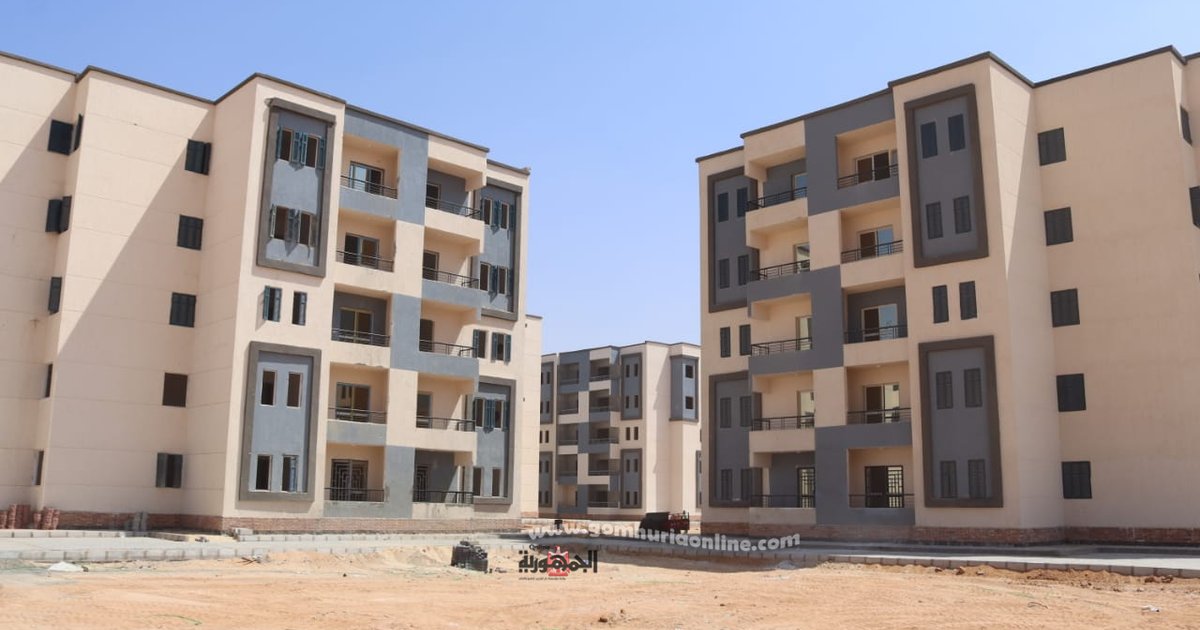
The Egyptian Ministry of Housing, Utilities, and Urban Communities has announced the commencement of procedures for examining and allocating units in the second phase of the 'Housing for All Egyptians 7' project, which aims to provide housing units for low-income individuals. This announcement is part of the Egyptian government's efforts to meet the housing needs of its citizens and improve living standards.
The ministry seeks through this project to achieve the state's vision of providing suitable housing for citizens, with a number of housing units allocated across various governorates, reflecting the government's commitment to providing sustainable housing solutions.
Details of the Initiative
The second phase of the 'Housing for All Egyptians 7' project includes housing units ranging in size from 90 to 120 square meters, offered at subsidized prices for low-income individuals. The application process has been opened for those interested in obtaining housing units, with citizens able to register through the ministry's official website.
It is expected that a significant number of Egyptian families will benefit from these units, contributing to the improvement of their living conditions. Additionally, the project is part of the state's plan to provide 1.5 million housing units in the coming years, reflecting ongoing efforts to meet the needs of the real estate market.
Background & Context
Social housing projects in Egypt are considered part of the government's strategy for sustainable development, with numerous initiatives launched in recent years to provide suitable housing for citizens. The country has witnessed an increase in demand for housing units due to the growing population.
Historically, the Egyptian government launched the 'Housing for All Egyptians' project in 2020, aimed at providing housing units at affordable prices for low-income individuals. The project achieved significant success in its first phase, prompting the ministry to launch the second phase.
Impact & Consequences
The 'Housing for All Egyptians 7' project is expected to contribute to improving the living standards of many Egyptian families by providing them with suitable housing at affordable prices. This project reflects the government's commitment to enhancing the housing sector and meeting citizens' needs.
Moreover, this project may stimulate the local economy by creating new job opportunities in the construction sector, thereby boosting economic growth in the country.
Regional Significance
The 'Housing for All Egyptians 7' project serves as a model for other Arab countries facing similar housing challenges. These initiatives can inspire other nations to adopt similar strategies aimed at improving living conditions for their citizens.
In light of the economic challenges facing many Arab countries, providing suitable housing remains a top priority, making such projects particularly important in enhancing social and economic stability.
In conclusion, the initiation of allocation procedures for the second phase of the 'Housing for All Egyptians 7' project reflects the Egyptian government's commitment to providing suitable housing for its citizens and enhances sustainable development efforts in the country.