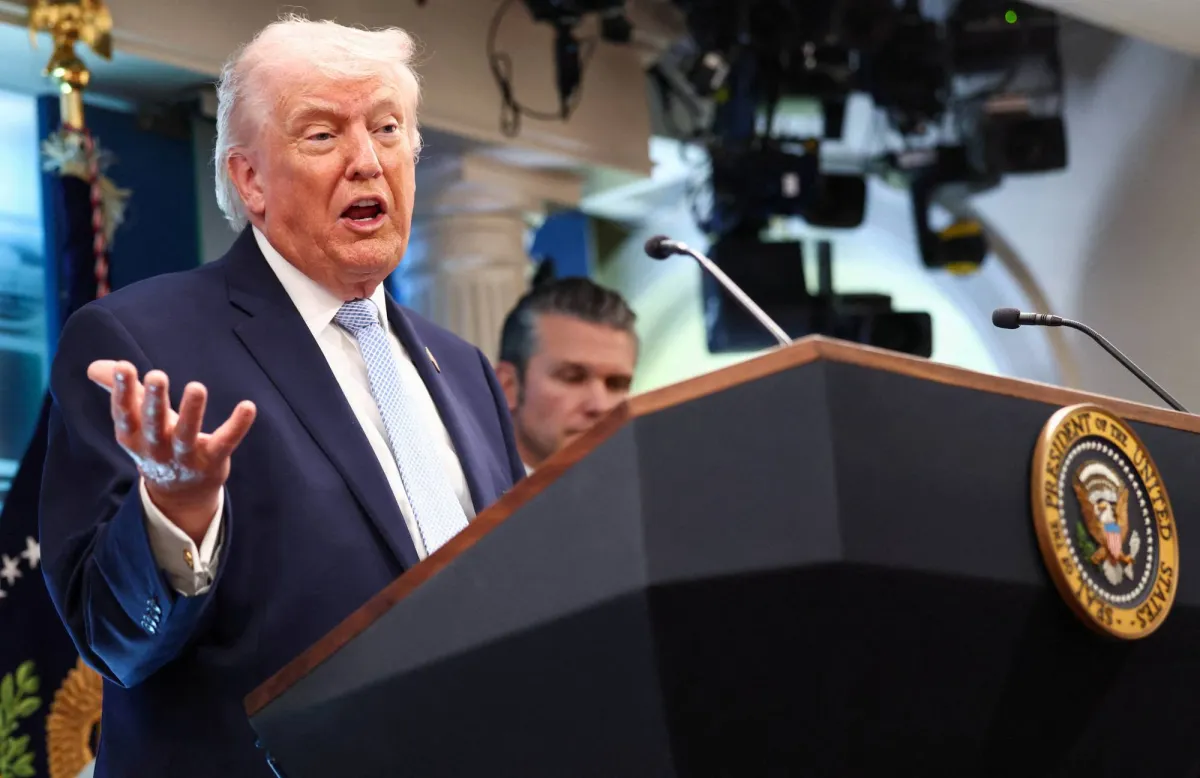
In a new development on the political scene, White House spokesperson Caroline Levitt confirmed on Wednesday that discussions are ongoing regarding the possibility of direct talks with Iran. However, she clarified that any final decision regarding these talks will only come from President Donald Trump or the White House.
Levitt's statements came at a critical time, as Washington and Tehran reached a two-week ceasefire agreement in an attempt to avoid the comprehensive destruction threatened by Trump earlier. The American president described this agreement as a "complete and total victory" for the United States, indicating that he would work closely with Iran, which has witnessed a "regime change."
Details of the Agreement
In a phone interview with the Associated Press, Trump confirmed that the United States will consider easing tariffs and sanctions imposed on Iran. He also noted that Iranian uranium will not be enriched during the ceasefire period. On the other hand, some American lawmakers expressed cautious reactions to the ceasefire announcement, arguing that the aimless war should end as soon as possible.
Democratic Representative Richard Blumenthal described the ceasefire as "good news," but added that Trump has yet to clarify the reasons behind the outbreak of the conflict. Meanwhile, Representative Gregory Meeks urged the president to explain the reasons that led the United States into war with Iran.
Background & Context
It is worth noting that Iran and the United States agreed to a ceasefire before the deadline set by Trump, with an agreement to reopen the Strait of Hormuz, a vital corridor for oil transport. This agreement came after talks with Pakistani leaders who played a pivotal role in mediating between the two parties.
Earlier, Trump had stated that "unconditional surrender by Iran" is the only acceptable option to end the war. Iran proposed a ten-point plan to resolve the conflict, which includes maintaining Iranian control over the Strait of Hormuz and lifting all sanctions.
Impact & Consequences
Political circles expect this agreement to have a significant impact on U.S.-Iran relations, potentially opening the door for future negotiations. However, the conflicting conditions between the two parties may hinder any tangible progress. There are also concerns that any new escalation could exacerbate the situation in the region.
On the other hand, reopening the Strait of Hormuz could affect global oil prices, as markets have seen a drop in prices following the announcement of the ceasefire. This could help alleviate economic pressures on countries that rely on oil imports.
Regional Significance
These developments are of great importance to the Arab region, as any escalation or de-escalation in relations between Washington and Tehran could impact the stability of Gulf states. Additionally, the situation in Lebanon, which has seen military escalation recently, may also be affected by the announced ceasefire.
In conclusion, it remains to be seen how events will unfold in the coming days and whether direct talks will lead to positive outcomes or remain surrounded by tensions.