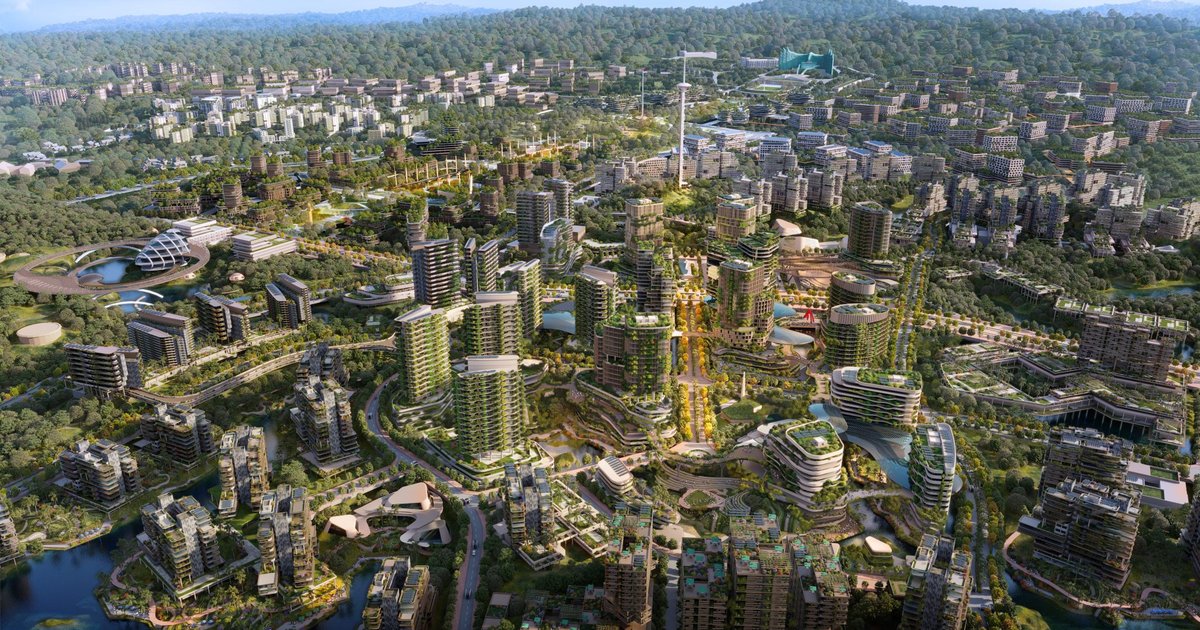
Indonesia is taking new steps towards realizing its vision for the new capital 'Nusantara', as Basuki Hadimuljono, the head of the new capital authority, announced the commencement of work by approximately 50 employees from the Indonesian Vice President's office at the new presidential palace. This move is part of the necessary preparations to activate government operations in the new capital.
During a visit to the office of the East Kalimantan governor, Basuki confirmed that all necessary arrangements have been completed, and that the government facilities in the new capital are ready for use. These facilities will support government activities and facilitate high-level administrative operations.
Event Details
In the context of his visit, Basuki pointed out that the work is not limited to executive government facilities but also extends to legislative and judicial areas. Actual work has begun on establishing offices for the House of Representatives and judicial institutions, with a work plan set in place since 2022 to expedite these projects.
Basuki also emphasized that the new capital authority is working to accelerate infrastructure development, including providing housing for government employees who will be relocated to the new capital. The authority is striving to complete housing projects, pending technical approvals from the Ministry of Public Works.
Background & Context
The new capital 'Nusantara' is considered an ambitious project for Indonesia, aiming to alleviate the pressure on the old capital Jakarta, which suffers from congestion and pollution. This project was announced in 2019, with the goal of creating a more sustainable environment for living and working.
The Indonesian government seeks through this project to achieve balanced development across regions, with better resource distribution among various provinces. This project also reflects the government's vision to enhance economic growth and improve the quality of life for citizens.
Impact & Consequences
This project is expected to have a significant impact on the Indonesian economy, as it will create new job opportunities and boost investments in the region. Additionally, it will contribute to the development of modern infrastructure that supports sustainable growth.
Moreover, the success of the new capital may encourage other countries in the region to consider similar projects to improve their urban environments. This could lead to a transformation in how major cities in Southeast Asia are managed.
Regional Significance
Considering the challenges faced by many Arab countries in managing major cities, Indonesia's experience in building a new capital could serve as a model. Arab nations can benefit from the lessons learned from this project in urban planning and sustainable development.
In conclusion, the new capital project 'Nusantara' represents a bold step towards a more sustainable future for Indonesia, reflecting the government's commitment to achieving balanced development. The success of this project may open new avenues for cooperation between Indonesia and Arab countries in the fields of urban development.