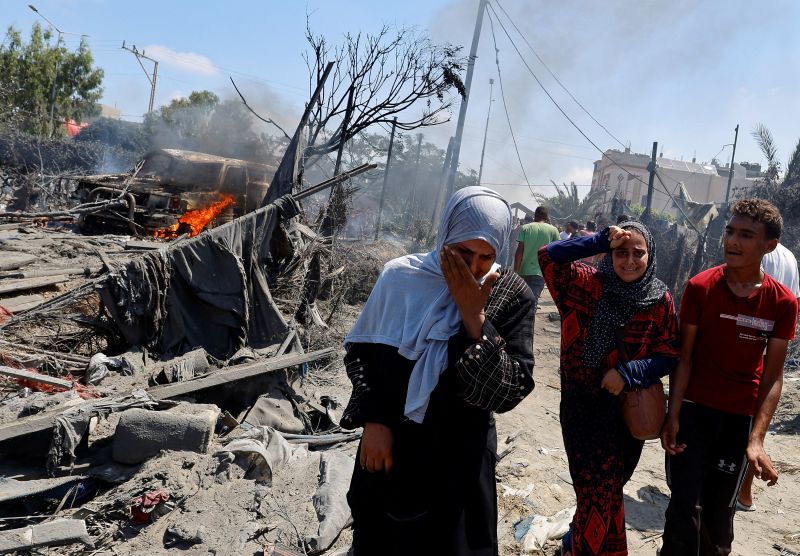
A reporter from Al-Ikhbariya in Gaza was injured due to an Israeli airstrike that targeted the journalists' tent, in an incident that reflects the increasing risks faced by media personnel in conflict zones. This attack comes at a sensitive time, as tensions in the region escalate, raising international concerns about the safety of journalists.
The journalists' tent in Gaza serves as a vital gathering point for media personnel, where ongoing events are covered and humanitarian suffering is documented. However, it has become a target for Israeli airstrikes, highlighting the challenges journalists face in fulfilling their professional duties.
Details of the Incident
The incident occurred late last night when Israeli warplanes targeted the tent housing a group of journalists covering events in the sector. Local sources reported that the airstrike resulted in injuries to the Al-Ikhbariya reporter, who was subsequently transported to the hospital for treatment.
This incident is part of a continuous military escalation in Gaza, where Israeli attacks on civilians and infrastructure are increasing. Many human rights organizations have condemned this airstrike, considering it a blatant violation of human rights and press freedom.
Background & Context
Historically, Gaza has witnessed numerous attacks on journalists, with multiple cases recorded of them being targeted while performing their duties. In recent years, the intensity of Israeli bombardment has increased, leading to the loss of many journalists' lives or injuries.
Press freedom is one of the fundamental rights guaranteed by international covenants; however, the reality in conflict zones often differs. Journalists in Gaza face significant challenges, including bombardment and arrests, which hinder their ability to convey the truth.
Impact & Consequences
This incident significantly affects press freedom in the region, raising concerns about the safety of journalists and their ability to work freely. Additionally, the military escalation complicates the humanitarian situation in Gaza, where residents suffer from a severe shortage of essential resources.
Moreover, targeting journalists may lead to a decline in media coverage of events in Gaza, contributing to a lack of accurate information about the humanitarian situation there. This, in turn, could affect global public opinion and reduce pressure on relevant parties to end the conflict.
Regional Significance
This incident exemplifies the challenges faced by media personnel in the Arab world, where risks are increasing in conflict zones. The targeting of journalists is not limited to Gaza; it extends to other areas such as Syria and Yemen, where journalists face arrest and torture.
These events contribute to the growing need for protecting journalists and providing them with a safe environment to work. They also raise questions about the role of the international community in safeguarding human rights and freedom of expression in conflict areas.
In conclusion, the safety of journalists in conflict zones remains an urgent issue that requires international attention. Targeting them is not merely a violation of their rights but an assault on the right to knowledge and information.