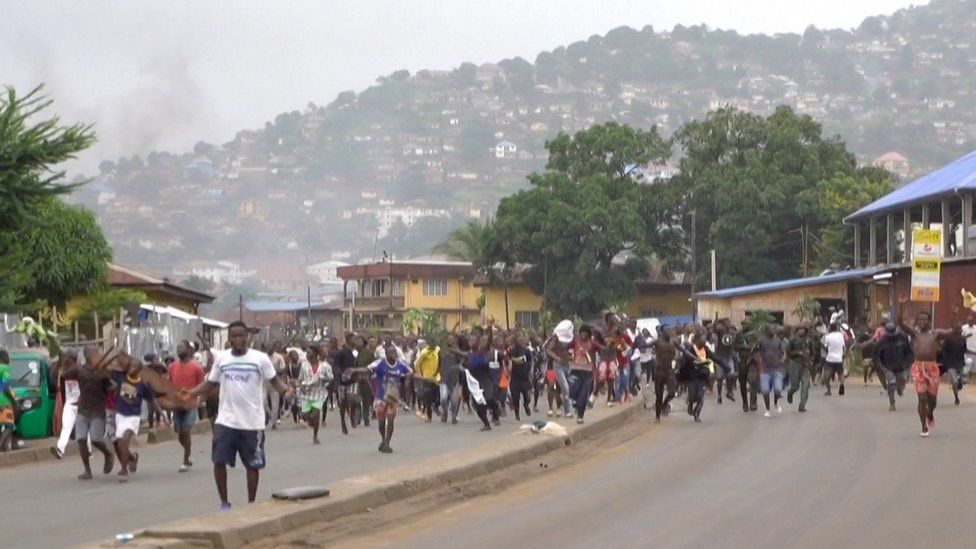
The leader of the opposition party "Renewal of the Democratic Movement," Yaacoub Ould Ahmed Lemrabt, suffered severe suffocation due to inhaling tear gas while security forces dispersed a protest in the Mauritanian capital, Nouakchott. He was transported to the hospital for treatment, where medical sources reported that he began to regain consciousness gradually but remains under medical supervision.
The opposition party had called for this protest on Sunday evening to express discontent over government decisions to raise fuel and domestic gas prices, which sparked widespread dissatisfaction among citizens. Activist Saadani Mint Sidom, the party's vice president, accused the police of using unknown gases against the demonstrators, noting that she was injured due to an assault.
Details of the Event
In the course of the events, security forces arrested 67 demonstrators, and several others were injured due to police repression. The German news agency reported that some of the detained activists were released later that night. The party criticized what it described as a crackdown on freedoms and the confiscation of the right to protest, asserting that government decisions aim to undermine citizens' purchasing power.
Riot police used force to disperse the demonstrators, firing tear gas at the designated gathering site and preventing protesters from reaching the location. Authorities denied permission for the march without providing any justification.
Background & Context
This escalation follows the Mauritanian government's increase in fuel prices by between 10% and 15%, while domestic cooking gas prices surged by over 60%. The government justified these increases as necessary to cope with rising costs of energy support amid regional crises and their impacts on the local market.
Mauritanian President Mohamed Ould Cheikh El Ghazouani had pointed to the challenges facing the country due to the global energy crisis, calling for strict measures to rationalize spending and enhance individual responsibility. The government spokesperson announced a package of austerity measures, including a ban on vehicle movement during specific hours.
Impact & Consequences
Concerns are growing that these protests could lead to greater escalation on the streets of Mauritania, especially given the difficult economic conditions faced by citizens. The rise in prices of essential goods poses a significant challenge to the government, which could affect its political stability.
The protests also reflect a general sense of dissatisfaction with government policies and may pave the way for more popular movements in the future. Additionally, these events could impact the relationship between the government and the opposition, complicating the political landscape in the country.
Regional Significance
These protests come at a time when the Middle East is experiencing geopolitical tensions, particularly concerning energy crises. The closure of the Strait of Hormuz and the effects of the Israeli-American war on Iran could lead to a global rise in fuel prices, increasing pressure on Arab governments, including the Mauritanian government.
In conclusion, the situation in Mauritania remains under observation as citizens look forward to the government's response to their legitimate demands. The continuation of protests could alter the dynamics of politics in the country and affect regional stability.