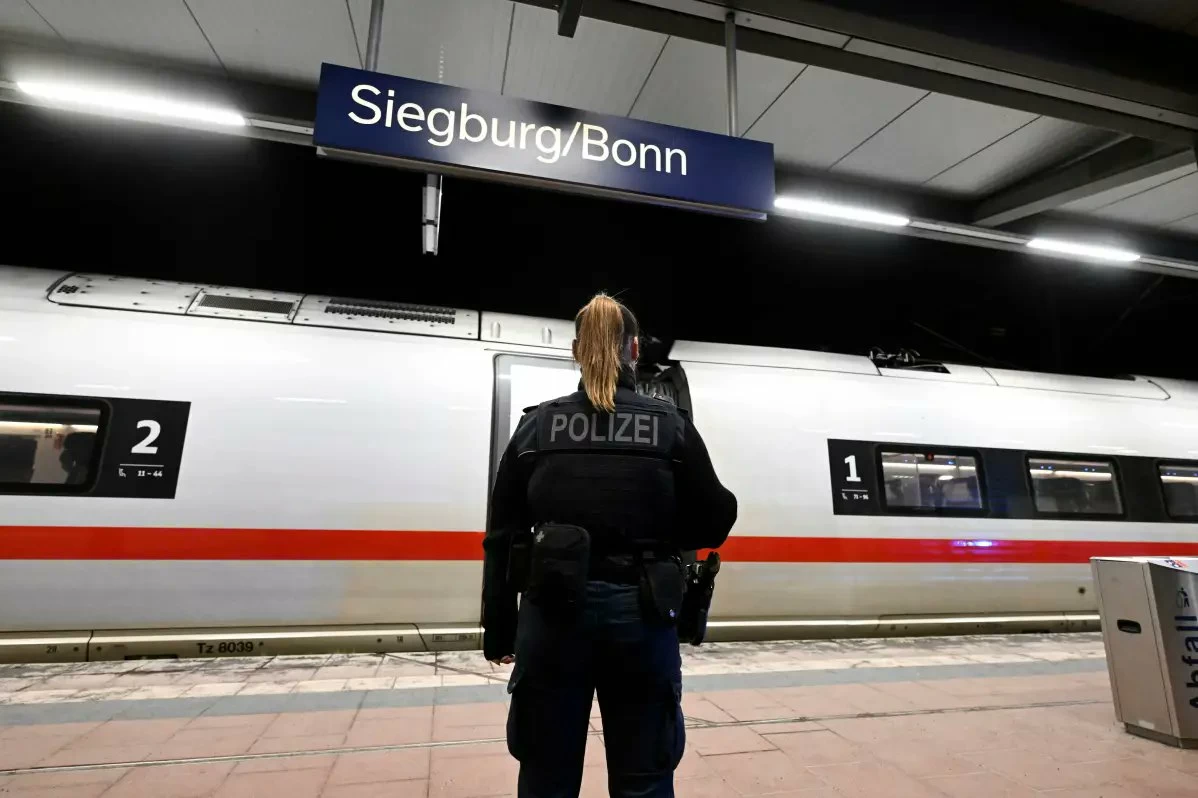
The German Federal Police announced an unfortunate incident on Thursday evening, where a 20-year-old man from Aachen ignited explosives inside a high-speed train, resulting in 12 people sustaining minor injuries. The incident occurred on the ICE train en route from Cologne to Frankfurt, and passengers were able to control the situation before the police arrived.
According to eyewitnesses and police reports, the young man was masked and made threats to "carry out an attack" before detonating the explosives in the train's aisle. The injuries resulting from the incident were minor, with one person being transported to a hospital in Bonn after suffering hearing damage.
Details of the Incident
Passengers quickly managed to confront the attacker, forcing him into a restroom and locking the door, preventing the situation from escalating. After the train stopped at the Siegburg station near Bonn, federal police intervened and arrested the suspect inside the train. As a precautionary measure, approximately 180 passengers were evacuated from the train.
During the search of the young man's bag, police found a large knife, a second knife, and additional smoke bombs. A police spokesperson confirmed that investigations are ongoing to determine the exact motive behind this act, noting that there are currently no clear indications of terrorist motives. The suspect is under investigation for potential charges including threats of murder and serious bodily harm.
Background & Context
This incident comes amid increasing security tensions in Germany, which has witnessed several individual attack incidents on public transport in recent years, particularly knife attacks. These incidents are often linked to psychological issues or personal motives, rather than organized terrorism.
Public transport in Germany is a potential target for such incidents due to the high density of passengers and the difficulty of complete security control. In recent years, German authorities have strengthened inspection measures and patrols at major stations, especially during travel seasons such as the Easter holiday.
Impact & Consequences
This incident raises concerns about passenger safety in public transport and reflects the urgent need to enhance security measures. It also highlights the challenges faced by authorities in addressing individual attacks, which may be linked to psychological issues or personal motives.
Such incidents require an effective response from authorities, including improving psychological support programs for individuals who may be prone to such behaviors. Additionally, cooperation between various security agencies should be enhanced to share information and analyze risks more effectively.
Regional Significance
Although the incident occurred in Germany, it reflects security challenges that other countries, including Arab states, may face. Individual incidents can impact tourism and travel, necessitating governments to bolster security in public transport.
This incident may also spark discussions on how to address individuals suffering from psychological issues and how to provide support before situations escalate. Raising public awareness about these issues can contribute to reducing such incidents in the future.