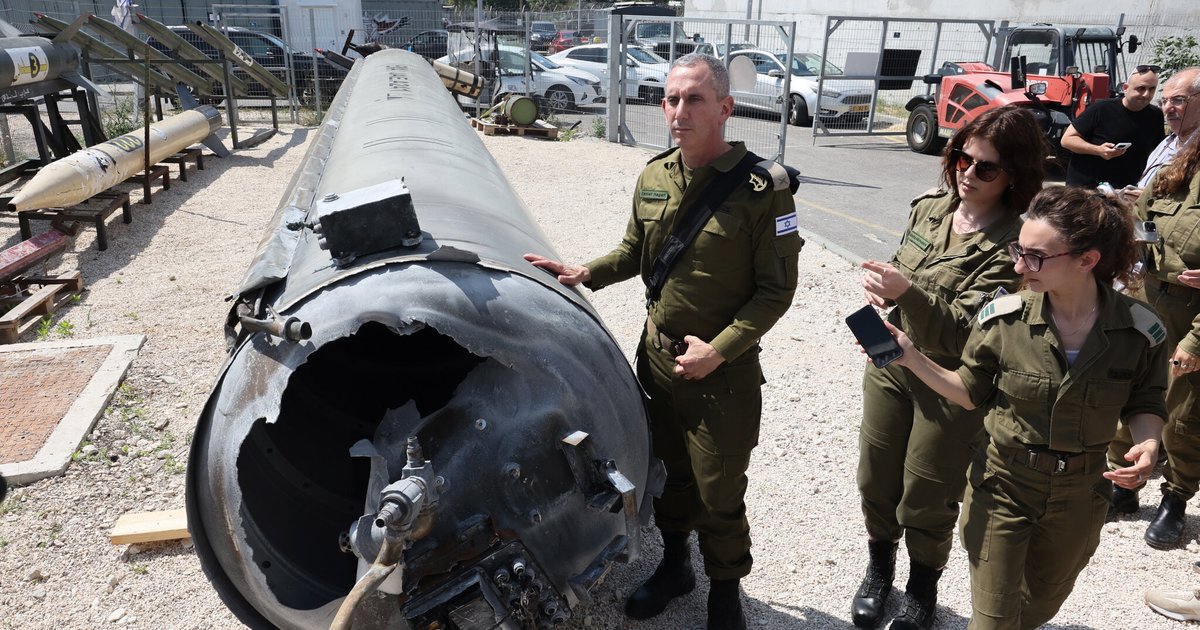
Several individuals were injured in the Israeli city of Haifa as a result of Iranian missile attacks, which targeted residential areas, leading to injuries and property damage. Following these attacks, the Israeli government announced its intention to carry out retaliatory strikes aimed at Iranian energy facilities.
These developments come at a sensitive time, as tensions in the region escalate, and it appears that the conflict between Iran and Israel has entered a new phase of escalation. The missile attacks on Haifa reflect Iran's capability to conduct long-range military operations, raising concerns about increasing violence in the region.
Details of the Incident
The missile attacks targeting Haifa, one of Israel's largest cities, were executed using Iranian missiles, indicating a shift in Iran's military strategy. Reports indicate that the missiles struck several areas, resulting in civilian injuries and damage to some properties.
In a swift reaction, the Israeli government vowed to respond to these attacks, confirming that it would target Iranian energy facilities, which could lead to further escalation in the ongoing conflict. These statements suggest the Israeli occupation's intention to take strong military actions against Iran, heightening tensions in the region.
Background & Context
The history of the conflict between Iran and Israel spans decades, with Israel perceiving Iran as a major threat to its national security. In recent years, Iran has increased its support for armed groups in the region, raising concerns for the Israeli occupation. The missile attacks on Haifa occur amid rising tensions between the two sides, as each seeks to bolster its military position.
Moreover, these attacks come against the backdrop of escalating regional tensions, with multiple conflicts occurring in the area, including the disputes in Syria and Yemen. These conflicts reflect the complexities of the regional situation and directly impact security and stability in the area.
Impact & Consequences
The recent escalation between Iran and Israel could have serious implications for regional security. If mutual attacks continue, we may witness a large-scale military escalation, potentially leading to international or regional interventions. Additionally, these events could affect global markets, particularly in the energy sector, as any escalation in the conflict may lead to rising oil prices.
Furthermore, the continuation of violence could exacerbate the humanitarian situation in the region, where civilians suffer from the ongoing conflict's repercussions. It is crucial for international parties to intervene to mitigate escalation and ensure security and stability in the area.
Regional Significance
These events directly impact Arab countries, as any escalation in the conflict between Iran and Israel could have repercussions for regional security. Arab nations grappling with internal conflicts may find themselves in a difficult position, as any escalation could complicate current situations.
Additionally, these events may affect relations between Arab states and Iran, as some Arab countries may feel compelled to reassess their ties with Iran amid rising tensions. It is essential for Arab nations to maintain communication with international parties to ensure regional stability.
In conclusion, the situation in the region remains tense, and the international community must work to de-escalate tensions and prevent military escalation between Iran and Israel.