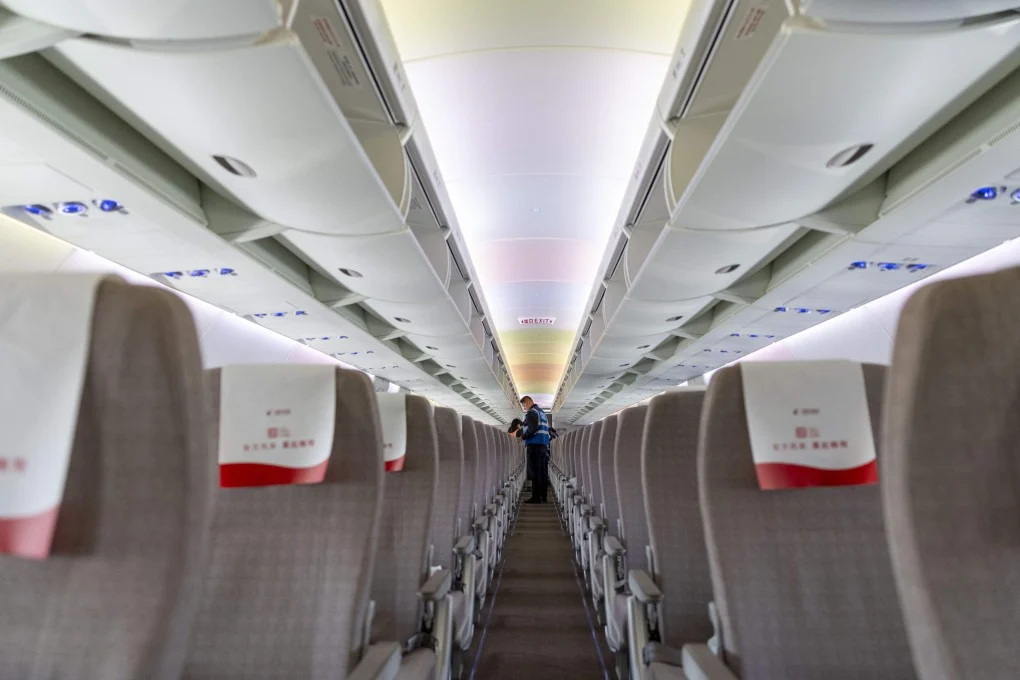
Chinese commercial aircraft manufacturer Comac is working to enhance the passenger experience aboard its new C919 aircraft by updating the cabin capacity, as part of its efforts to boost its competitiveness in the civil aviation market dominated by Boeing and Airbus.
The proposed updates include increasing the size of the overhead luggage compartments and improving the air conditioning system to prevent water leakage, aiming to make the travel experience more comfortable and convenient for passengers.
Details of the Updates
The C919 aircraft is one of Comac's flagship projects, as the company aims to enter the narrow-body commercial aircraft market. With these new updates, Comac hopes to attract more airlines and consumers, which could contribute to reducing dependence on imported aircraft.
The C919 is currently undergoing testing, and it is expected to enter service in the coming years. These updates come at a critical time as Comac seeks to prove its competitiveness in a challenging market.
Background & Context
Founded in 2008, Comac aims to develop the aviation industry in China and enhance its independence in this sector. Since then, the company has worked on developing new aircraft that align with global standards, with the C919 being part of China's vision to become a leader in the aviation industry.
As Comac continues to innovate, the C919 represents a significant step towards achieving this goal, showcasing the company's commitment to advancing its technology and capabilities.
Impact & Consequences
If Comac succeeds in updating its C919 and providing an improved travel experience, it could change the dynamics of the global aviation market and increase the company's market share, putting pressure on Western companies like Boeing and Airbus.
This potential shift could lead to increased competition, prompting established manufacturers to enhance their offerings and services to retain market dominance.
Regional Significance
The advancements in the C919 are not just significant for Comac but also for the broader aviation landscape in the region. As the company seeks to establish itself in the market, it opens new avenues for collaboration with regional airlines, including those in the Arab world.
Such partnerships could lead to mutually beneficial opportunities, enhancing the overall aviation infrastructure and service quality in the region.
In conclusion, the updates to the C919 aircraft are a strategic move for Comac, aiming to bolster its competitive edge in the global aviation market while enhancing the travel experience for passengers.