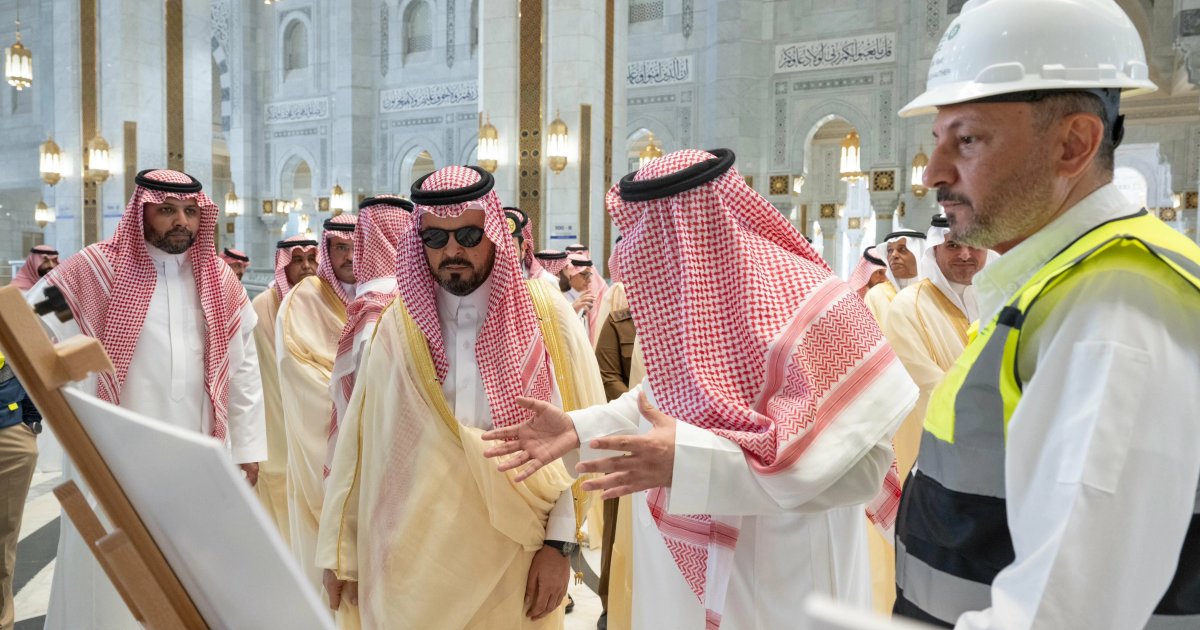
The Deputy Emir of Mecca, Prince Saud bin Mishal bin Abdulaziz, conducted an inspection tour of the reception and guidance center for pilgrims in Al-Nawaria, where he reviewed the operational workflow and services provided to the guests of Allah. He was accompanied on this visit by the Deputy Minister of Hajj and Umrah, Dr. Abdul Fattah Mashat, the Secretary of the Holy Capital, Musa'ad Al-Dawood, along with several officials from government and security sectors.
During his tour, Prince Saud bin Mishal observed the workflow in the pre-preparation room at the center, where he reviewed the operational systems and screens used to monitor operational processes. He emphasized the importance of confirming the accommodations for pilgrims with service providers before their arrival, monitoring the statistics of buses arriving at the center, as well as the bus tracking system to ensure smooth movement and expedite procedures.
Details of the Event
His Highness also reviewed the workflow in the reception hall for land pilgrims, where the mechanism for exchanging foreign and Saudi buses at the center was presented. A range of organizational and operational services were provided to facilitate the reception procedures for pilgrims and guide them to their accommodations smoothly and regularly.
Following this, the Deputy Emir of Mecca visited the Holy Mosque, where he assessed the readiness of the Tawaf project and the operational system and services provided to those visiting the Sacred House of Allah for the Hajj season of 1447 AH. This visit is part of ongoing efforts to enhance operational efficiency and improve the experience of the guests of Allah, accompanied by several officials.
Background & Context
Mecca is one of the most prominent Islamic cities that welcomes millions of pilgrims and Umrah performers annually. Therefore, improving the services provided to these guests is a top priority for the relevant authorities. Numerous measures and precautions have been taken to ensure the provision of distinguished services to pilgrims, including the development and expansion of facilities.
These efforts also include enhancing coordination among various government and security agencies to ensure smooth movement and facilitate procedures. New expansion projects have been implemented in the Holy Mosque, contributing to accommodating the increasing number of visitors.
Impact & Consequences
These efforts are part of a comprehensive operational system aimed at enhancing the quality of services provided to worshippers, Umrah performers, and visitors. By improving the experience of pilgrims, the Kingdom's position as a primary destination for Hajj and Umrah is strengthened.
These projects contribute to creating a more accessible and smooth worship environment within the Holy Mosque and its facilities, reflecting the Kingdom's commitment to providing the best services to the guests of Allah.
Regional Significance
Mecca is a significant spiritual center for Muslims around the world, and thus improving services there has positive effects on religious tourism in the region. This contributes to strengthening cultural and religious ties among Islamic countries.
Moreover, these efforts reflect the Kingdom's commitment to enhancing regional and international cooperation in the field of religious tourism, contributing to stability and development in the region.
In conclusion, this visit highlights the importance of ongoing efforts to improve services provided to pilgrims, reflecting the Kingdom's commitment to offering a distinguished experience for the guests of Allah.