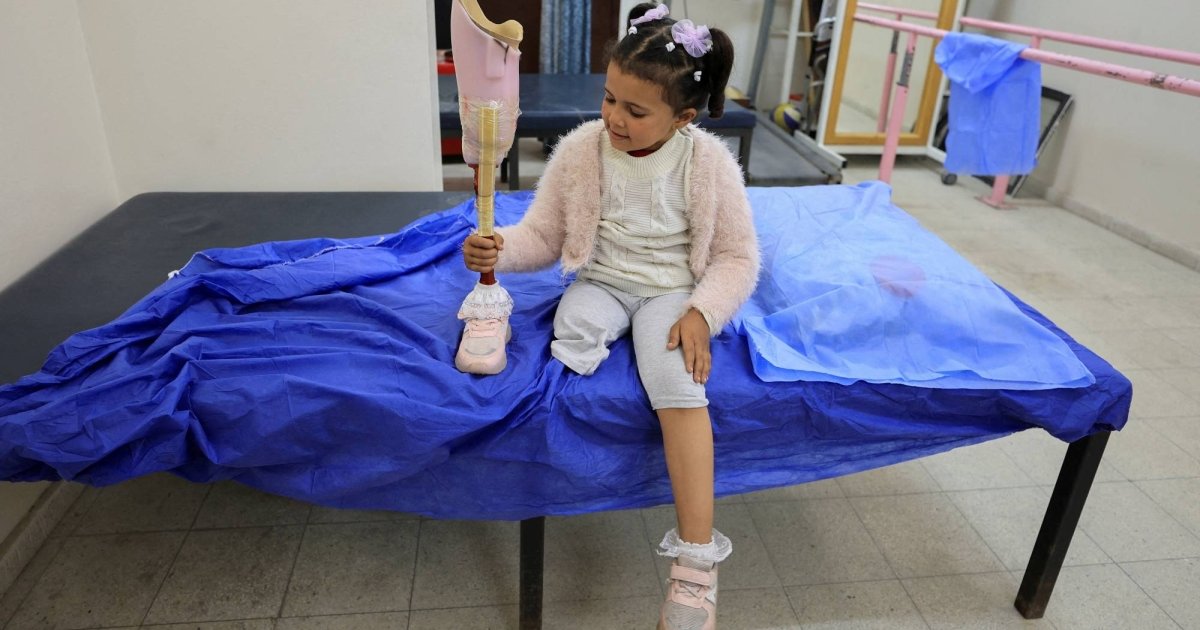
In the Gaza Strip, crutches transform from mere assistive devices into essential pillars of productivity, as the injured adapt their body movements and develop alternative skills suited for professions that require prolonged standing or strenuous fieldwork, all amid a lack of any prepared infrastructure or advanced prosthetics.
This report by Al Jazeera highlights the field struggles of three men who redefine the meaning of perseverance by practicing their original professions under extraordinary circumstances, turning physical deficits into motivation for work rather than a reason for withdrawal, and providing a living example of resilience that is not penned in poems but is visible in the details of their movements and gestures.
Details of the Event
Photojournalist Sami Shahada moves cautiously over the rubble of destroyed homes, balancing the weight of his camera with his physical imbalance, as he continues to document a scene of which he was a victim just months ago. Meanwhile, Mohammed Ahmed Naseer bends slowly, leaning on his iron crutch to plant a seedling in a sandy patch he has cultivated between tents in the "Passport Camp". On a dirt sidewalk in the Sabra area, barber Muawiya Al-Wahidi steadies his only remaining left foot, leaning his body to the right to adjust the angle of his scissors above his client's head.
In mid-April 2024, photographer Sami Shahada was running with his camera to cover an airstrike when a shell struck, amputating his right leg instantly. Sami recalls the moment: "I was aware of everything; I saw my foot leaving my body before entering the operating room. In the car, I looked at my missing place and wondered about the fate of my profession that requires running and maneuvering through fire."
Sami did not wait long; on May 13, 2024, just one month after the amputation, he returned to the field. However, moving was no longer the same; every shot now required effort in balancing and securing the area to ensure he did not fall. He says while stabilizing his camera tripod: "I now need someone to support me when climbing over rubble or moving quickly when targeted. My movements have become calculated to the millimeter, but the camera in my hand gives me the balance I lost in my body."
Today, Sami works with one leg, capturing the destruction he personally experienced. For him, standing behind the lens is not a "heroic act" but a professional entitlement accumulated over 17 years of work. He concludes by saying: "My leg fell in the field, but the camera remained. The international charters that did not protect me, I will continue to document their violations until my last breath, and I will keep walking towards the truth no matter how heavy the steps are."
"I found myself in the shroud, but the pulse returned at the last moment," describes Mohammed Ahmed Naseer the moment he was rescued from under the rubble of the Indonesian hospital in November 2024. He ended up with an amputation of his leg, kidney poisoning, and shrapnel lodged in his abdomen, finding himself displaced in a tent in the Passport Camp, with no source of income to support his six children.
Due to rising prices and a lack of vegetables, Naseer decided to cultivate the narrow space next to his tent. Daily tasks are not easy for a man who lost his leg; he has to sit on a small wooden stool and bend his torso to reach the ground, using simple hand tools to turn the rocky soil. He says: "Farming here is not for leisure; it is our means to eat. My children bring water from far away, and I take on the task of planting and caring for painful sitting positions for my back and leg."
Today, Mohammed Naseer grows radishes and arugula, distributing the surplus to his displaced neighbors. Despite his dreams of a prosthetic limb to ease his movement, his current focus is on returning to his original profession of carpentry. He adds: "I want to return to making bedrooms. Working with my hands is what will preserve my family's dignity. The amputated leg is an obstacle, but my hands are still capable of holding the hammer and saw."
Behind a plastic chair on the sidewalk in the Sabra area, Muawiya Al-Wahidi (42 years old) stands holding his scissors. Muawiya, who lost his leg during the 2021 aggression, found himself once again in the midst of a war that destroyed his home and salon in the Sabra neighborhood. Today, he is forced to work "in the open air," where he stands for long hours on his only left foot, causing him severe pain in his back and joints.
Muawiya explains the field difficulties: "Haircutting requires circular movement around the client, which I cannot do now. I have to ask the client to move themselves or turn very slowly leaning against a back wall. Doctors warned me that the immense pressure on my only foot could lead to losing it, but options have run out; the shop has turned into a bedroom for my children Siraj and his siblings, and the sidewalk is the only workspace."
In winter, the suffering doubles; the cold increases stiffness in the muscles surrounding the amputation, and rain completely halts work. Nevertheless, Muawiya insists on working daily: "I am currently working at 10% of my previous capacity, but this percentage is what prevents us from extending our hands to people."
Muawiya represents one of 12,000 amputees in Gaza, but his story stands out in his determination to remain the "barber" who provides his service to people, standing as much as his exhausted body allows, and holding onto his scissors as his only tool of survival.