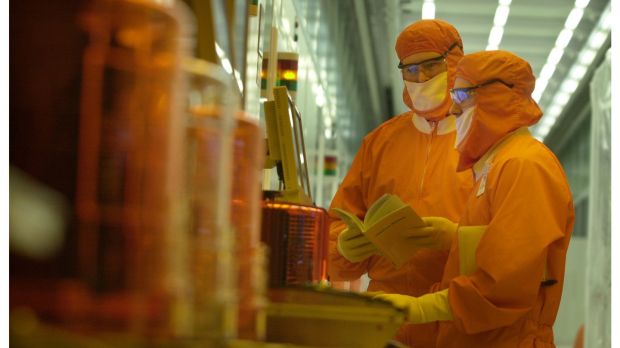
Intel, a leader in the semiconductor industry, has announced its agreement to pay $14.2 billion to regain half of its stake in its plant located in Ireland, which it had previously sold to Apollo Global Management. This step is part of Intel's efforts to restore its production strength and enhance its position in the global technology market.
Through this deal, Intel aims to rebuild its manufacturing capabilities, especially in light of the challenges it has faced in recent years. The company has seen a decline in its market share due to increasing competition from firms like Tesla and NVIDIA, prompting it to take bold steps to regain control over the semiconductor market.
Details of the Agreement
The agreement involves Intel regaining half of its plant in Ireland, which is considered one of the company's strategic locations in Europe. The plant, previously sold to Apollo, was part of Intel's plan to reduce costs and improve efficiency. However, the company realized that returning to this plant could help it meet the increasing demand for semiconductors, especially with the growing reliance on technology across various sectors.
This deal is one of the largest transactions in Intel's history, reflecting the company's commitment to expanding its operations in Europe. It also comes at a time when European governments are seeking to boost local semiconductor production in an effort to reduce dependence on Asian companies.
Background & Context
Founded in 1968, Intel has since become one of the leading companies in the semiconductor industry. However, the company has faced significant challenges in recent years, with increasing competition from other firms in the market. In 2020, Intel announced plans to scale back production at some plants, leading to the sale of certain assets, including the Irish plant.
Ireland is an important hub for the technology industry, hosting many major companies such as Google and Facebook. The Irish government has contributed to attracting these companies by offering attractive tax incentives, making it a preferred destination for investment in the technology sector.
Impact & Consequences
This deal is expected to have a significant impact on the global semiconductor market. It reflects Intel's desire to reclaim its market position, which may lead to increased competition in this sector. Additionally, regaining the plant will help Intel meet the rising demand for semiconductors, especially as reliance on technology grows across various fields.
Furthermore, this move could strengthen the relationship between Intel and the Irish government, potentially contributing to attracting more investments to the region. This agreement may also open up new opportunities for collaboration between Intel and other technology companies in Ireland.
Regional Significance
Although the deal involves an American company and an Irish plant, it has potential implications for the Arab region. The increasing demand for semiconductors may open the door for Arab companies to invest in this sector. Additionally, enhancing local semiconductor production in Europe could affect semiconductor prices in the global market, which may impact Arab companies that rely on these components in their products.
In conclusion, Intel's deal represents a strategic step aimed at enhancing its production capabilities amid increasing challenges in the technology market. As reliance on technology grows across various sectors, this move could mark the beginning of a new phase of growth and innovation in the semiconductor industry.