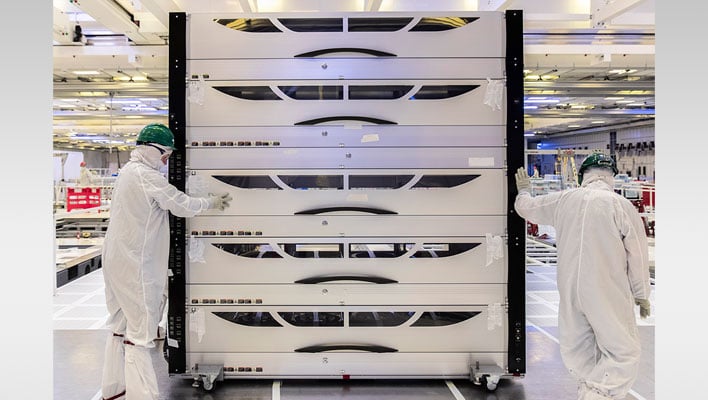
Intel, the American semiconductor giant, saw a significant increase in its shares by 9% on Wednesday after announcing its full ownership of the Fab 34 plant in Ireland. This decision came after an investment of $14.2 billion to repurchase the stake that was previously owned by Apollo Global Management, which was sold in 2024.
Intel had sold this 49% stake in its Irish plant to Apollo for $11.2 billion as part of its strategy to provide greater flexibility during a challenging period for the company. David Zinsner, Intel's Chief Financial Officer, confirmed that the agreement made in 2024 was a suitable structure at the right time, allowing Intel to accelerate vital initiatives.
Details of the Event
This move signifies that Intel has regained its strength and confidence in the market. When Intel sold its stake in 2024, the company was undergoing a tough phase, competing with leading semiconductor firms like Taiwan Semiconductor Manufacturing Company. Nevertheless, Intel continued to make substantial investments, allocating $100 billion to expand its chip manufacturing capabilities in the United States, including a massive plant opened in Arizona last year.
Despite leadership changes, including the dismissal of former CEO Pat Gelsinger at the end of 2024, the Arizona plant project remained on track. Intel emphasized that the repurchase agreement reflects the increasing and essential role of CPUs in the age of artificial intelligence.
Background & Context
Founded in 1968, Intel has become one of the leading companies in the semiconductor industry. However, the company has faced significant challenges in recent years, with its market share declining against competitors. In 2024, Intel was in the midst of substantial efforts to restructure its operations and improve its financial performance, leading to strategic decisions such as selling the stake in the Irish plant.
Ireland is a crucial hub for the technology industry, hosting many major companies. Intel has contributed to boosting the local economy through its investments in this sector. With the regaining of ownership of the plant, Intel hopes to enhance its production capacity and meet the growing demand for chips.
Impact & Consequences
This move is significant not only for Intel but also for the semiconductor industry as a whole. The restoration of ownership of the plant reflects Intel's ability to adapt to market changes and regain its position. This step may lead to increased productivity and improved competitiveness for the company against others.
Moreover, Intel's investment in its Irish plant underscores the importance of this market in its global strategy. This investment is expected to foster innovation and the development of new technologies, which will have a positive impact on both the local and global economy.
Regional Significance
As major technology companies like Intel continue to expand their investments, Arab countries can benefit from these trends by strengthening partnerships with these firms. Such investments could open new opportunities in technology and innovation in the region, contributing to the development of the digital economy.
Furthermore, enhancing the semiconductor industry in Arab countries could contribute to achieving technological independence and reducing reliance on imports, thereby boosting the competitiveness of Arab nations in the global market.