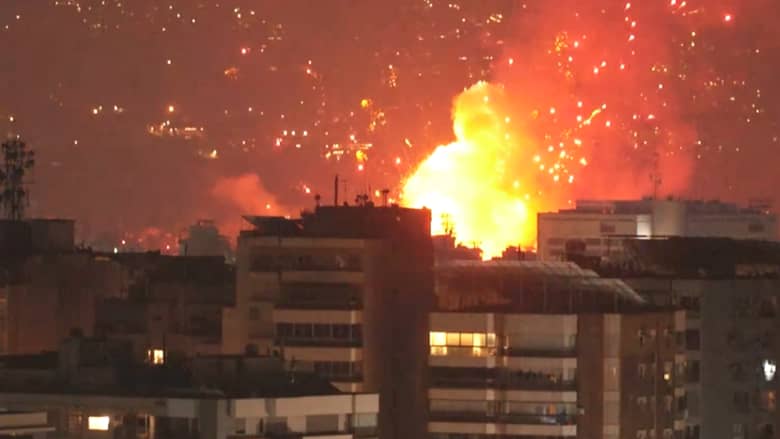
Intense airstrikes targeted the southern suburbs of Beirut overnight, with reports indicating around 8 airstrikes. This escalation coincides with fierce clashes between Hezbollah and the Israeli army in southern Lebanon. These events come amid rising tensions in the region, raising concerns about a larger escalation in the conflict.
The airstrikes were accompanied by violent clashes, with both sides exchanging gunfire, leading to casualties and injuries among civilians. Local sources reported that the airstrikes targeted sites belonging to Hezbollah, further heightening tensions between the two parties.
Details of the Incident
Late at night, Israeli warplanes targeted several areas in the southern suburbs, causing widespread destruction to property. The areas surrounding Hezbollah's headquarters experienced intense bombardment, creating panic among residents. Clashes continued in the south, where the Israeli army attempted to advance in certain areas, but Hezbollah fiercely resisted.
These events follow a period of relative calm, during which conditions in Lebanon had shown slight improvement in recent months. However, the recent escalation reflects the instability in the region and indicates the potential for renewed conflict.
Background & Context
Historically, the relationship between Hezbollah and Israel has been marked by increasing tensions for decades. The recent conflict stems from several factors, including border disputes and resource conflicts, as well as regional and international interventions. Lebanon is suffering from a severe economic crisis, complicating internal situations and making it difficult for the government to control the situation.
It is worth noting that Hezbollah is considered a significant player in Lebanon's political landscape, wielding considerable influence. Meanwhile, Israel seeks to maintain its national security, making it challenging to reach a lasting peaceful resolution.
Impact & Consequences
The recent escalation could have serious repercussions for regional security. With the continuation of airstrikes and clashes, the number of displaced persons from affected areas is likely to increase, adding an additional burden on Lebanon, which is already facing a humanitarian crisis.
This escalation may also affect relations between Lebanon and neighboring countries, potentially leading to new international interventions. The international community is closely monitoring the situation, as any escalation could impact the stability of the entire region.
Regional Significance
Events in Lebanon have direct implications for neighboring Arab countries, as any escalation could lead to a flow of refugees into countries like Syria and Jordan. Additionally, the situation in Lebanon may affect relations between Arab countries and Israel, especially in light of recent developments in Israeli-Arab relations.
In conclusion, the situation in Lebanon remains complex, with political, military, and economic dimensions intertwined. It is crucial for the involved parties to remain committed to dialogue and negotiation to avoid further escalation.