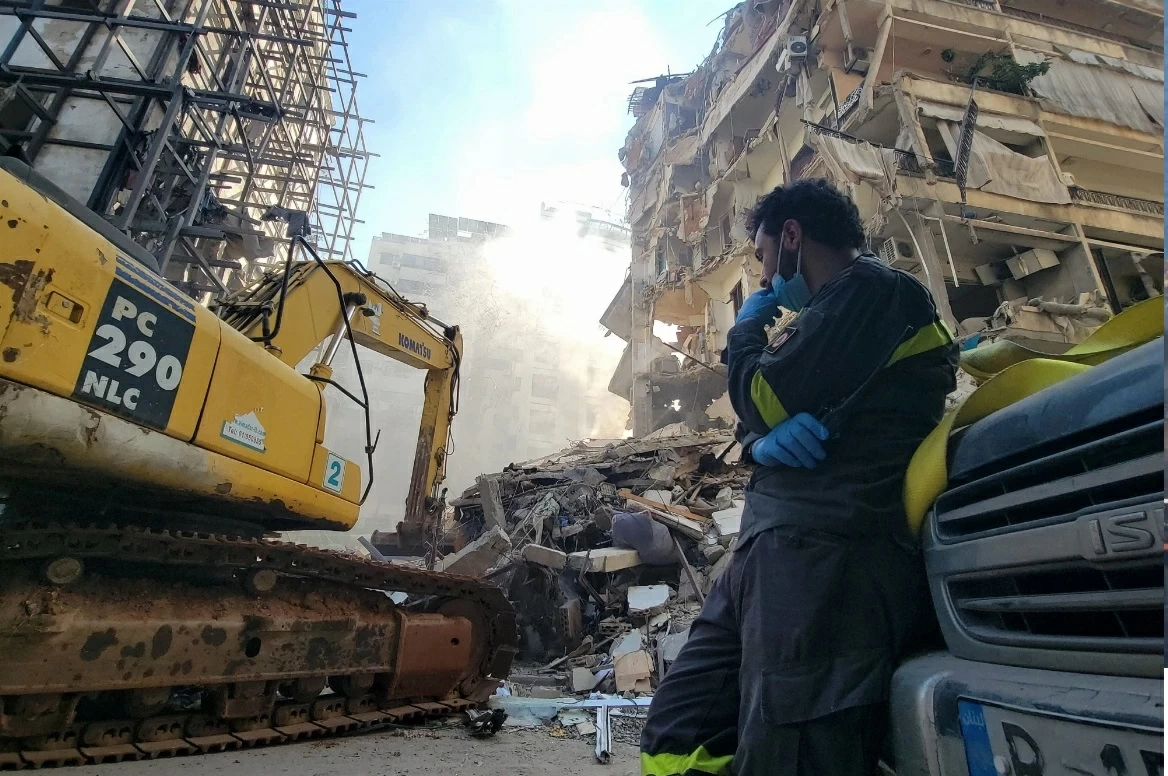
The Secretary-General of the Arab League, Ahmed Aboul Gheit, strongly condemned the brutal and unprecedented Israeli assaults on Lebanon, which have led to hundreds of casualties among innocent civilians. These attacks represent the most intense wave of airstrikes the region has witnessed in years, targeting residential and commercial areas in the capital, Beirut, and southern Lebanon.
In an official statement released today, Aboul Gheit affirmed that these unjustified assaults constitute a blatant and serious violation of all international laws. He also accused Israel of deliberately attempting to sabotage the ceasefire agreement announced between the United States and Iran.
Details of the Event
Spokesman for the Secretary-General, Jamal Rushdi, explained that the international community is making strenuous efforts to defuse the war and resolve the ongoing conflict, while Israel continues to play a disruptive role against any understandings that could contribute to restoring stability in the region. He considered that Israel's systematic and overt policies aim to ignite the situation through Lebanon, threatening any effort aimed at restoring security.
The statement reiterated the Arab League's call for the international community to pressure Israel to immediately halt its assaults on Lebanon and implement relevant international resolutions. It also confirmed the League's full solidarity with Lebanon and its people in facing this difficult phase.
Background & Context
Today, Lebanon witnessed an unprecedented wave of Israeli airstrikes, described by Lebanese and international sources as the most intense since the current escalation began. Israel launched dozens of airstrikes in a short period, targeting over 100 sites in less than 10 minutes, focusing on residential and commercial neighborhoods in central Beirut and the southern suburbs, as well as areas in southern Lebanon and the Bekaa Valley.
These airstrikes came just hours after the announcement of a two-week ceasefire agreement between the United States and Iran. However, Israel confirmed that the agreement does not include the Lebanese front and continued its military operations against Hezbollah targets.
Impact & Consequences
The airstrikes resulted in hundreds of casualties and caused extensive destruction in populated areas, with columns of smoke rising over the capital, Beirut. These developments occur within the context of a broad regional escalation that has been ongoing for months, leading to the displacement of nearly one million people within Lebanon and the destruction of a significant portion of the infrastructure.
This wave of airstrikes is the largest since the 2006 war, raising international concerns about the region sliding into a comprehensive war despite attempts at de-escalation.
Regional Significance
The repercussions of these assaults extend beyond Lebanon, raising widespread concern in neighboring Arab countries. The continuation of military escalation could exacerbate the humanitarian situation in Lebanon and heighten tensions across the entire region.
In conclusion, the current situation requires urgent action from the international community to stop the Israeli assaults and work towards peaceful solutions that restore stability to the region and ensure the rights of innocent civilians.