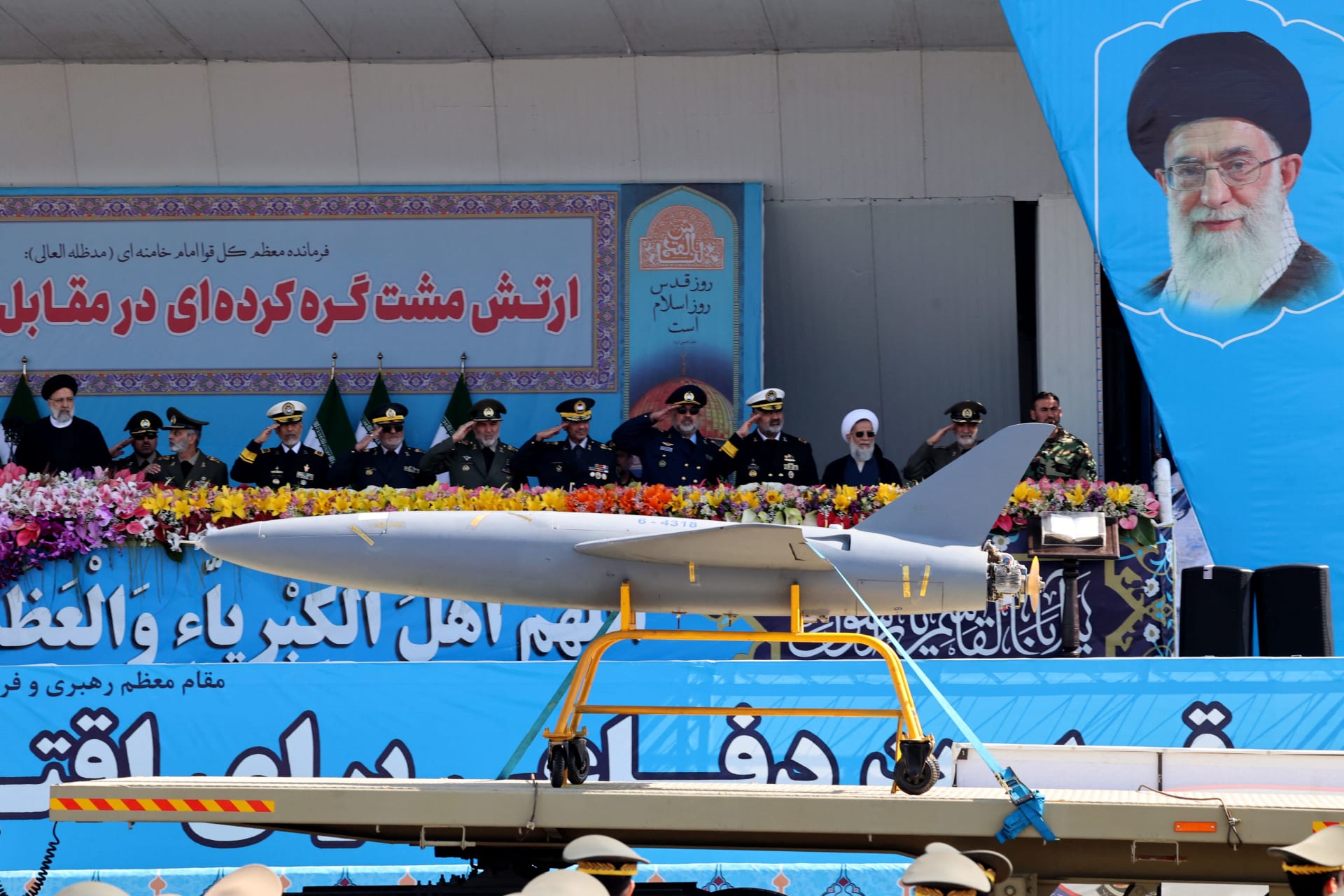
Kuwait, Saudi Arabia, the UAE, and Bahrain announced on Wednesday the success of their air defenses in intercepting a group of ballistic missiles and drones launched from Iran. This escalation occurs on the 26th day of the US-Israeli-Iranian war, as tensions in the region continue to rise.
In Kuwait, the Ministry of Foreign Affairs summoned Iranian Ambassador Mohammad Toutounji for the third time, delivering a note of protest against what it described as "brutal Iranian aggression." This follows an attack targeting fuel tanks at Kuwait International Airport, which the ministry considered a serious violation of international humanitarian law, given that the airport is deemed a civilian facility.
Details of the Incident
The General Staff of the Kuwaiti Army reported that air defenses successfully repelled hostile missile and drone attacks, urging citizens to adhere to security and safety instructions. The Kuwaiti Ministry of Defense detected 20 ballistic missiles and 9 drones over the past 24 hours.
In Saudi Arabia, the official spokesperson for the Ministry of Defense, Major General Turki Al-Maliki, confirmed that several drones targeting the Eastern Province and Riyadh were intercepted and destroyed. The Saudi Civil Defense reported debris from missiles falling on two houses in the Eastern Province, causing material damage without any reported injuries.
Meanwhile, in the UAE, the Ministry of Defense announced that air defenses engaged with 9 drones coming from Iran, noting that since the beginning of Iranian attacks, they have intercepted 357 ballistic missiles, 15 cruise missiles, and 1815 drones. The ministry confirmed its readiness to deal with any threats.
In Bahrain, the Bahrain Defense Force Command announced that it had intercepted and destroyed 153 missiles and 331 drones since the onset of Iranian aggression. The command emphasized that these attacks represent a blatant violation of international humanitarian law and a direct threat to regional peace and security.
Background & Context
These developments come amid escalating Israeli and American attacks on Iran since the end of February, which have resulted in hundreds of casualties, including high-ranking security officials. Tehran has responded to these attacks by launching missiles and drones towards Israel, in addition to targeting what it describes as American interests in the region.
Concerns are growing that these escalations could lead to a larger escalation in the regional conflict, as the involved countries seek to protect their territories and interests from increasing threats.
Impact & Consequences
These events underscore the rising tensions in the Arabian Gulf region, where Gulf countries face ongoing threats from Iran. Iranian attacks have resulted in casualties and damage to civilian facilities, prompting widespread condemnation from affected nations.
These attacks are a clear violation of international laws, necessitating strong reactions from the international community to ensure the protection of civilians and prevent further escalation of the conflict.
Regional Significance
These events directly affect the security and stability of the Arab region, as fears of new conflicts increase. Additionally, these developments may lead to enhanced security cooperation among Gulf countries to address shared threats.
In conclusion, attention remains focused on the evolving situation in the Gulf, where the current circumstances require urgent diplomatic actions to avoid further escalation.