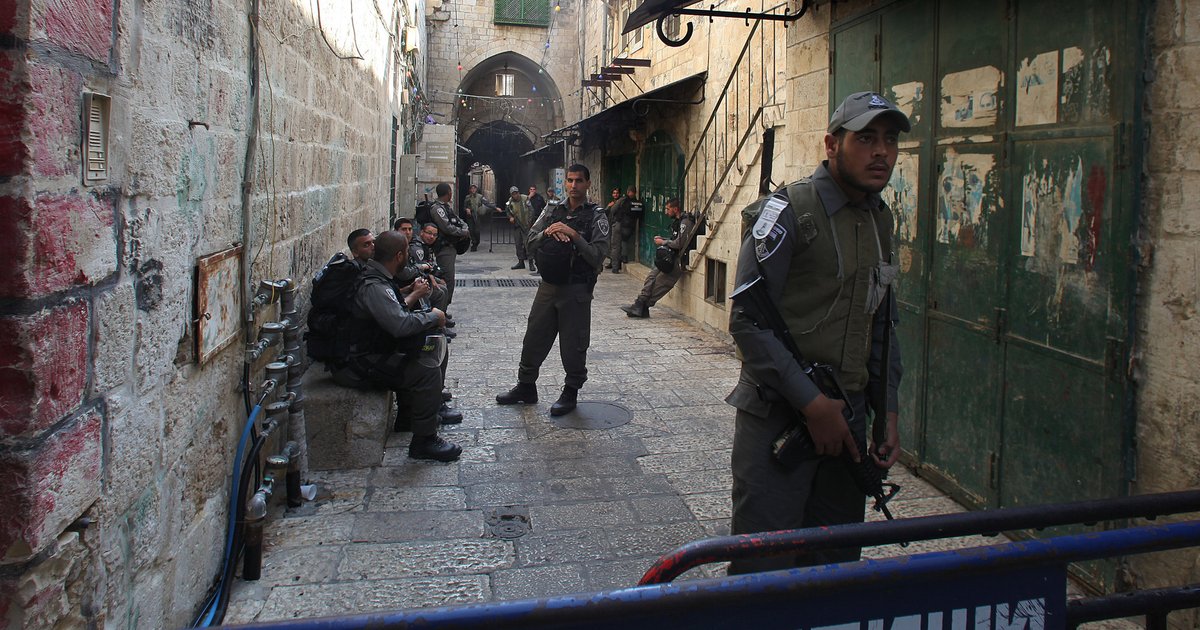
Foreign ministers from eight Arab and Islamic countries, including Jordan and the UAE, condemned Israel's restrictions on freedom of worship in Jerusalem. This was stated in a joint declaration that reflects their concern over the ongoing violations, emphasizing the need to respect the rights of Muslims and Christians to practice their religious rituals freely.
The statement issued by the foreign ministers of Jordan, the UAE, Indonesia, Pakistan, Turkey, Saudi Arabia, Qatar, and Egypt came at a time when Jerusalem is witnessing heightened tensions due to restrictions imposed on worshippers' access to holy sites, particularly the Al-Aqsa Mosque. The ministers pointed out that these restrictions contradict international laws that guarantee freedom of worship.
Details of the Event
In the statement, the ministers expressed their strong condemnation of Israeli measures that restrict freedom of worship, stressing the importance of maintaining the historical and legal status of Jerusalem. They also called on the international community to take effective steps to stop these violations, warning that the continuation of such policies could exacerbate the situation in the region.
The ministers emphasized that Jerusalem is not just a city, but a symbol of peace and coexistence among religions, and that any assault on freedom of worship there is an assault on human values. They noted that these restrictions negatively affect relations between peoples and increase tensions in the region.
Context and Background
Historically, Jerusalem has been a center of religious and political conflicts, with the Al-Aqsa Mosque being the first qibla and the third holiest site in Islam. Over the ages, the city has witnessed numerous events that have affected freedom of worship, especially under the Israeli occupation that began in 1967. Since then, holy sites have been subjected to restrictive policies aimed at altering the status quo.
In recent years, Israeli violations have escalated, with restrictions imposed on worshippers' access, especially during religious holidays and occasions. These policies have sparked angry reactions from Arab and Islamic countries, which consider Jerusalem a central issue in the Palestinian-Israeli conflict.
Consequences and Impact
These restrictions on freedom of worship in Jerusalem pose a threat to security and peace in the region. The continuation of these policies could lead to an outbreak of violence, threatening stability in the Palestinian territories and intensifying the conflict. Moreover, these violations may affect relations between Arab states and Israel, complicating peace efforts.
Furthermore, these policies could foster feelings of frustration and anger among Palestinians, potentially pushing them towards more extreme actions. Therefore, the international community is called upon to intervene immediately to stop these violations and protect the rights of Palestinians to practice their religious rituals.
Impact on the Arab Region
The issue of Jerusalem is a sensitive topic that affects relations between Arab countries and Israel. Any violation of freedom of worship in the holy city provokes strong reactions from Arab governments and peoples. These events could lead to escalating tensions in the region, reflecting the importance of the Palestinian issue in Arab politics.
In conclusion, the statement issued by the foreign ministers reflects the commitment of Arab and Islamic countries to defend the rights of Palestinians in Jerusalem. It emphasizes the necessity of collective action to confront the challenges facing freedom of worship in the holy city, highlighting the importance of Arab unity in the face of Israeli violations.