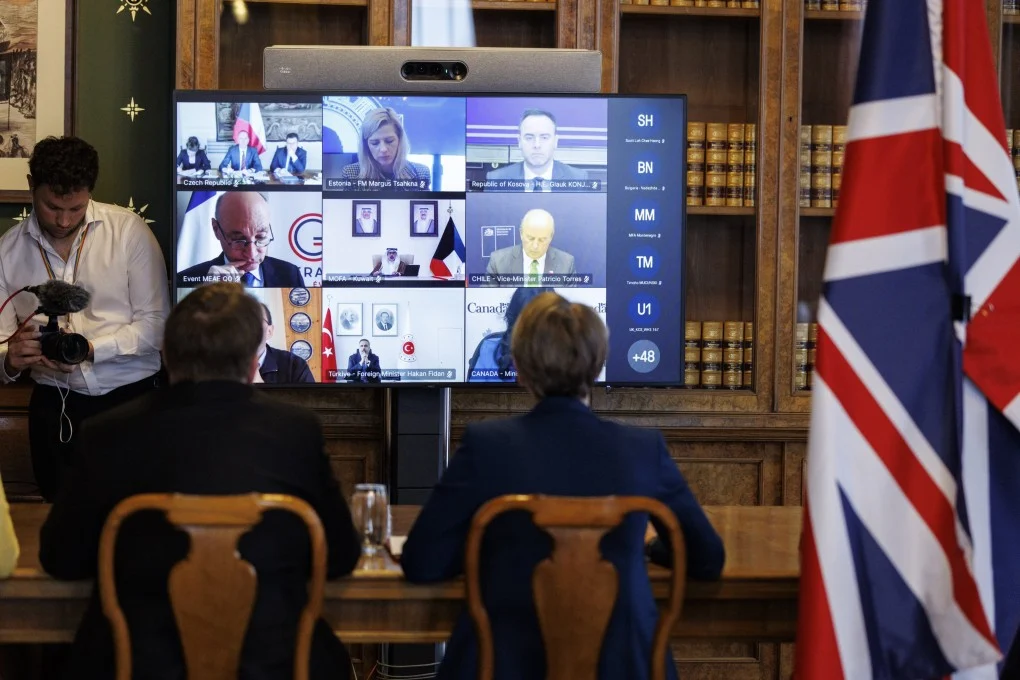
Approximately 40 countries met on Thursday to discuss joint actions aimed at reopening the Strait of Hormuz, one of the world's most important maritime corridors, after Iran imposed a blockade on this vital passage. British Foreign Secretary Yvette Cooper emphasized that Iran's "reckless" actions negatively impact global economic security, noting that this situation requires urgent action from the international community.
The virtual meeting, chaired by Cooper, included countries such as France, Germany, Canada, the United Arab Emirates, and India, where the challenges facing the global economy due to this blockade were discussed. Cooper pointed out that Iran is holding "the global economy hostage," necessitating a coordinated response from the concerned nations.
Details of the Event
These developments come at a sensitive time, as the Strait of Hormuz is a vital route for transporting oil and natural gas, with approximately 20% of the world's total oil exports passing through it. The participating countries expressed deep concern over Iran's actions, which they believe obstruct international trade and affect energy prices.
While Cooper called for concrete steps to be taken, U.S. President Donald Trump indicated that securing this waterway is the responsibility of other nations, raising questions about the United States' commitment to supporting its allies in the region.
Background & Context
Historically, the Strait of Hormuz has witnessed recurring tensions between Iran and Western nations, with Iran using this passage as a means to exert pressure on major powers during times of crisis. In recent years, tensions have escalated due to economic sanctions imposed on Iran, prompting it to take more aggressive actions in the region.
The Iranian blockade of the Strait of Hormuz comes at a time when major countries are seeking to enhance energy security, especially given the ongoing fluctuations in global oil markets. These tensions have impacted oil prices, further underscoring the importance of the current meeting.
Impact & Consequences
The meeting is expected to have significant implications for international relations, particularly in the Middle East. If the participating countries can reach a joint agreement, it could lead to improved security in the region and enhance trade flows.
On the other hand, the continuation of the Iranian blockade could exacerbate economic conditions in oil-dependent countries, placing additional pressures on their governments. Furthermore, any potential military escalation in the region could affect regional stability and complicate the situation further.
Regional Significance
Arab countries, especially those located along the shores of the Arabian Gulf, are considered the most affected by the tensions in the Strait of Hormuz. These nations heavily rely on exporting oil through this passage, and any threat to navigation could directly impact their economies.
Moreover, the stability of the Arab region is closely linked to security in the Strait of Hormuz, making it imperative for Arab nations to collaborate with major powers to ensure freedom of navigation and protect their economic interests.