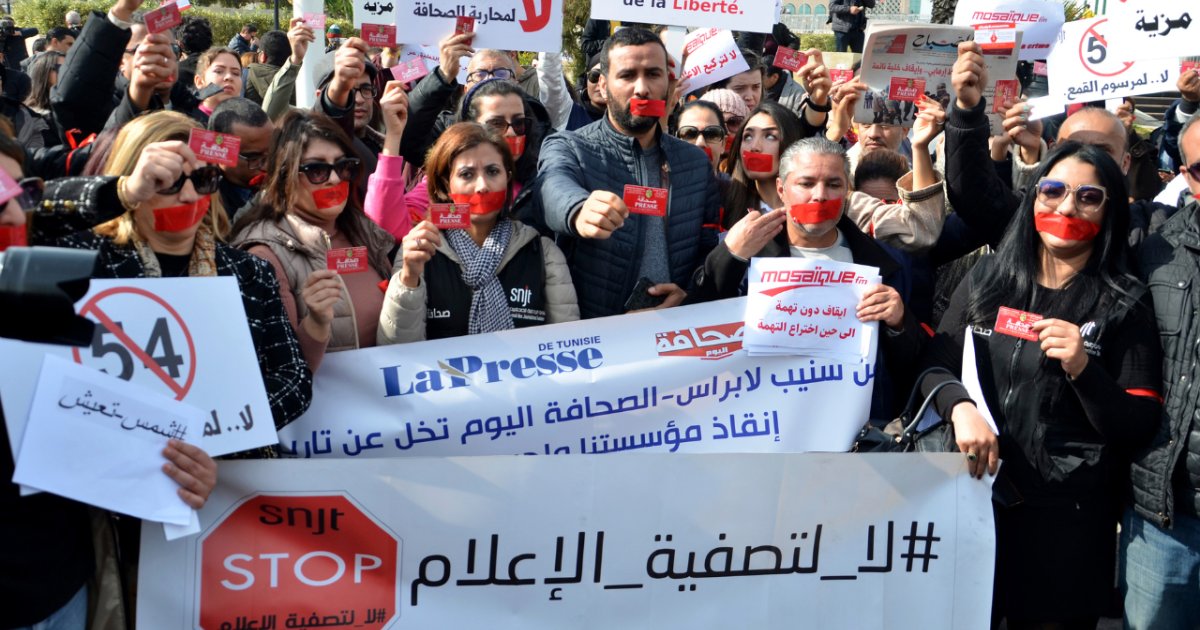
Tunisian and international organizations have condemned the ruling against Anas Hammadi, president of the Tunisian Judges' Association, which sentences him to one year in prison on charges of 'disrupting freedom of work.' This verdict follows his involvement in protests against the dismissal of 57 judges in 2022, raising widespread concerns about the independence of the judiciary in Tunisia.
This action is seen as part of a series of measures taken by Tunisian authorities against judges and legal unions, sparking fears of a decline in democracy and human rights in the country. Numerous human rights organizations have expressed their concerns regarding the impact of these actions on the judicial system.
Details of the Ruling
A Tunisian court issued its ruling on Monday, where Hammadi was charged with disrupting freedom of work, which many view as a direct targeting of judges and legal unions. This ruling comes at a sensitive time when Tunisia is experiencing increasing political and social tensions, as many judges and activists strive to defend judicial independence.
It is noteworthy that Hammadi had participated in widespread protests against the decision to dismiss 57 judges, a decision many consider arbitrary and aimed at undermining judicial independence. These protests have strained relations between the government and legal unions.
Background & Context
Historically, Tunisia has undergone significant transformations since the revolution that ousted the Ben Ali regime in 2011. However, recent years have seen a decline in public freedoms, including freedom of expression and judicial independence. The government has faced numerous criticisms for its attempts to control judicial institutions.
In recent years, there have been increasing calls from judges and legal unions to protect judicial independence. Nonetheless, the government has adopted policies that contradict these demands, leading to heightened tensions between the two sides.
Impact & Consequences
The ruling against Hammadi serves as a strong message to judges and legal unions in Tunisia, reflecting a regression in freedoms and increasing their fears of targeting. This ruling may lead to further protests and tensions in the Tunisian streets, as many judges and activists seek to defend their rights.
Moreover, this ruling could affect Tunisia's image in the international community, as some may view it as evidence of a decline in democracy and human rights in the country. The government may face greater international pressure from human rights organizations and Western countries calling for respect for human rights.
Regional Significance
The case of Hammadi is part of a broader phenomenon occurring in many Arab countries, where public freedoms and fundamental rights are under threat. Amid political and economic crises, governments seek to consolidate their power at the expense of citizens' rights.
The decline of judicial independence in Tunisia could have negative repercussions on neighboring countries, as this situation may inspire other governments to adopt similar policies. Therefore, maintaining judicial independence is vital to ensure citizens' rights in the region.
In conclusion, the future of the judiciary in Tunisia remains uncertain amid these developments. It requires the international community to pressure Tunisian authorities to ensure respect for human rights and judicial independence.