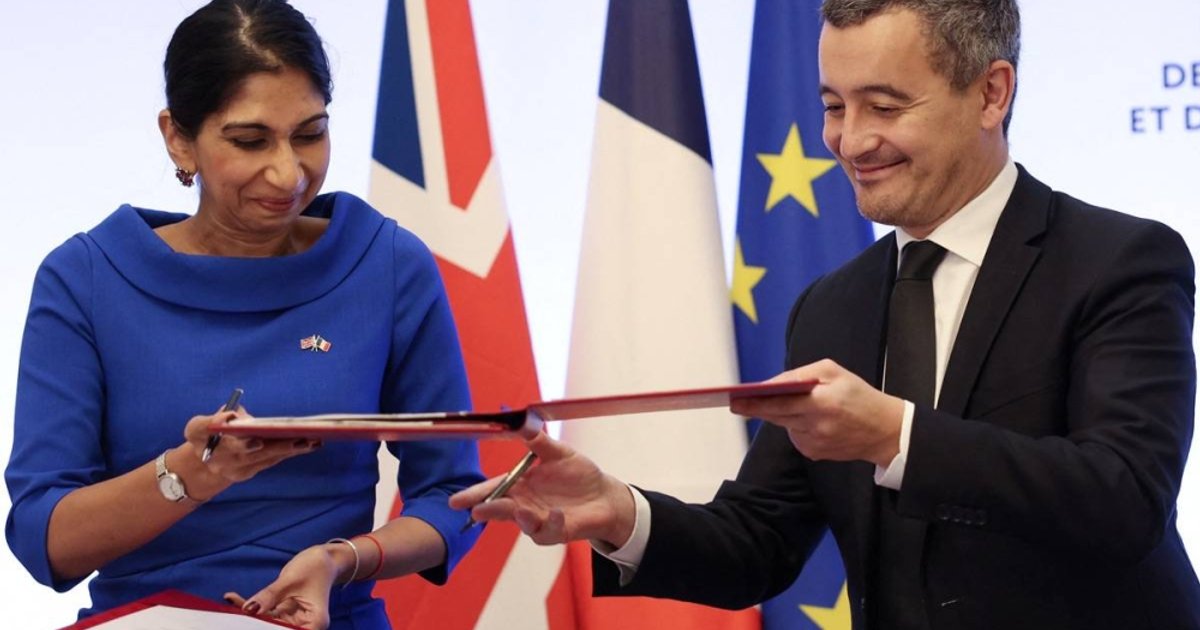
Britain and France are preparing to lead a wide-ranging diplomatic and military initiative, as they chair talks involving approximately 30 countries this week, aimed at forming an international coalition to reopen the Strait of Hormuz. This move comes in light of the restrictions imposed by Iran on navigation in the strait since the onset of the American-Israeli war against it in February, according to British media reports.
The Guardian reported that London has offered to host an international security summit to devise a "feasible collective plan" for reopening the strait, at a time when the economic repercussions of the conflict with Iran continue to unfold.
Details of the Event
This summit follows a statement signed by more than 30 countries, including most of the NATO member states, pledging to make "appropriate efforts" to resume shipping through this vital trade corridor. This comes after former President Donald Trump criticized allies, labeling them as "cowards" for failing to provide assistance.
The Guardian quoted a British defense ministry official stating that the meeting will be held at the level of defense chiefs, with the possibility of inviting other nations that did not sign the statement. The meeting is expected to discuss how to reopen the shipping lane, through which approximately 20% of global oil supplies pass. The British defense ministry has already sent military planners to the U.S. Central Command (CENTCOM) to explore options for tanker passage through the strait.
Background & Context
While the British defense ministry confirmed that it has begun examining possible options, such as sending a Royal Navy ship or a commercial vessel equipped with autonomous systems to clear mines, this will only occur after the conflict subsides. European nations appear hesitant to engage in the war, with a NATO diplomat stating that "allies do not agree to be called into a war they did not start, without any idea of what the United States will do."
The newspaper also reported that European government officials indicated that messages from the U.S. president regarding what he wants from allies in his war against Iran are confusing, making any efforts to assist in reopening the Strait of Hormuz stagnant. Officials clarified that Washington has not made any formal requests for equipment, while allies are reluctant to send military assets to the region for fear of being attacked by Iran.
Impact & Consequences
In this context, German Defense Minister Boris Pistorius emphasized the need for greater predictability and clarity in strategic vision, reflecting the uncertainty surrounding European nations' stance toward the United States. This situation reflects a double standard, as American officials have repeatedly pressured Europeans to focus on defending their continent, while now asking them to deploy in the Middle East.
A senior European government official described the situation as "ridiculously inconsistent," as the United States requests allies to support them in the Middle East while simultaneously demanding they focus on other issues, such as supporting Ukraine.
Regional Significance
This meeting represents a critical step in the context of geopolitical tensions in the region, as reopening the Strait of Hormuz could significantly impact global oil supplies and prices. Any escalation in the conflict may also have negative repercussions on Arab economies, particularly those dependent on oil.
In conclusion, it remains to be seen how these discussions will evolve and whether they will lead to tangible results in reopening the Strait of Hormuz, amidst the increasing challenges faced by the involved nations.