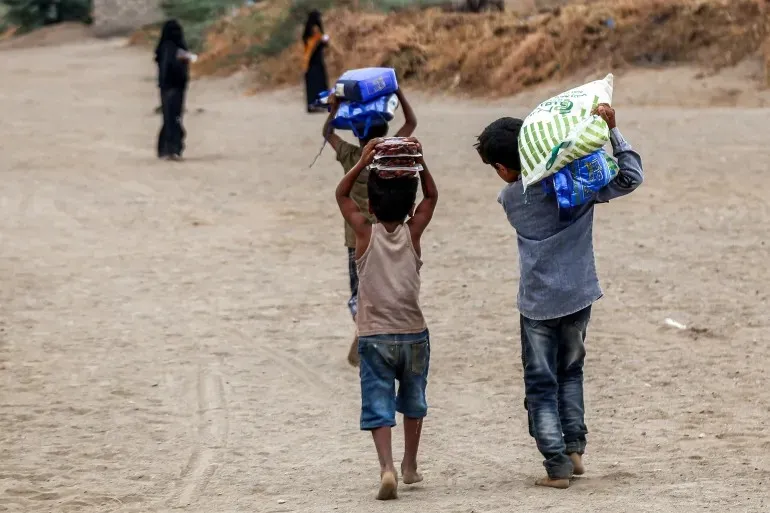
International warnings are increasing about the negative impacts of military escalation in the Middle East on the humanitarian situation in Yemen, which is already suffering from one of the worst humanitarian crises in the world. With relief operations declining in large parts of the country, Yemenis face the danger of sliding into a new phase of economic and humanitarian deterioration.
The economic developments resulting from U.S.-Israeli military operations against Iran, and the latter's attacks on regional countries, indicate that regional tensions could significantly affect the internal situation in Yemen. This situation adds pressure on millions of people living under extremely fragile living conditions.
Details of the Situation
In the city of Aden, anxiety among residents is rising, as long queues are seen in front of fuel and domestic gas stations amid fears of supply shortages and rising prices. The Yemeni Oil Company has confirmed the regular supply of fuel to government and private stations, warning against rumors accusing unspecified entities of trying to incite chaos.
Despite stable fuel prices, local sources have reported signs of a crisis in domestic gas due to increased demand for purchase and storage, leading to price hikes at unregulated sales outlets, raising concerns among residents about the potential emergence of a black market.
Background & Context
Abdul Wahid Al-Aubli, a Yemeni economic researcher, considers fuel costs to be one of the biggest challenges facing the Yemeni economy. He points out that the cost of importing fuel three years ago was around $3.5 billion, and it is expected to rise by $1 billion if the current crisis continues, which will lead to increased prices of goods and services.
The organization