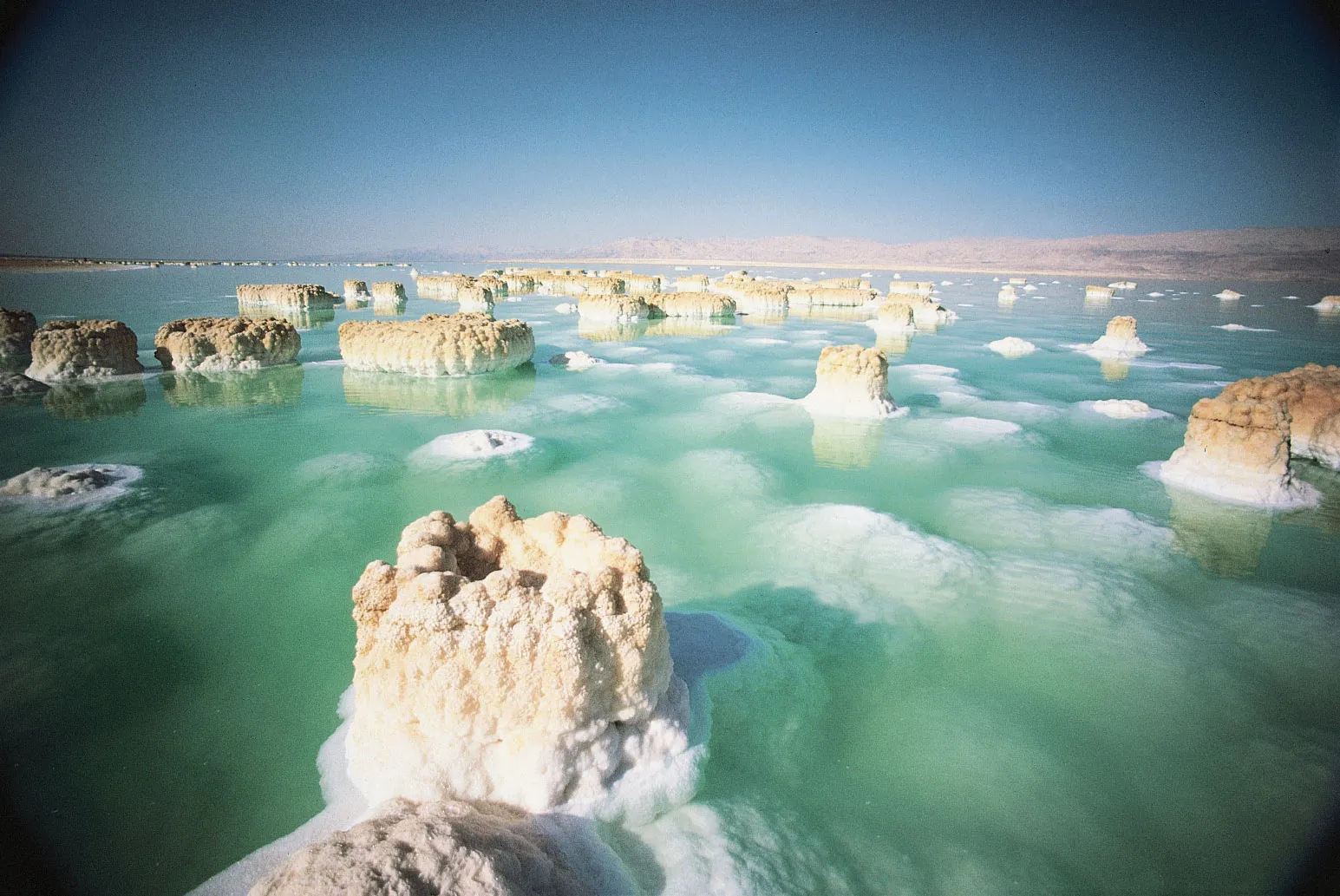
The recent change in the color of the Dead Sea following the latest rainstorms has raised numerous questions about the reasons behind this natural phenomenon. Scientific studies, along with expert statements, clarify that this change is merely a temporary result of chemical and environmental reactions caused by floodwaters that surged into the sea.
Satellite images and live observations have documented this noticeable change in water color, which coincided with heavy rainfall that began on March 18. The floodwaters, laden with silt and nutrients, mixed with the saline water, resulting in a shift in color towards greenish and brownish tones.
Details of the Event
Dr. Ahmed Radwan, a marine physics professor at the National Institute of Oceanography in Egypt, explained that the arrival of floodwaters from the mountains and valleys, carrying massive amounts of silt, does not lead to rapid sedimentation of these particles as occurs in regular seas. Instead, these particles remain suspended for longer periods due to the high density of the Dead Sea water, leading to increased turbidity and a color shift from clear blue to brownish or yellowish shades.
The nature of the Dead Sea water, which has a salinity approximately ten times that of regular seas, triggers a series of physical and chemical processes when mixed with fresh rainwater. Dr. Ahmed added that the salinity of the Dead Sea makes its composition entirely different from that of other seas, as it contains a high concentration of magnesium and potassium salts, further increasing the water's density.
Background & Context
Historically, the Dead Sea is considered one of the most peculiar bodies of water in the world, renowned for its high salinity. These unique characteristics create a special environment where living organisms cannot easily thrive. However, environmental changes such as rainfall and floods can lead to noticeable alterations in the chemical composition of the water.
Previous studies have addressed the effects of mixing fresh water with Dead Sea water, showing that phosphates play a significant role in stimulating the growth of microorganisms such as green algae and halophilic bacteria. These studies indicate that environmental changes can lead to the flourishing of living organisms, thereby altering the color of the water.
Impact & Consequences
The change in the color of the Dead Sea is not merely an aesthetic phenomenon; it carries significant environmental implications. The chemical changes that occur as a result of mixing fresh water with saline water lead to a redistribution of salts, altering the chemical composition of each water layer. This change can impact marine life and disrupt the ecological balance in the Dead Sea.
Additionally, this phenomenon highlights the importance of studying climate changes and their effects on water bodies. Amid global climate changes, such phenomena may become more common, necessitating greater attention from researchers and policymakers.
Regional Significance
The change in the color of the Dead Sea may attract the interest of both tourists and researchers, potentially enhancing eco-tourism in the region. The Dead Sea, regarded as a unique tourist destination, could benefit from these natural phenomena to draw more visitors.
However, efforts must be made to preserve the marine environment and ensure that climate changes do not negatively impact this natural landmark. Understanding these phenomena can aid in developing strategies to maintain the Dead Sea as a tourist and environmental destination.