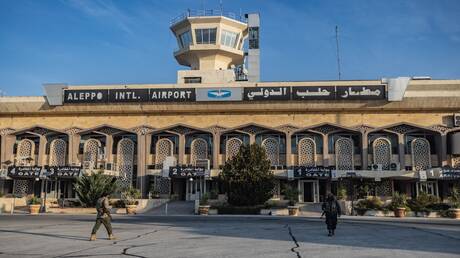
Recent reports from Aleppo International Airport highlight a complaint regarding discriminatory practices within one of its facilities. Alaa Salal, the Director of the Government Communication Directorate at the Syrian Civil Aviation Authority, confirmed that the airport management is seriously following up on a complaint filed by a group of non-hijab-wearing female travelers, who stated that a kiosk at the airport refused to sell products to them.
This incident comes at a sensitive time, as such practices raise questions about individual rights and freedom of choice in public spaces. The affected travelers expressed their dissatisfaction with this behavior, which they consider discriminatory based on their appearance, contradicting fundamental human rights principles.
Details of the Incident
According to available information, the complaint was submitted by a group of female travelers who experienced an embarrassing situation while at the airport. They indicated that the kiosk operator refused to provide service to them due to their not wearing hijabs. This matter has sparked varied reactions among travelers and airport staff, prompting the airport management to take steps to investigate the incident.
The investigations are expected to include an assessment of the kiosk operator's behavior, along with a review of the policies in place at the airport to ensure that such incidents do not recur in the future. The airport management will also work to enhance awareness regarding travelers' rights and the necessity of respecting cultural and religious diversity.
Background & Context
Aleppo, once an important commercial and cultural center in Syria, has undergone significant changes over the past years due to the ongoing conflict. With the city regaining control, the Syrian government aims to rebuild infrastructure and promote tourism. However, issues related to individual rights and discriminatory practices remain ongoing challenges.
Concerns are growing that such incidents could negatively impact the airport's image as a safe and comfortable destination for travelers. There is an urgent need to foster a culture of respect and tolerance in public spaces, especially in light of the social and political challenges facing the country.
Impact & Consequences
This incident could lead to widespread repercussions, not only at the airport level but also for tourism in Syria as a whole. Discriminatory practices may influence travelers' decisions to visit the country, potentially resulting in a decline in tourist numbers and consequently affecting the local economy.
Moreover, local and international reactions to this incident could impact the Syrian government's reputation regarding human rights. Therefore, the airport management is required to take swift and effective measures to address this issue and ensure it does not happen again.
Regional Significance
This incident represents part of a broader phenomenon concerning women's rights in the Arab world. Women in many countries face challenges related to discrimination and gender-based violence. Addressing these issues requires collective efforts from governments and civil society to promote women's rights and ensure a safe environment for all.
Ultimately, there is hope that this case will contribute to enhancing dialogue around human rights and equality in the region, potentially leading to positive changes in policies and practices.