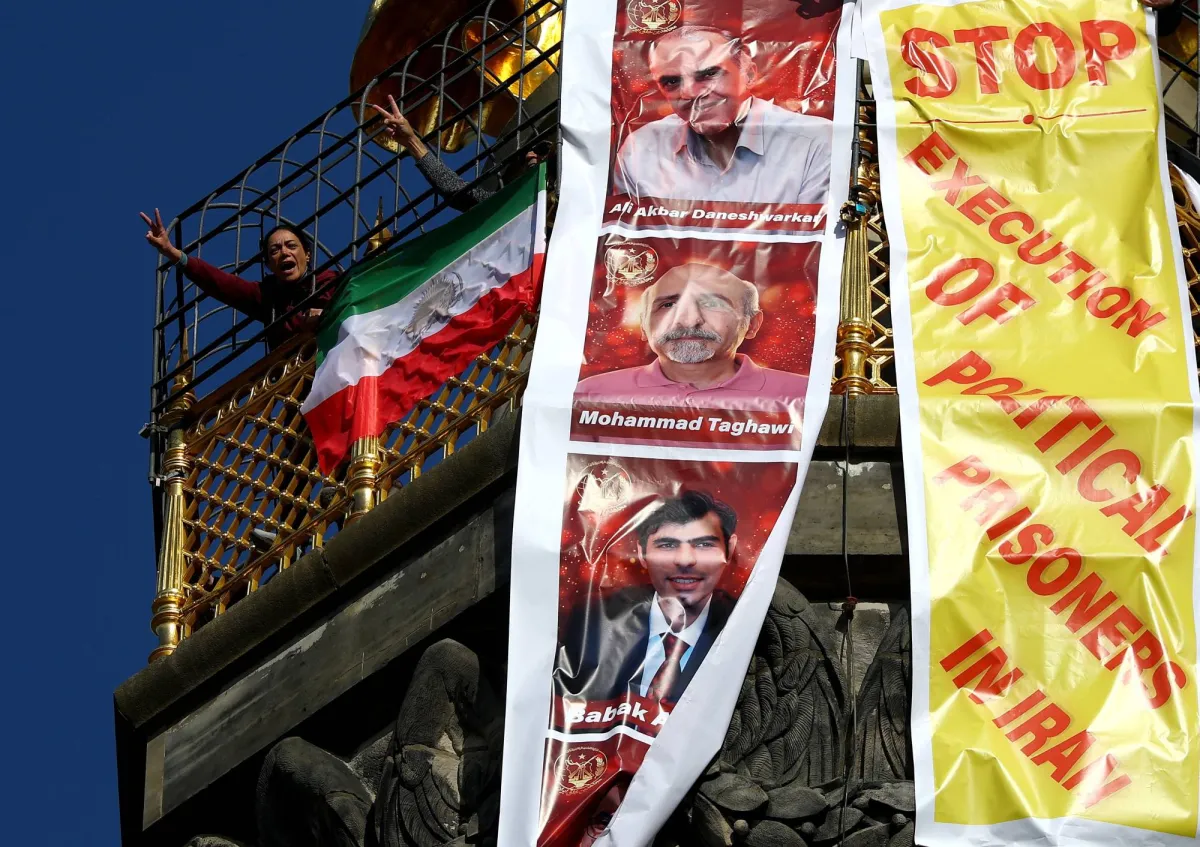
The pace of executions in Iran has intensified, with authorities executing a cleric who participated in the protests that swept the country earlier this year. This comes at a time when tensions between Iran and both the United States and Israel are escalating, increasing the severity of repression against dissenters.
Ali Fahim, aged 23, was hanged after being convicted of involvement in an attack on a base belonging to the Basij forces, which are part of the Iranian Revolutionary Guard, during the protests that erupted in January. According to human rights organizations, Fahim was one of seven men sentenced to death in February, with four of them executed so far, putting the remaining three at imminent risk of execution.
Details of the Event
Agence France-Presse reported that the execution took place after the Supreme Court upheld the sentence against Fahim, who was described by state media as an "enemy agent." Human rights organizations have noted that those convicted in this case are considered political prisoners, having been subjected to torture and denied contact with a lawyer during their trials.
These executions occur in the context of protests that began in late December, initially sparked by rising living costs but quickly transforming into anti-regime demonstrations. Authorities have responded to these protests with a severe crackdown that has resulted in thousands of deaths.
Background & Context
After a period of halting executions following the U.S.-Israeli attack on Iran, authorities resumed executions, with ten political prisoners executed in just the past eight days. Among these, four were executed in connection with the protests, while the others were executed on charges of belonging to the banned "People's Mujahedin" group.
Concerns are growing over the use of executions as a means to suppress opposition, with Amnesty International stating that the Iranian judiciary has become a tool of repression aimed at instilling fear among those demanding political change. The director of Iran Human Rights confirmed that these executions reflect the Islamic Republic's strategy in confronting its people amid external conflict.
Impact & Consequences
These executions exacerbate the humanitarian situation in Iran, as many believe the regime uses them as a means to intimidate citizens and prevent them from expressing their opinions. Additionally, these measures may lead to increased international pressure on Iran, with expectations of rising calls from the international community to halt the use of the death penalty.
Simultaneously, these events could heighten tensions between Iran and Western countries, potentially affecting future negotiations regarding Iran's nuclear program. This situation serves as a real test for Iranian foreign policy amid growing pressures.
Regional Significance
The events in Iran have significant implications for the Arab region, as Arab countries closely monitor developments in Iran, especially amid rising tensions between Tehran and Washington. The repression faced by protesters in Iran may inspire protest movements in other countries in the region.
In conclusion, all eyes remain fixed on Iran and the unfolding situation, with expectations that protests will continue in the face of repression, potentially leading to worsening humanitarian and political crises in the country.