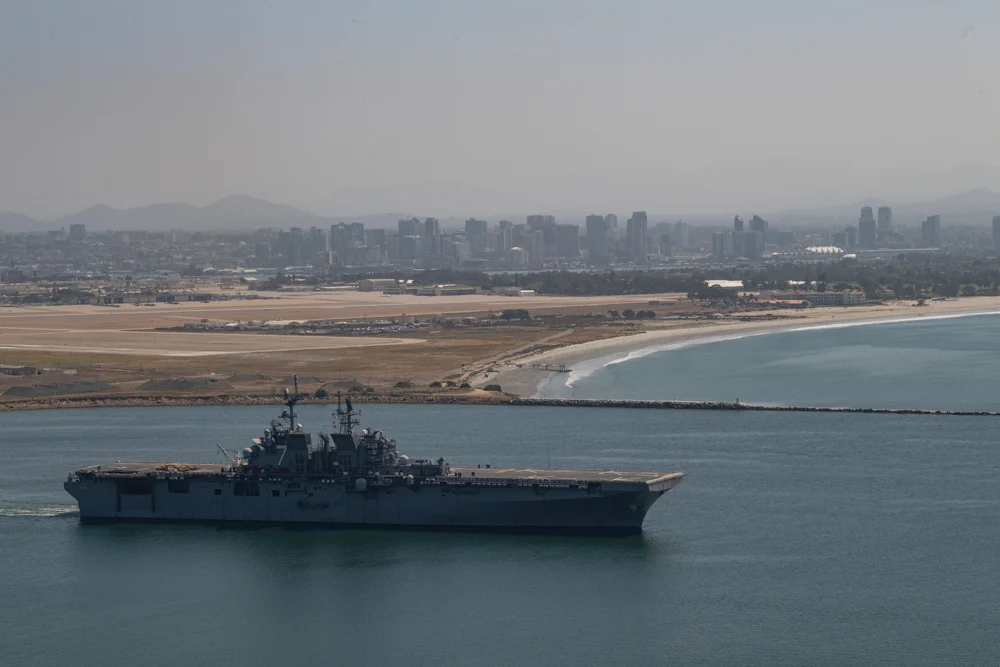
Iran's Parliament Speaker, Mohammad Baqer Qalibaf, has accused the United States of planning a ground attack on Iran, despite its claims regarding diplomacy. This accusation follows the arrival of the USS Tripoli, an American aircraft carrier carrying approximately 3,500 soldiers, to the Middle East last Friday.
These developments occur amidst a notable escalation in conflict, with American and Israeli forces conducting airstrikes on Iran, leading to increased tensions in the region. Iran has retaliated against these attacks by targeting certain Gulf states, negatively impacting energy markets and threatening the global economy.
Details of the Incident
Qalibaf stated in a statement published by the official Iranian news agency (IRNA): "The enemy sends public messages for negotiation and dialogue while secretly planning a ground attack." He added: "Our men are waiting for the arrival of American soldiers on the ground to receive punishment." These statements reflect Iranian concerns over a potential escalation in American military operations in the region.
The Washington Post reported that the U.S. Department of Defense (Pentagon) was preparing plans for ground operations that could include strikes on Kharq Island and sites near the Strait of Hormuz. However, President Donald Trump has not yet approved any troop deployments.
Background & Context
Historically, relations between Iran and the United States have been tense since the 1979 Islamic Revolution. These relations have escalated in recent years, particularly after the U.S. withdrawal from the Iran nuclear deal in 2018. Since then, Washington has imposed strict economic sanctions on Tehran, exacerbating the country's economic and social conditions.
At the same time, Iran has continued to develop its nuclear program, raising international concerns about the possibility of it acquiring nuclear weapons. These dynamics have led to heightened military tensions, with the region becoming a theater for complex military operations involving multiple countries.
Impact & Consequences
Iranian statements indicate that Tehran is prepared to confront any military escalation from the United States. Any military operations could provoke strong reactions from Iran, increasing the likelihood of a widespread conflict in the region. Furthermore, rising tensions could impact global oil prices, as the Strait of Hormuz is a vital point for oil transportation.
Moreover, any military escalation could affect stability in Gulf countries, intensifying regional conflicts. This could have negative repercussions on the global economy, especially given the current economic crises.
Regional Significance
The current events in Iran have a direct impact on Arab countries, especially those with close ties to the United States. Gulf states, such as Saudi Arabia and the United Arab Emirates, are concerned about escalating tensions and may take steps to bolster their military security.
Additionally, the situation in Iraq, Syria, and Lebanon is significantly affected by Iranian-American tensions. Iran-backed armed groups in Iraq and Syria may increase their activity if the conflict escalates, complicating security conditions in the region.
In conclusion, the situation in the Middle East appears to be heading towards further complexity, with growing fears of military escalation that could lead to a comprehensive conflict. The international community must act urgently to alleviate tensions and prevent the outbreak of a new war in the region.