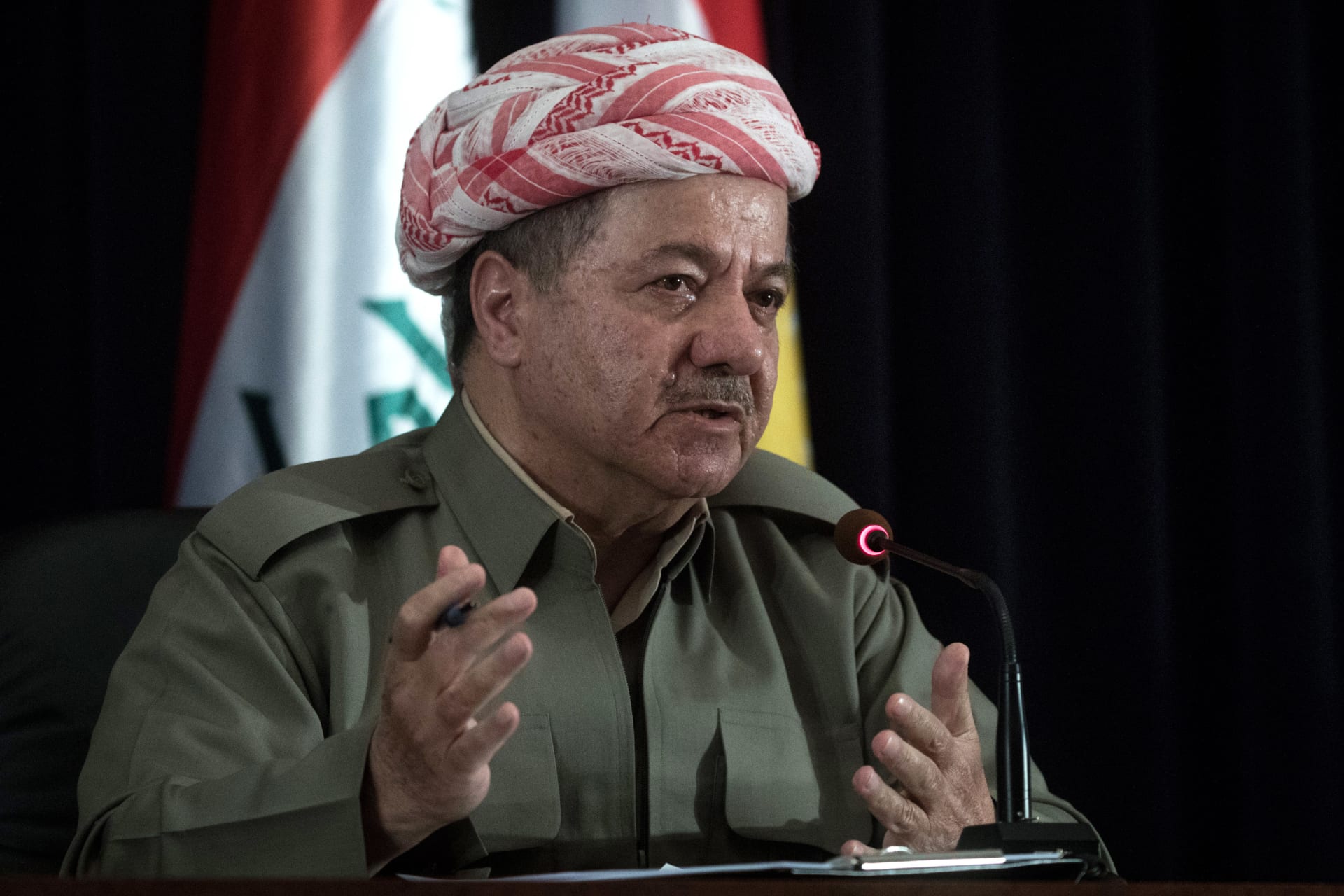
The President of the Kurdistan Region of Iraq, Nechirvan Barzani, confirmed that Iranian authorities admitted their involvement in the bombing that targeted a Peshmerga headquarters on the outskirts of Erbil, the capital of the region. This statement came during his attendance at a memorial service for the Peshmerga who lost their lives in this attack, where Barzani noted that Iran promised to conduct a comprehensive investigation into the incident.
In his remarks, Barzani emphasized that the Kurdistan Region would not be a source of threat to neighboring countries, stressing the importance of maintaining positive relations with surrounding nations. This statement has elicited mixed reactions in political and media circles, with some considering it a positive step towards calming tensions in the region.
Details of the Incident
The bombing occurred at a Peshmerga headquarters in an area near Erbil, resulting in the deaths of six Kurdish forces. This incident comes at a sensitive time, as the region is witnessing increasing tensions between Iran and other countries, in addition to the internal situation in Iraq.
Barzani, who attended the memorial service, expressed deep sorrow over the loss of these heroes, indicating that such incidents do not reflect the region's will to maintain security and stability. He also stressed the necessity of taking serious steps to prevent the recurrence of such incidents in the future.
Background & Context
Historically, the relations between the Kurdistan Region of Iraq and Iran have experienced numerous fluctuations, with periods of cooperation and others of tension. In recent years, pressures on the region have increased due to regional conflicts, complicating the situation further. The recent bombing is one of the most prominent events reflecting these tensions and comes at a critical time for Iraq, which is striving for stability after years of conflict.
Iran, which considers itself an influential regional power, often intervenes in Iraq's internal affairs, raising concerns among many parties. These interventions are not new but have become more complicated with increasing international pressures on Tehran.
Impact & Consequences
The potential repercussions of this bombing could be far-reaching, as it may lead to an escalation of tensions between the Kurdistan Region and Iran. It could also affect relations between the region and Baghdad, as each party seeks to assert its sovereignty and independence.
This incident is likely to increase pressures on the Baghdad government to address external threats more seriously. It may also provoke reactions from neighboring countries that are closely monitoring the situation, which could lead to changes in regional policies.
Regional Significance
This event reflects the security challenges facing the Arab region as a whole, where regional and international interests intersect in a complex manner. The Iranian bombing of the Peshmerga highlights the urgent need for greater cooperation among Arab countries to confront common threats.
Furthermore, this incident may lead some countries to reevaluate their relations with Iran, especially under the current political circumstances. It is crucial for Arab nations to remain vigilant regarding developments in Iraq and the Kurdistan Region, as these events can impact regional stability overall.
In conclusion, the question remains as to how the concerned parties will handle this crisis and whether it will lead to positive steps towards achieving peace and stability in the region.