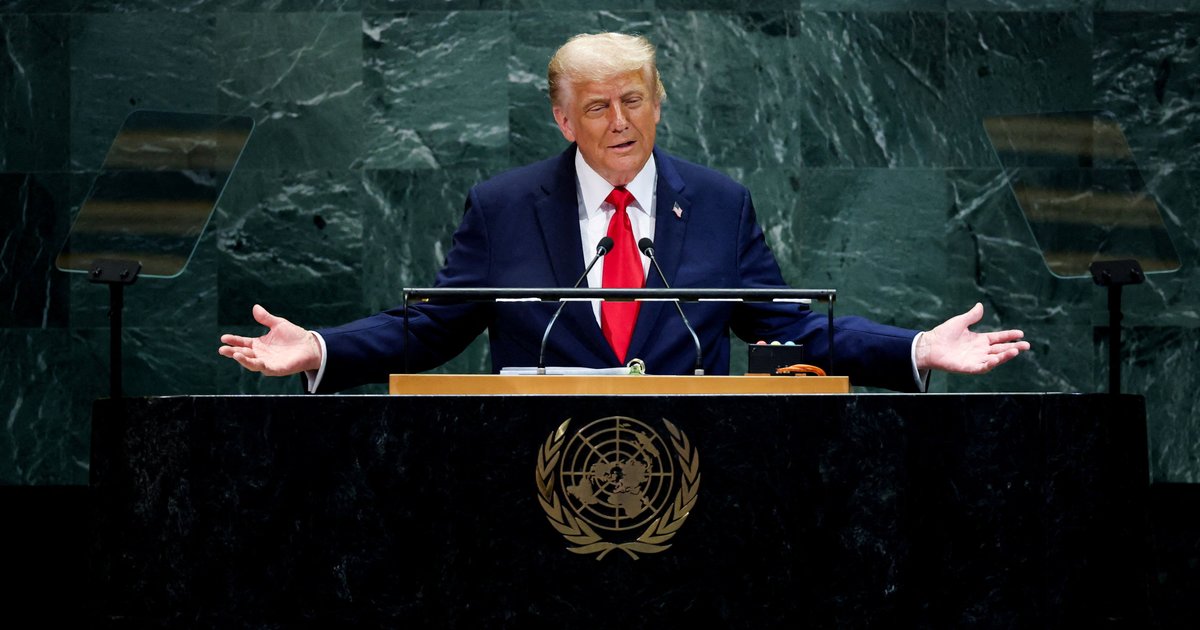
Former U.S. President Donald Trump announced that Iran has agreed to not possess nuclear weapons, a statement that carries significant implications for the future of relations between Tehran and Washington. These remarks come at a time when tensions in the region are escalating, raising questions about the fate of potential nuclear agreements.
These statements coincide with increasing diplomatic efforts by Western nations to curb Iran's nuclear activities, as Iran has faced severe sanctions due to its controversial nuclear program. Trump emphasized that this step represents an important advancement towards achieving stability in the region.
Details of the Announcement
In his remarks, Trump clarified that Iran has shown a willingness to cooperate with the international community regarding its nuclear program, suggesting that this step could pave the way for new negotiations. This announcement has elicited mixed reactions from officials in Washington, with some considering this progress as a means to ease tensions.
However, concerns remain that Iran may exploit these negotiations to gain further strategic advantages. Some analysts have pointed out that the American statements could be part of a larger strategy aimed at pressuring Tehran to make greater concessions.
Background & Context
Historically, relations between the United States and Iran have been strained, particularly following Trump's withdrawal from the nuclear agreement in 2018. This withdrawal escalated tensions and reinstated strict economic sanctions on Iran, significantly impacting its economy.
In recent years, Iran has sought to strengthen its relationships with other countries in the region, including Russia and China, in an attempt to alleviate Western pressures. Nevertheless, Trump's recent statements may indicate the possibility of reopening channels for dialogue, which could significantly affect regional dynamics.
Impact & Consequences
If Trump's statements are confirmed, it could lead to radical changes in U.S. foreign policy towards Iran. This might encourage European nations to reconsider their stance on Tehran, potentially leading to a resumption of negotiations regarding the nuclear agreement.
On the other hand, this move could raise concerns among some of the United States' allies in the region, such as Israel, which views Iran as an existential threat. Therefore, any change in U.S. policy may require a reassessment of their security strategies.
Regional Significance
Neighboring Arab countries, such as Saudi Arabia and the United Arab Emirates, are among the most affected by developments in U.S.-Iranian relations. If negotiations succeed, it could lead to greater stability in the region, positively impacting both the economy and security.
However, any agreement may require Arab nations to reassess their alliances and security strategies, especially given the ongoing tensions with Iran. Thus, these statements could serve as a turning point in regional relations.
In conclusion, Trump's remarks regarding Iran remain a focal point of interest in political and diplomatic circles. If this information is confirmed, it could open new avenues for cooperation or tension in the region, necessitating careful monitoring by all concerned parties.