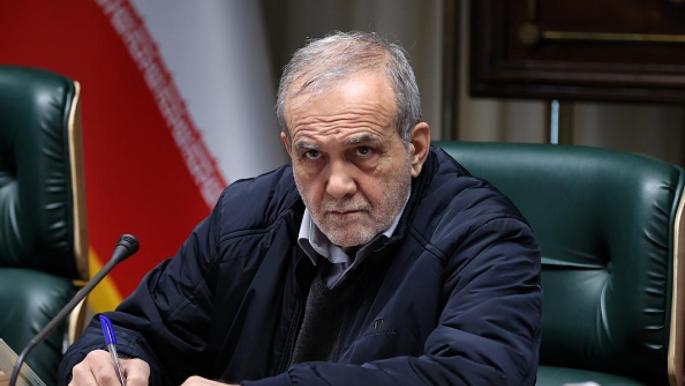
Iranian President Masoud Bezhakian announced today that any decision regarding the end of the war will only be made after all conditions proposed by Iran are fulfilled. Bezhakian emphasized the importance of these conditions to ensure the 'dignity of the country', reflecting Tehran's steadfast position in negotiations.
Bezhakian's statements come at a sensitive time in the region, where military and political tensions continue to escalate. It appears that Iran is seeking to strengthen its position in any future negotiations, reflecting its desire to achieve strategic gains.
Details of the Announcement
In a press conference, Bezhakian clarified that Iran will not accept any settlement that does not meet its core demands. These statements come amid increasing international pressure on Iran to end the ongoing conflict, which has significantly affected regional stability.
The Iranian president also noted that his country will not back down from its position, and any decision related to peace must be balanced and take into account the interests of the Iranian people. These remarks also reflect the challenges Iran faces under the economic sanctions imposed on it.
Background & Context
Historically, Iran has experienced numerous military conflicts, both within its borders and with its neighbors. The current conflict is part of a broader struggle between Iran and other countries in the region, including the United States and its allies. For years, Iran has sought to enhance its influence in the region, leading to heightened tensions.
The conditions proposed by Iran in negotiations are part of its strategy to bolster its position on the international stage. This strategy has impacted Iran's relations with Western countries, where Tehran is accused of escalating its foreign policy.
Impact & Consequences
The continuation of the war and the failure to reach an agreement could exacerbate the humanitarian situation in the region. This scenario may also negatively impact the Iranian economy, which is already suffering from sanctions. If the war persists, pressure on the Iranian government may increase from the populace suffering from the consequences of the conflict.
On the international front, these statements could heighten tensions between Iran and Western nations, potentially hindering any diplomatic efforts aimed at resolving the conflict. Additionally, these circumstances may affect relations between Iran and neighboring countries, complicating the regional landscape further.
Regional Significance
Bezhakian's remarks hold particular significance for Arab countries, as any escalation in the conflict could impact the stability of the entire region. Arab nations that share borders with Iran or are influenced by its actions may find themselves in a difficult position if tensions continue.
Furthermore, any escalation in the conflict could lead to an influx of refugees into neighboring countries, increasing the burdens on these nations. The situation may also affect oil prices and financial markets, reflecting on the global economy.
In conclusion, President Masoud Bezhakian's statements remain an indicator of Tehran's steadfast position in the face of international pressures. Achieving peace in the region requires genuine diplomatic efforts that consider all parties involved.