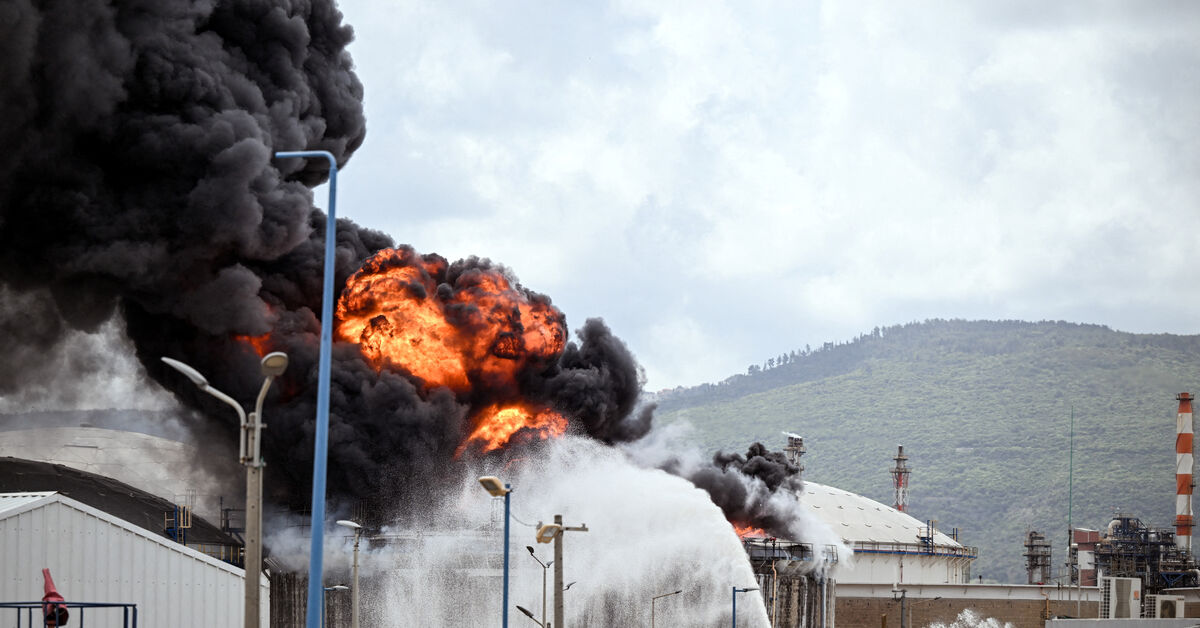
Iran launched an attack on a fully loaded Kuwaiti oil tanker named Al-Salmi off the coast of Dubai on Monday, igniting a fire on board. This attack comes at a critical time, as President Donald Trump warned that the United States would destroy Iranian energy facilities if Tehran does not open the Strait of Hormuz, which is considered one of the most important maritime passages in the world.
The attack on the Al-Salmi tanker is the latest in a series of assaults targeting commercial vessels in the Gulf region and the Strait of Hormuz, which have seen a notable escalation since the attack by the United States and Israel on Iran on February 28 of this year. These developments indicate a rise in tensions in the region, raising concerns about maritime security.
Details of the Incident
The attack on the Kuwaiti oil tanker was carried out using missiles or drones, a method that has become common in Iranian assaults on ships. This incident fits within Iran's increasing policy of using military force to protect its interests in the region, especially amid growing international pressures.
Trump's statements come at a sensitive time as he seeks to bolster his position in foreign policy, especially with the upcoming U.S. presidential elections. His threats to destroy Iranian facilities reflect the United States' desire to deter Iran from any further escalation in the region.
Background & Context
Historically, the Strait of Hormuz has witnessed numerous conflicts and tensions, being the main corridor for transporting oil from Gulf countries to global markets. In recent years, Iran has increased its military activity in the region, leading to heightened tensions with the United States and its allies.
Attacks on commercial vessels are not new but have become more frequent in recent years, as Iran seeks to use this strategy as a means of pressuring its adversaries. These events reflect the ongoing conflict between Iran and the United States, which has spanned decades.
Impact & Consequences
The attack on the Kuwaiti oil tanker could lead to greater escalation in tensions between Iran and the United States, potentially affecting global oil prices. Any disruption in maritime navigation in the Strait of Hormuz could lead to increased oil prices, impacting the global economy.
This escalation may also provoke reactions from Gulf countries, which may feel threatened by Iranian activities. These nations are likely to seek to strengthen their military alliances with the United States and other countries to counter Iranian threats.
Regional Significance
This escalation in tensions between Iran and the United States has direct implications for the Arab region, as the Arabian Gulf is a vital area for the Arab economy. Any escalation in the conflict could destabilize the region, affecting security and economic conditions.
Moreover, the continued attacks on commercial vessels may increase tensions between Arab countries and Iran, reflecting existing divisions in the region. It is crucial for Arab nations to remain vigilant against these threats and work to enhance their security and stability under these changing circumstances.