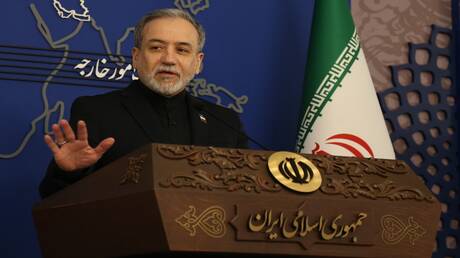
Iranian Foreign Minister Abbas Araghchi stated on Monday that his country "respects Saudi Arabia," highlighting the importance of removing US troops from the region. These statements come at a time when relations between Iran and Saudi Arabia are undergoing significant transformations, as both sides seek to improve bilateral ties.
Araghchi, speaking at a press conference, pointed out that the presence of US troops in the region is a source of tension, calling for an end to this presence. These remarks reflect Iran's current policy aimed at enhancing its regional influence and reducing US military presence in the Middle East.
Details of the Event
Araghchi's statements come amid significant changes in the Middle East, where many countries are reassessing their relationships with major powers. He indicated that Iran hopes to build relationships based on mutual respect with Saudi Arabia, reflecting Tehran's desire to improve its image in the region.
He also confirmed that Iran is ready to engage in dialogue with all countries, including Saudi Arabia, to achieve stability in the region. This call comes as Iran attempts to strengthen its role as a major regional power, especially following tensions in its relations with the United States.
Background & Context
Historically, Iranian-Saudi relations have been marked by significant tensions, especially following the Islamic Revolution in Iran in 1979. Since then, relations between the two countries have been strained, with each supporting opposing sides in regional conflicts.
In recent years, the region has witnessed radical changes, with some countries beginning to reassess their strategies. For instance, some Arab nations have normalized relations with Israel, affecting the regional balance. In this context, Iran seeks to enhance its relationships with neighboring countries, including Saudi Arabia, to address common challenges.
Impact & Consequences
Araghchi's remarks could lead to changes in regional dynamics, potentially opening the door for new dialogue between Iran and Saudi Arabia. If rapprochement between the two countries is achieved, it may contribute to reducing tensions in the region and enhance opportunities for cooperation in various fields.
However, the question remains regarding Saudi Arabia's readiness to respond to these calls. Saudi Arabia, which considers Iran a major competitor in the region, may be cautious in dealing with these statements, especially given ongoing tensions in Yemen and Syria.
Regional Significance
The Iranian-Saudi relationship is pivotal in determining the future of the region. If the two countries can overcome their differences, it could lead to greater stability in the Middle East, contributing to enhanced economic and political cooperation among Arab nations.
Conversely, if tensions persist, it could exacerbate existing conflicts and increase instability in the region. Thus, Araghchi's call for the withdrawal of US troops may be a step toward reassessing regional relationships, but it requires a positive response from the Saudi side to achieve tangible results.
In light of the rapid changes in the Middle East, Iranian-Saudi relations remain a central focus for understanding the region's future. Araghchi's statements reflect Iran's desire to improve relations, but the biggest challenge lies in how Saudi Arabia will respond to this call.