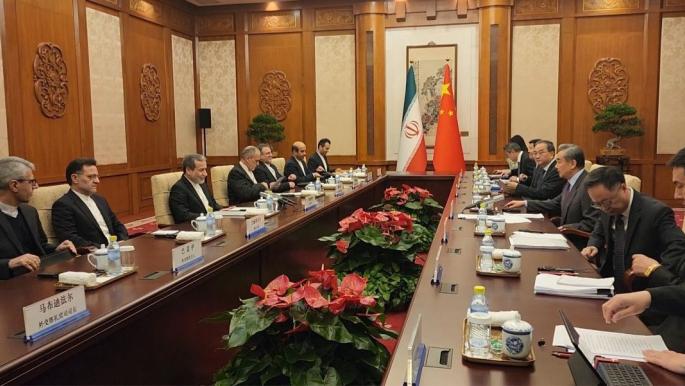
Iranian Foreign Minister Abbas Araghchi urged China and Russia on Tuesday to take a firm stance against actions targeting Tehran at the United Nations Security Council, emphasizing the importance of cooperation among the three nations to counter Western pressures.
This call comes at a time of increasing international tensions, as the West, particularly the United States, seeks to impose new sanctions on Iran due to its nuclear program. Araghchi stated that Western actions aim to undermine his country's sovereignty, calling on Beijing and Moscow to support Tehran in facing these challenges.
Details of the Event
In his remarks, Araghchi confirmed that Iran is closely monitoring movements within the Security Council, indicating that any attempt to pass resolutions against Iran would have severe consequences. The Iranian minister expressed optimism regarding China's and Russia's ability to resist these pressures, noting that cooperation among the three countries could shift the balance of power in the international arena.
This statement follows a series of meetings Araghchi held with his counterparts in Beijing and Moscow, where regional and international issues of mutual concern were discussed, including regional security and economic cooperation.
Background & Context
Historically, Iran has relied on the support of both China and Russia in facing Western pressures. Beijing and Moscow have played a significant role in shielding Iran from imposed sanctions, whether in the energy sector or military domain. Additionally, economic relations between Iran and China have seen notable growth, with China being the largest importer of Iranian oil.
In recent years, the relationship between Iran and Russia has also witnessed a significant rapprochement, particularly in defense and military cooperation. These relations have bolstered Iran's position in the international arena, making it more capable of confronting challenges.
Impact & Consequences
Araghchi's call to China and Russia serves as a warning to the West against taking any steps against Iran. Cooperation among the three countries could strengthen Iran's position in the Security Council, potentially hindering any moves aimed at imposing new sanctions on it.
This call also reflects Iran's desire to enhance its regional and international alliances in the face of Western pressures. This dynamic could lead to changes in political balances in the region, which may significantly affect relations between Arab states and Iran.
Regional Significance
Iran's movements within the Security Council have a direct impact on Arab countries, particularly those experiencing tensions with Iran. Increased cooperation between Iran, China, and Russia could bolster Iran's position in the region, potentially escalating tensions between Iran and Arab states.
Moreover, any actions by the Security Council against Iran could provoke strong reactions from Tehran, impacting regional security and increasing instability in the area.
In conclusion, the Iranian Foreign Minister's call highlights the rising tensions in international relations and underscores the importance of alliances in confronting political and economic pressures.