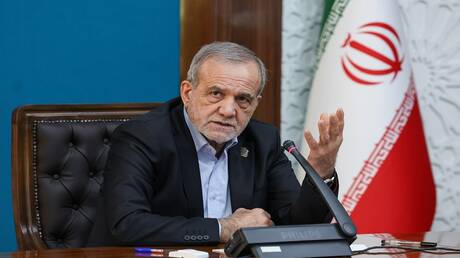
Iranian President Masoud Bezhakian has declared the commencement of an 'economic war' against what he described as the enemy's failure to achieve its military objectives against Iran. Bezhakian emphasized that this shift is in response to escalating economic pressures on the country, highlighting the importance of the Iranian people's solidarity with the leadership to confront these challenges.
In remarks made during a meeting with several officials, Bezhakian pointed out that the enemy aims to weaken Iran by targeting its economy. He added that the Iranian people have the capability to thwart these conspiracies through unity and solidarity.
Details of the Announcement
Bezhakian's statements come at a time when Iran is experiencing increasing economic pressures due to international sanctions, which have significantly affected various economic sectors. The Iranian president noted that these sanctions are intended to undermine the morale of the Iranian people, yet they simultaneously reflect the enemy's failure to achieve its military goals.
Bezhakian also stressed the necessity of enhancing domestic production and reducing reliance on imports, stating that these measures would contribute to strengthening the national economy. He called on all citizens to actively participate in supporting the economy by purchasing local products.
Background & Context
Historically, Iran has faced numerous economic challenges due to sanctions imposed on it for decades. These sanctions have led to a significant decline in economic growth and increased rates of inflation and unemployment. Nevertheless, the Iranian government continually strives to bolster the economy through reform programs aimed at improving the living conditions of its citizens.
In recent years, Iran has witnessed waves of popular protests due to economic conditions, prompting the government to take urgent measures to address these crises. Bezhakian's recent statements appear to aim at restoring trust among citizens and motivating them to engage in economic efforts.
Impact & Consequences
Bezhakian's call for the Iranian people to unite may enhance national spirit, but it could face significant challenges amid difficult economic conditions. Popular solidarity requires improvements in living conditions, which may be hard to achieve under ongoing sanctions.
On the other hand, these statements could impact Iran's relations with Western countries, as they may be perceived as a call for internal mobilization against external pressures. Additionally, these steps could lead to increased tensions in the region, especially if Iran continues to strengthen its economic and military capabilities.
Regional Significance
Iran is a key player in the region, and any economic or political shifts within it could affect neighboring countries. Increased economic pressures on Iran may escalate tensions in the region, particularly concerning issues like the Iranian nuclear program and tensions in the Gulf.
Moreover, Bezhakian's call for unity may serve as a model for some Arab countries facing similar economic challenges. National unity and solidarity could be crucial in addressing economic crises in many nations.
In conclusion, Bezhakian's statements reflect the significant challenges Iran faces under current circumstances, highlighting the importance of national unity in confronting crises. However, the question remains regarding the government's ability to achieve these goals amid ongoing pressures.