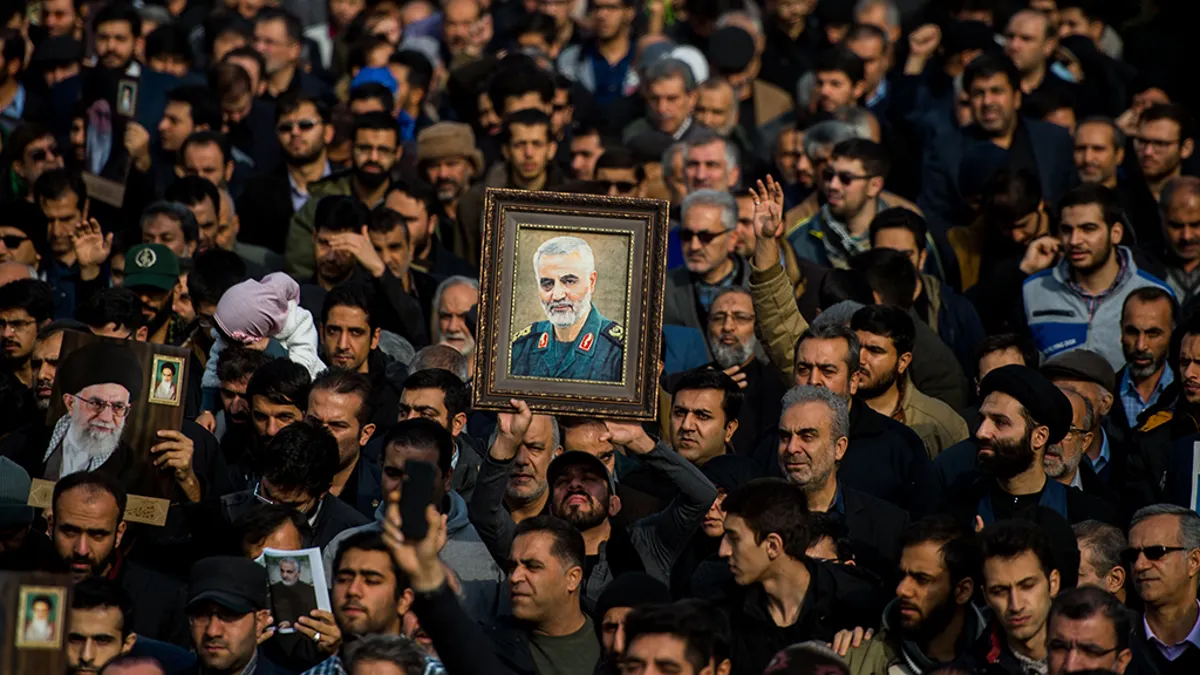
Iran has categorically denied any connection between two detainees in the United States and Qassem Soleimani, the former commander of the Quds Force, after Washington announced the cancellation of their residency. These statements come at a time when tensions between Iran and the United States are escalating, raising questions about the motives behind these arrests.
The Iranian authorities confirmed that the detainees have no ties to Soleimani, who was assassinated in a US drone strike in 2020. This denial comes as Iran attempts to dispel rumors that could affect its position in ongoing nuclear negotiations with world powers.
Details of the Incident
The US Department of Justice announced the cancellation of the detainees' residency, sparking mixed reactions in political and media circles. Some sources viewed this decision as reflecting increasing pressure on the Biden administration to address issues related to Iran. In contrast, Iran asserted that these steps merely represent attempts to tarnish its reputation.
Iran is striving to strengthen its position in nuclear negotiations, considering any arrests or legal actions against its citizens as an infringement on its sovereignty. Tehran has expressed its willingness to cooperate with the international community, while simultaneously rejecting any external pressures that might influence its internal decisions.
Background & Context
The history of Iranian-American relations is fraught with tensions, having witnessed numerous political and military crises over the past decades. The assassination of Soleimani marked a turning point in these relations, as Iran viewed it as a hostile act warranting a strong response. Since then, Iran has been attempting to rebuild its power and influence in the region, focusing on enhancing its military and diplomatic capabilities.
In recent years, there have been multiple attempts to revive the Iranian nuclear deal, but these often face obstacles due to mutual distrust between the two sides. This situation complicates matters as Iran seeks to achieve its interests while facing increasing international pressures.
Impact & Consequences
These events could lead to an escalation of tensions between Iran and the United States, potentially affecting regional stability. Any escalation in the situation could negatively impact global markets, particularly in the energy sector. Furthermore, the continuation of these crises may increase tensions between Iran and its allies in the region.
These events also serve as a real test for the Biden administration, which must make difficult decisions regarding how to handle Iran. If tensions persist, the administration may find itself compelled to take firmer steps, which could further escalate the situation.
Regional Significance
Iranian-American relations directly impact security and stability in the Arab region. Any escalation in these relations may reflect on neighboring countries, especially those suffering from internal conflicts or tensions with Iran. The situation in Iraq, Syria, and Lebanon could be significantly affected, as Iran plays a key role in these crises.
Ultimately, Iranian-American relations remain a focal point for the world, with everyone eager to see how matters will evolve in the future. Any changes in these relations could impact regional and international security, making it essential to closely monitor developments.