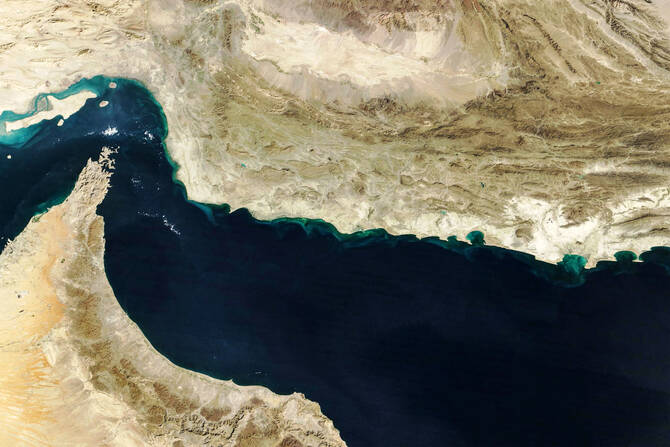
The Iranian Foreign Ministry has denied rumors regarding Tehran charging fees for ships passing through the Strait of Hormuz, stressing that this information is baseless. Ministry spokesman Nasser Kanani confirmed that Iran adheres to international laws related to maritime navigation.
These statements come at a time when the Strait of Hormuz, one of the world's most important waterways, is experiencing increasing tensions due to regional conflicts and maritime threats.
Details of the Incident
In recent days, media reports circulated suggesting that Iran might impose fees on vessels crossing the Strait of Hormuz, raising widespread concern in maritime and commercial circles. The Iranian Foreign Ministry quickly responded to these rumors, considering them part of a psychological warfare against the Islamic Republic.
Kanani also pointed out that Iran views the Strait of Hormuz as a vital corridor for global trade and that it would not take any steps that could hinder navigation in the area. He confirmed that Tehran is always striving to maintain maritime security in the region.
Background & Context
The Strait of Hormuz is a critical transit point for approximately 20% of the world's total oil supply, making it a focal point for major powers. In recent years, the strait has witnessed numerous maritime incidents, including attacks on oil tankers, which have heightened tensions between Iran and Western countries.
Historically, Iran has threatened to close the strait if its national interests are jeopardized, raising fears of military escalation in the region. However, Tehran is aware of the strait's importance to the global economy, which makes it cautious in handling this issue.
Impact & Consequences
If the imposition of transit fees through the Strait of Hormuz is confirmed, it could lead to increased shipping costs, affecting global oil prices. Such a move might provoke strong reactions from major countries, especially the United States, which views Iran as a threat to maritime security.
On the other hand, this news could escalate tensions between Iran and neighboring countries, negatively impacting regional stability. If rumors persist, they could affect maritime trade in the region as a whole.
Regional Significance
Arab countries neighboring the Strait of Hormuz, such as the United Arab Emirates and Saudi Arabia, are among the most affected by any changes in navigation through the strait. These countries heavily rely on oil exports through this vital corridor.
Any tensions in the region could lead to rising oil prices, impacting the economies of these countries and increasing economic pressures on them. Therefore, stability in the Strait of Hormuz is vital for Arab countries and the global economy as a whole.
The situation in the Strait of Hormuz remains under close observation, as any new developments could significantly impact maritime navigation and global trade. Iran, through its statements, reaffirms its commitment to maintaining maritime security, reflecting its desire to avoid escalation.