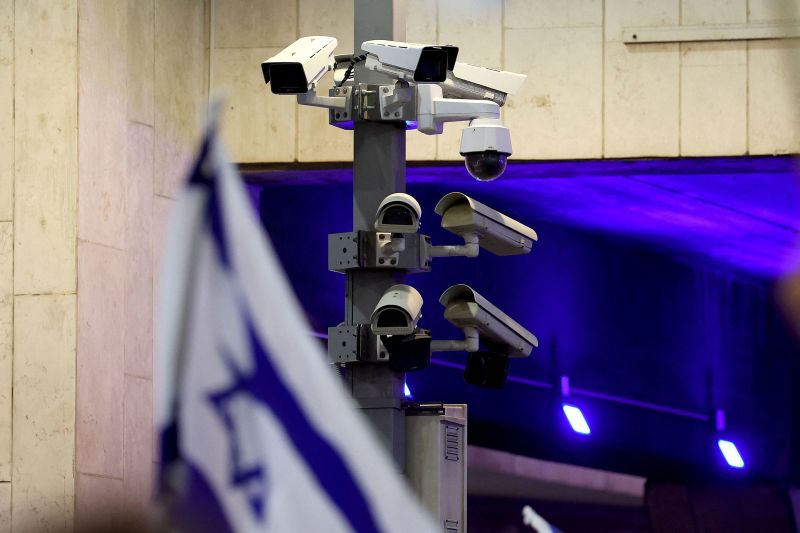
Recent reports have revealed that Iran has established a vast network of cameras to monitor dissenters, which has been used by Israel as a tool to target them. This network, developed as part of Tehran's efforts to enhance control over dissent, illustrates how technology can be utilized in complex political contexts.
The network involves the installation of cameras in public places and sensitive areas, allowing Iranian authorities to monitor social and political activities. At the same time, Israel has exploited this information to bolster its security strategies, raising questions about privacy and human rights in the region.
Details of the Event
This network is part of Iran's ongoing efforts to surveil its citizens, especially amid increasing protests against the regime. The cameras are not only a tool for surveillance but are also used to gather information about dissenters, facilitating actions against them by the authorities.
On the other hand, reports indicate that Israel has used this data for security purposes, reflecting the indirect cooperation between the technologies employed in Iran and Israeli military operations. This cooperation demonstrates how technology can influence political conflicts in the region.
Background & Context
Historically, Iran has always been under tight surveillance by its government, especially after the Islamic Revolution in 1979. Since then, technology has been used to monitor dissenters and restrict freedoms. In recent years, protests against the regime have increased due to economic and social issues, prompting the government to enhance its surveillance tools.
Conversely, Israel, facing ongoing security threats, is constantly seeking to develop its defense strategies. The use of data collected from the Iranian network shows how countries can leverage technology to their advantage in complex contexts.
Impact & Consequences
These developments raise significant concerns regarding human rights and privacy in the region. The use of cameras to monitor citizens can lead to increased repression and restrictions on fundamental freedoms. Additionally, the indirect cooperation between Iran and Israel in this context illustrates how technology can affect political conflicts.
Moreover, this situation may heighten tensions between countries in the region, as this information could be used as a tool for political or military pressure. This underscores the need for an international legal framework to regulate the use of technology in surveillance.
Regional Significance
These events are significant for Arab countries, as they demonstrate how technology can impact political stability in the region. Many Arab nations face similar challenges in monitoring dissenters, which may lead to increased repression and restrictions on freedoms.
Furthermore, the cooperation between Iran and Israel in this context indicates the necessity for Arab states to be more aware of technological developments and how they are used in political conflicts. Arab governments should enhance their strategies to monitor human rights and ensure the protection of their citizens.
In conclusion, Iran's use of a camera network as a surveillance tool, and how it has been exploited by Israel, highlights the importance of technology in political conflicts. Arab nations must be cautious and work towards strengthening human rights amid these rapid developments.