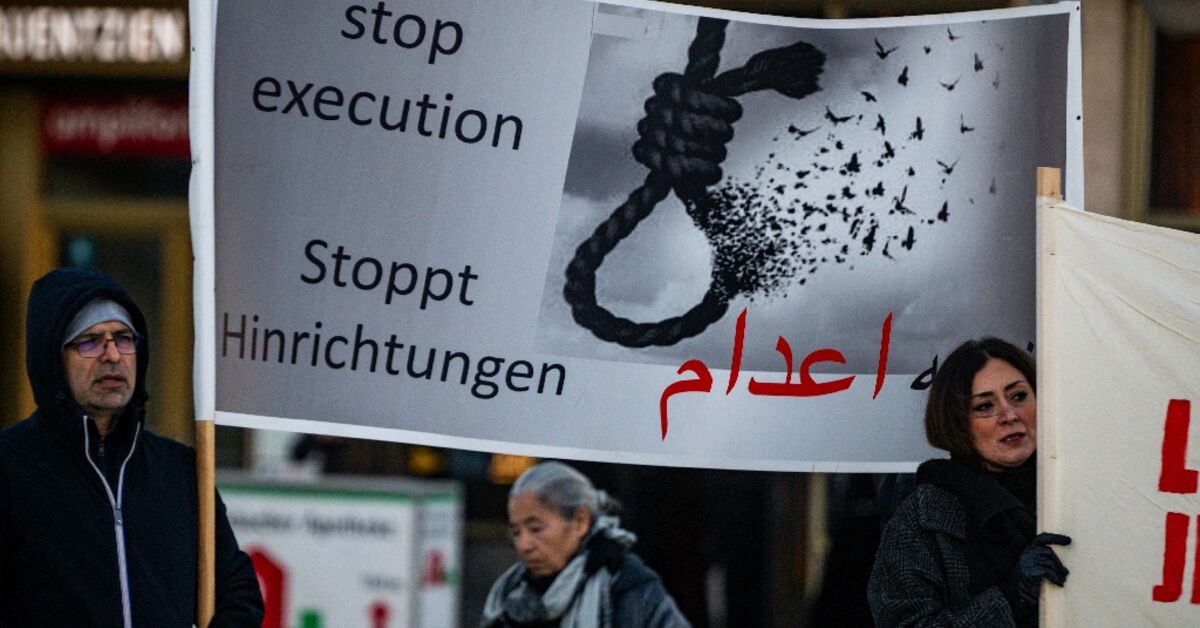
The Iranian authorities executed Ali Fahim on Monday, who was sentenced to death for his participation in an attack on a base belonging to the Revolutionary Guard during the protests that swept the country in January. This incident comes at a time when executions in Iran are on the rise, which human rights organizations view as a blatant violation of human rights.
These executions are part of a broad crackdown on demonstrators, with the Iranian government accused of using excessive force to suppress dissenting voices. Human rights organizations have reported a significant increase in the number of executions, with many of those sentenced viewed as political prisoners.
Details of the Execution
Ali Fahim, who was only 23 years old, was executed after being convicted of participating in an attack on a Basij base in Tehran. This case has sparked widespread controversy, as human rights organizations claim that the trial was not fair and that the accused were subjected to torture during their detention.
These executions occur at a sensitive time for Iran, as tensions escalate with Israel and the United States, increasing pressure on the Iranian government. These events are part of a broader context of regional conflict and political tensions.
Background & Context
In recent years, Iran has experienced waves of popular protests, with citizens taking to the streets to protest economic and political conditions. These protests have led to violent reactions from authorities, who have used force to suppress demonstrators. The recent executions are in line with the Iranian government's policy to stifle any opposition.
Historically, Iran has been known for its strict application of the death penalty, but in recent years, international criticism of these practices has increased. Human rights organizations have called for a halt to these executions, viewing them as contrary to international human rights standards.
Impact & Consequences
These executions demonstrate the Iranian government's willingness to go to great lengths to suppress opposition. Such policies may exacerbate domestic conditions, potentially increasing public discontent. At the same time, these actions could negatively impact Iran's image in the international community, where human rights violations are a major concern.
Moreover, the rise in executions may lead to increased pressure on the Iranian government from the international community, possibly resulting in new sanctions or heightened diplomatic pressures.
Regional Significance
The events in Iran have a direct impact on the Arab region, as Iran is a key player in many regional conflicts. The escalation of repression in Iran may encourage some regimes in the region to take similar actions against dissenters, increasing anxiety in Arab countries.
Additionally, the situation in Iran could affect relations between Arab states and Iran, potentially exacerbating tensions between the two sides. Under these circumstances, it is crucial to monitor developments in Iran and their implications for the region.