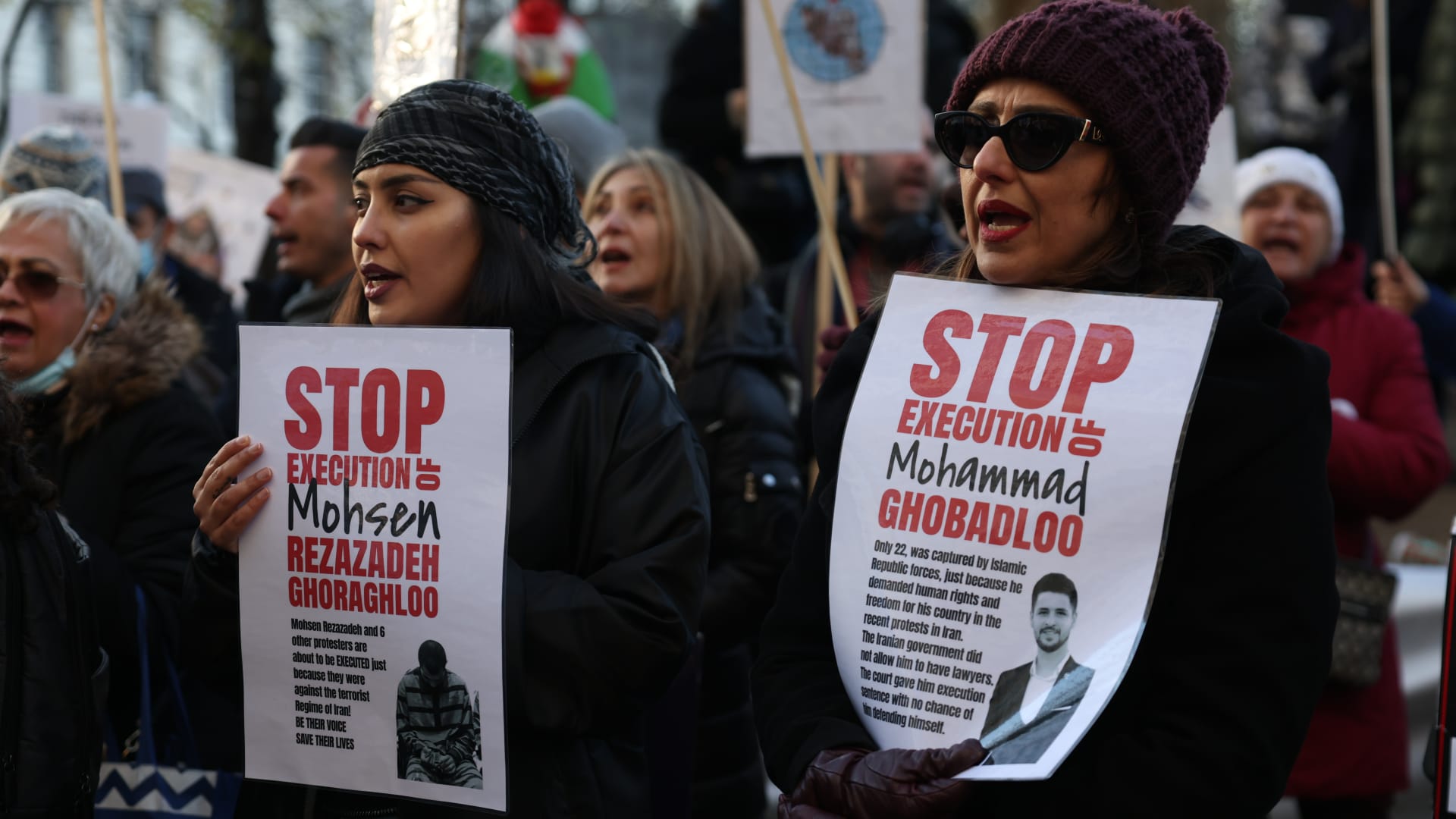
Hamzeh Khalili, the first deputy of the Iranian judiciary, announced today that authorities have started implementing final death sentences against detainees arrested during the protests that broke out in January. These protests were sparked by a sense of frustration over the plummeting value of the local currency and a severe economic crisis. The authorities responded to these protests with a widespread crackdown, leading to the arrest of hundreds of participants.
According to Khalili's statements, investigations have been conducted into cases involving what are referred to as "terrorists and rioters," with final sentences issued in some cases, which are now being executed. He clarified that the sentences issued in recent days will be announced later, emphasizing that there will be no leniency for the convicted.
Details of the Executions
In the same context, Iranian state media reported that authorities executed three individuals last Thursday after they were convicted of killing two police officers during the unrest. The executions took place in the city of Qom, where these young men were found guilty of "moharebeh," a crime considered one of the major offenses in Iran.
Background & Context
The roots of the protests date back to the beginning of this year, when citizens took to the streets in response to deteriorating economic conditions and living difficulties. These protests had significant repercussions, leading to increased repression by the government, which initiated a broad campaign of arrests. The protests occurred against a backdrop of growing public discontent amid a climate of political and social polarization.
Moreover, several international human rights organizations, such as Amnesty International, condemned the executions, stating that they were carried out following unfair trials and confessions obtained under torture. Experts assert that the rise in executions reflects the Iranian government's harsh policy towards dissenters.
Impact & Consequences
These sentences and repressive practices have sparked widespread criticism both locally and internationally. In addition to the growing concern within Iranian society, these developments highlight the situation in the country amid increasing economic pressures. These crackdowns reflect the geopolitical tensions involved in the regional conflict, especially in light of the ongoing war against Iran led by the United States and Israel.
Furthermore, these events affect Iran's influence in the region, as this repressive policy is viewed as a sign of weakness and may further erode public trust in the ruling system.
Regional Significance
The developments in Iran have a direct impact on the situations in neighboring countries, particularly those experiencing political turmoil. Such repressive policies may encourage the strengthening of protest movements in countries with similar regimes, potentially leading to a new wave of unrest.
Arab nations are closely monitoring the developments in Iran due to the potential implications for regional security and stability. Iranian actions and the slide towards repression could pose a challenge to regional balance and make external interventions more likely.
In conclusion, it appears that Iran is facing a dilemma with increasing pressures both internally and externally, making the political horizon unclear.