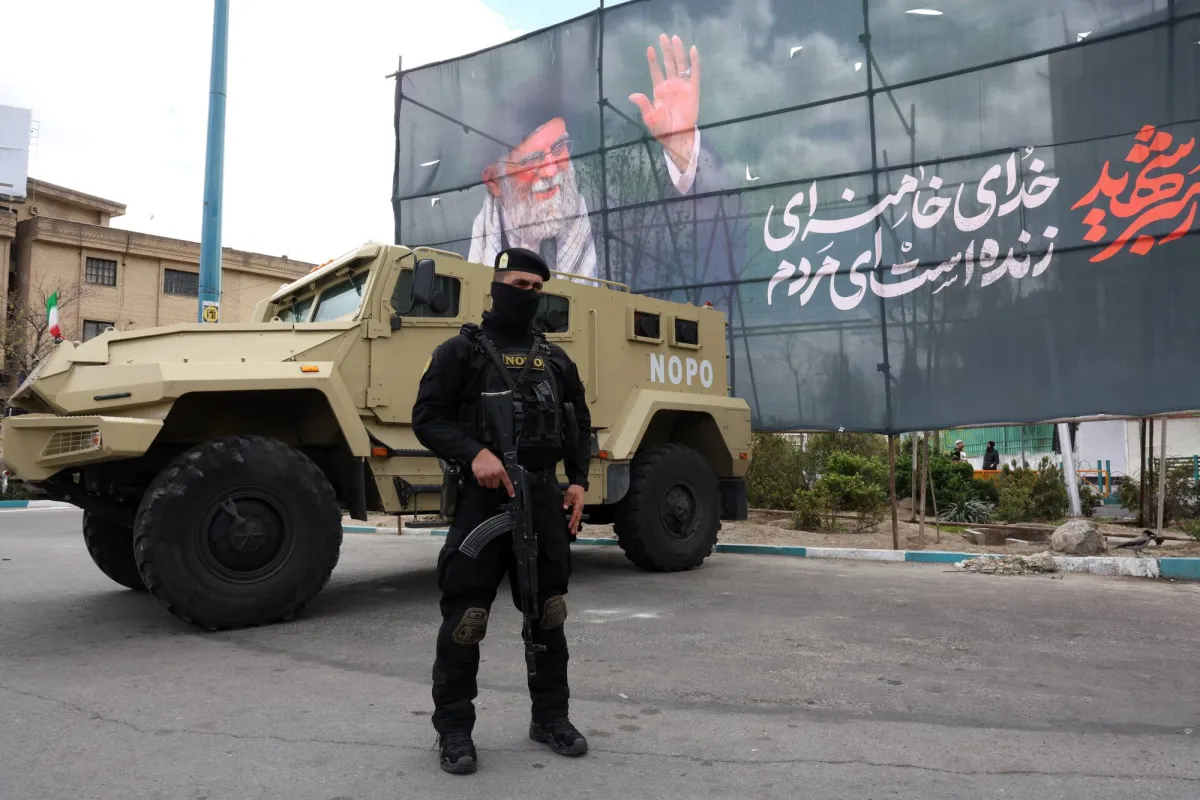
Iran executed two men who were members of the banned Mujahedin-e Khalq (MEK) organization, according to human rights groups. The executions took place in Ghazal Hesar prison in Karaj, near the capital Tehran, where Abdol Daneshvarkar (60 years old) and Mohammad Taghavi Sankdahi (59 years old) were hanged on charges of belonging to this organization.
The Iranian Judiciary's Mehr News Agency reported that the death sentences had been confirmed and ratified by the Supreme Court. Iranian authorities consider the MEK a terrorist organization; it is an opposition group that has been in exile since the 1980s.
Details of the Event
In a statement from the National Council of Resistance of Iran, the political wing of the organization, it was confirmed that the two men were active members of the MEK. Maryam Rajavi, the organization's Secretary-General, stated that the Iranian regime, feeling desperate due to the people's uprising, seeks to delay the explosion of popular anger through the execution of its members.
These executions come at a critical time, as fears grow over the rising number of executions in Iran, where authorities use this punishment as a means to instill terror in society, especially amid the ongoing war against the United States and Israel.
Background & Context
Historically, Iran has been one of the countries that most frequently applies the death penalty, ranking second globally after China. Human rights organizations have expressed concern that the Islamic Republic may exploit current conditions to carry out mass executions in prisons.
In a related context, Iran Human Rights, based in Norway, reported that the two prisoners had been subjected to physical and psychological torture and were deprived of their legal rights. The organization also warned that four other defendants in the same case face imminent execution.
Impact & Consequences
Concerns are increasing that these executions may lead to a rise in protests within Iran, where the Iranian society is experiencing growing anger due to economic and political conditions. The country has witnessed widespread demonstrations in recent months protesting living conditions, leading to violent crackdowns by the authorities.
These events may also affect Iran's relations with the international community, as Western countries continue to pressure Tehran regarding human rights violations. Many governments and international organizations have condemned these executions, further isolating Iran on the international stage.
Regional Significance
These executions are seen as an indicator of increasing repression in Iran, which could impact the stability of the region as a whole. Any escalation in protests or public reactions may have repercussions on neighboring countries, especially amid existing tensions between Iran, the United States, and Israel.
In conclusion, these events serve as a reminder of the complexity of the situation in Iran, where internal issues intersect with regional tensions, making it difficult to predict the trajectory of future events.