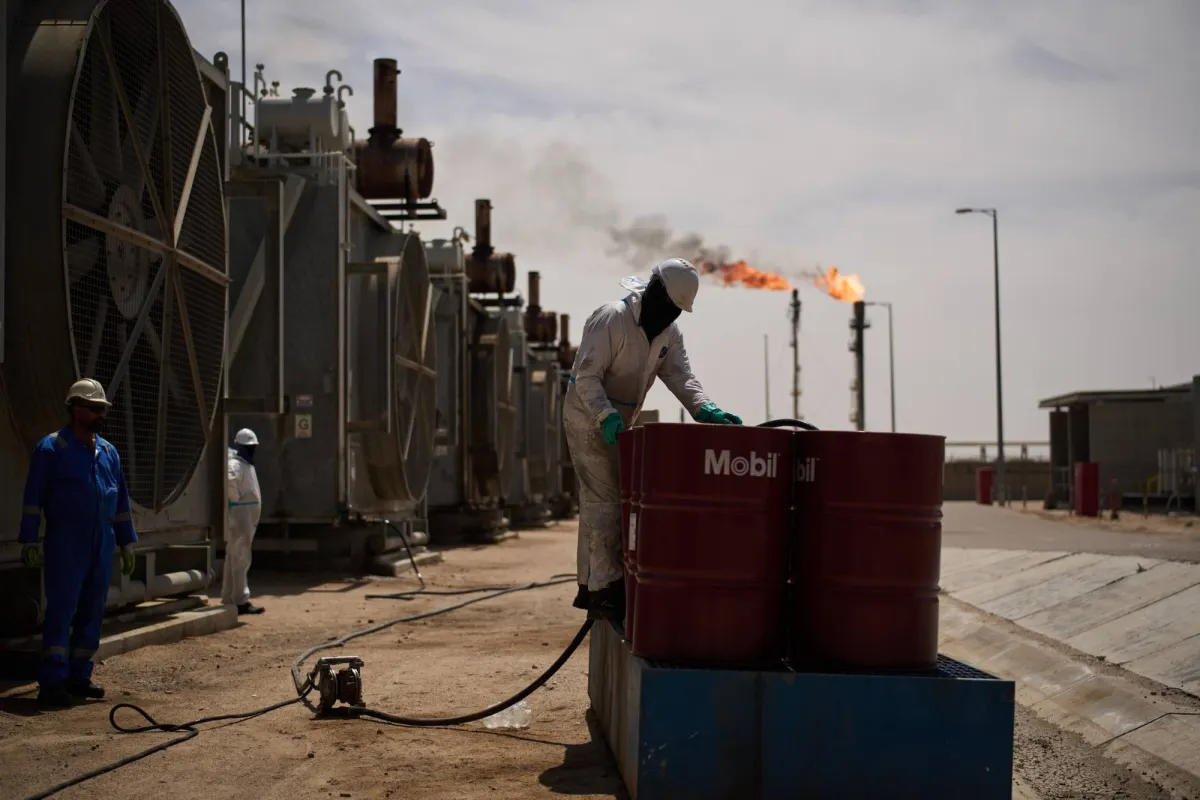
The Iraqi Oil Marketing Company (SOMO) has called on its international clients to provide plans and schedules for crude oil loading within 24 hours, following reports that Iran has granted Iraq an exemption from the restrictions imposed on navigation in the strategic Strait of Hormuz.
SOMO clarified in a document obtained by Reuters, dated April 5, that it encourages companies to submit lifting schedules to ensure the continuity and stability of export operations, and to address loading programs in a timely manner, including naming vessels and the agreed contractual quantities.
Details of the Event
The company confirmed in the document that all loading terminals, including the Basra oil port and its associated facilities, are operating at full capacity, emphasizing Iraq's complete readiness to implement all contractual programs without any restrictions. The resumption of exports is expected to assist Iraq, a member of OPEC, in reviving its production, which sharply declined to about 800,000 barrels per day last month due to military tensions.
However, market observers believe the real challenge lies in the response of ship owners and insurance companies, and their ability to send their tankers to the Gulf region amid ongoing direct military confrontations between the United States and Israel on one side, and Iran on the other, resulting in high security risks.
Context and Background
The Strait of Hormuz is a vital point for oil transportation, through which about 20% of global oil supplies pass. The region has witnessed increasing tensions recently, especially following military attacks by the United States and Israel on Iran. These events have significantly affected navigation in the strait, prompting oil-importing countries to seek alternatives.
In this context, South Korean President Yoon Suk-yeol stated that his country must accept a degree of risk in importing crude oil from the Middle East, noting that the closure of the Strait of Hormuz could severely impact oil supplies to South Korea.
Implications and Effects
Markets expect the resumption of Iraqi oil exports to improve the economic situation in the country, but security risks remain. With ongoing tensions, global oil prices could be significantly affected, potentially leading to higher energy costs in importing countries.
Additionally, the mutual threats between the United States and Iran could exacerbate the situation, affecting the stability of global financial markets. At the same time, South Korea is seeking to secure alternative supplies from countries such as Saudi Arabia, Oman, and Algeria.
Impact on the Arab Region
This development is significant for the Arab region, as many countries rely on Iraqi oil as a primary energy source. The resumption of exports could contribute to strengthening economic relations between Iraq and its neighbors, but security risks remain a barrier to achieving long-term stability.
In conclusion, the situation in the Strait of Hormuz remains under observation, with increasing concerns about the impact of current events on oil supplies and global markets.