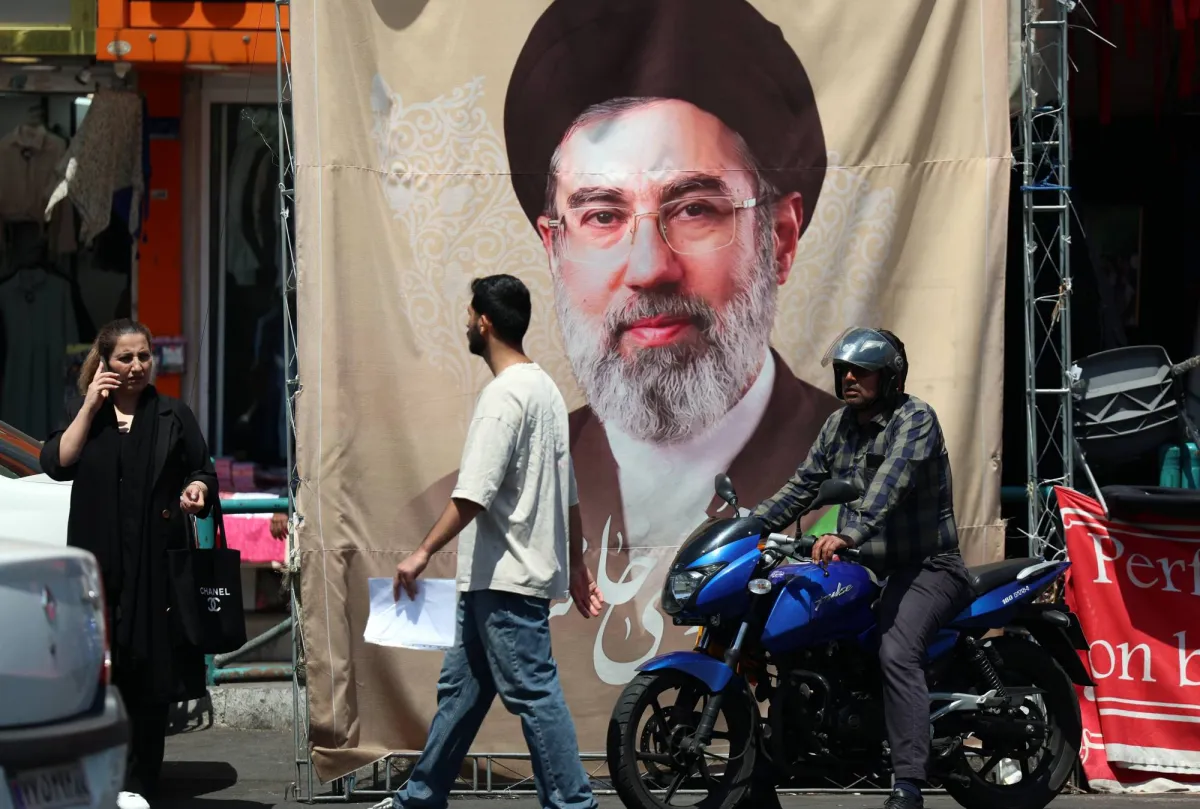
Iran is undergoing a significant transformation in its power structure two months after the war with the United States and Israel, with the role of the Supreme Leader diminishing in favor of the Revolutionary Guard. This shift may indicate a further hardening of Iranian politics, as Tehran continues to consider resuming talks with Washington.
Since the establishment of the Islamic Republic in 1979, power in Iran has been concentrated around a single Supreme Leader who holds final authority on all major issues. However, the death of Supreme Leader Ali Khamenei at the beginning of the war and the rise of his son Mohammad have ushered the country into a new system dominated by Revolutionary Guard leaders, resulting in the absence of a decisive reference for decision-making, according to an analysis by Reuters.
Event Details
Mohammad Khamenei remains at the top of the system, but informed sources indicate that his role is limited to legitimizing decisions made by Revolutionary Guard generals, rather than issuing directives himself. The pressures of war have led to a concentration of power within a narrower circle of hardline conservatives, with an increasing influence of the Supreme National Security Council and the Revolutionary Guard in military and political decision-making.
A Pakistani government official reported that Iranians are slow in their responses, indicating a lack of a unified leadership structure. Furthermore, the obstacle to reaching an agreement with Washington is not internal conflicts but rather the gap between what the United States is willing to offer and what the Revolutionary Guard will accept.
Background & Context
Historically, Iran has relied on its Supreme Leader to guide both domestic and foreign policy. However, with escalating military tensions, the Revolutionary Guard has become the dominant force. Foreign Minister Abbas Araghchi has emerged as Iran's diplomatic face, while Revolutionary Guard Commander Ahmad Vahidi has become the central figure in negotiations.
Iran is currently seeking to resume talks with Washington, having proposed a new plan that includes phased discussions, postponing the nuclear file until after the war ends. However, Washington insists that this issue must be addressed from the outset.
Impact & Consequences
The current transformations suggest that Iran may adopt a more aggressive foreign policy, as the rise of the Revolutionary Guard reflects a desire to strengthen internal control and resist Western pressures. As the country enters a state of war, it appears that any faction within the system lacks the power to confront the increasing dominance of the Revolutionary Guard.
This trend could lead to further tensions in the region, as Iran continues to bolster its regional influence, potentially exacerbating existing conflicts.
Regional Significance
These developments are of great importance to Arab countries, as they may affect the stability of the region. With the increasing power of the Revolutionary Guard, tensions in relations between Iran and Arab states may rise, especially among those concerned about Tehran's growing influence.
In conclusion, Iran seems to be heading towards a new phase of hardline policies, which could negatively impact peace and stability efforts in the region.