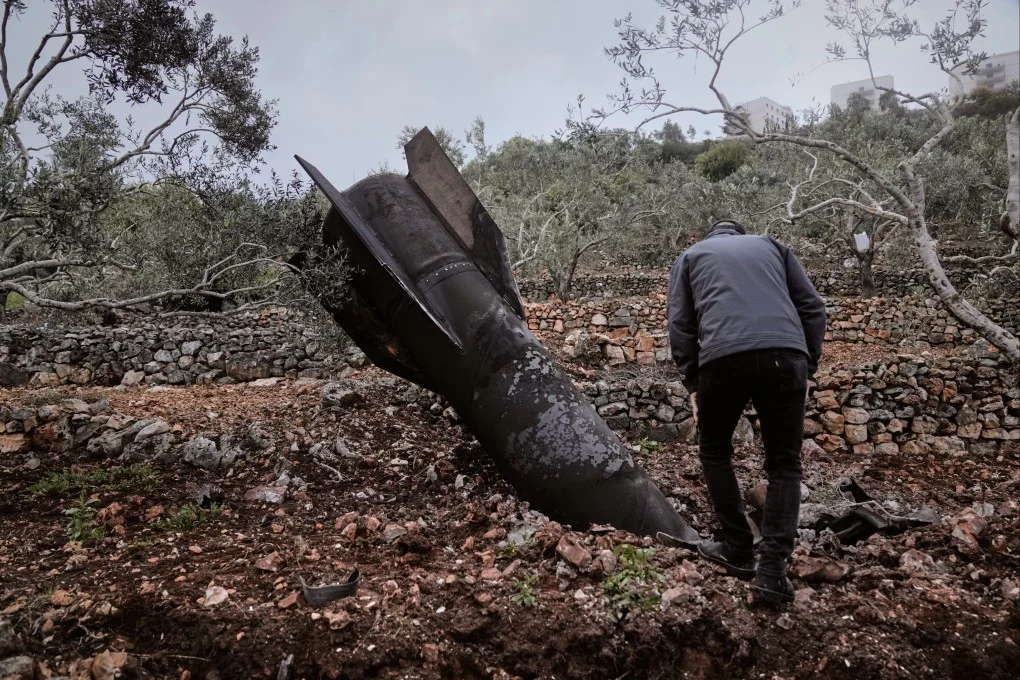
Iranian President Masoud Beizhekin affirmed that his country possesses the 'necessary will' to end the ongoing conflict with the United States and Israel, pointing out the importance of obtaining guarantees against renewed hostilities. These statements come at a sensitive time, as Iran experienced a day of intense airstrikes, heightening tensions in the region.
Beizhekin's remarks followed strong warnings from the Iranian Revolutionary Guard, which threatened to retaliate against major American technology companies such as Google, Facebook, and Apple. These statements reflect the precarious situation Iran finds itself in amid increasing military and economic pressures from the United States and its allies.
Details of the Event
In recent days, Iran has witnessed an escalation in military pressures, having been subjected to several airstrikes by American and Israeli forces. These pressures come at a critical time for Tehran, which is seeking to improve its economic and political standing. President Beizhekin, who recently assumed office, aims to achieve internal stability by ending the conflict with major powers.
The financial markets in the United States responded positively to Beizhekin's statements, reflecting hope for a potential agreement that could ease tensions. However, concerns remain regarding the reactions of the Iranian Revolutionary Guard, which is considered the main military force in the country.
Background & Context
Historically, Iranian-American relations have significantly deteriorated since the Islamic Revolution in 1979. Economic sanctions and military blockades have been among the primary tools of pressure employed by the United States against Iran. In recent years, tensions have escalated dramatically due to Iran's nuclear program and military activities in the region.
In 2015, a nuclear agreement was reached between Iran and major powers, but the United States' withdrawal from the agreement in 2018 brought matters back to square one. Since then, tensions have notably increased, leading to a series of military and economic incidents.
Impact & Consequences
Beizhekin's statements could mark the beginning of a new phase in Iranian-American relations, but they require concrete steps from both sides. If Iran can secure guarantees against renewed conflict, this could lead to the easing of sanctions and an improvement in the country's economic situation.
On the other hand, if military pressures continue, this could escalate the conflict, negatively impacting regional security. The Iranian Revolutionary Guard, which is seen as the main military force, may take retaliatory actions if it feels that Iran's interests are threatened.
Regional Significance
Iranian-American relations are pivotal for security in the Arab region. Any improvement in relations could lead to greater stability in countries like Iraq, Syria, and Lebanon, where Iran plays a significant role. Conversely, ongoing tensions could exacerbate existing conflicts and negatively affect regional security.
In conclusion, the question remains open as to whether Iran and the United States will be able to reach an agreement that achieves peace and stability in the region. Upcoming events will determine the course of relations between the two parties and their impact on the situation in the Middle East.