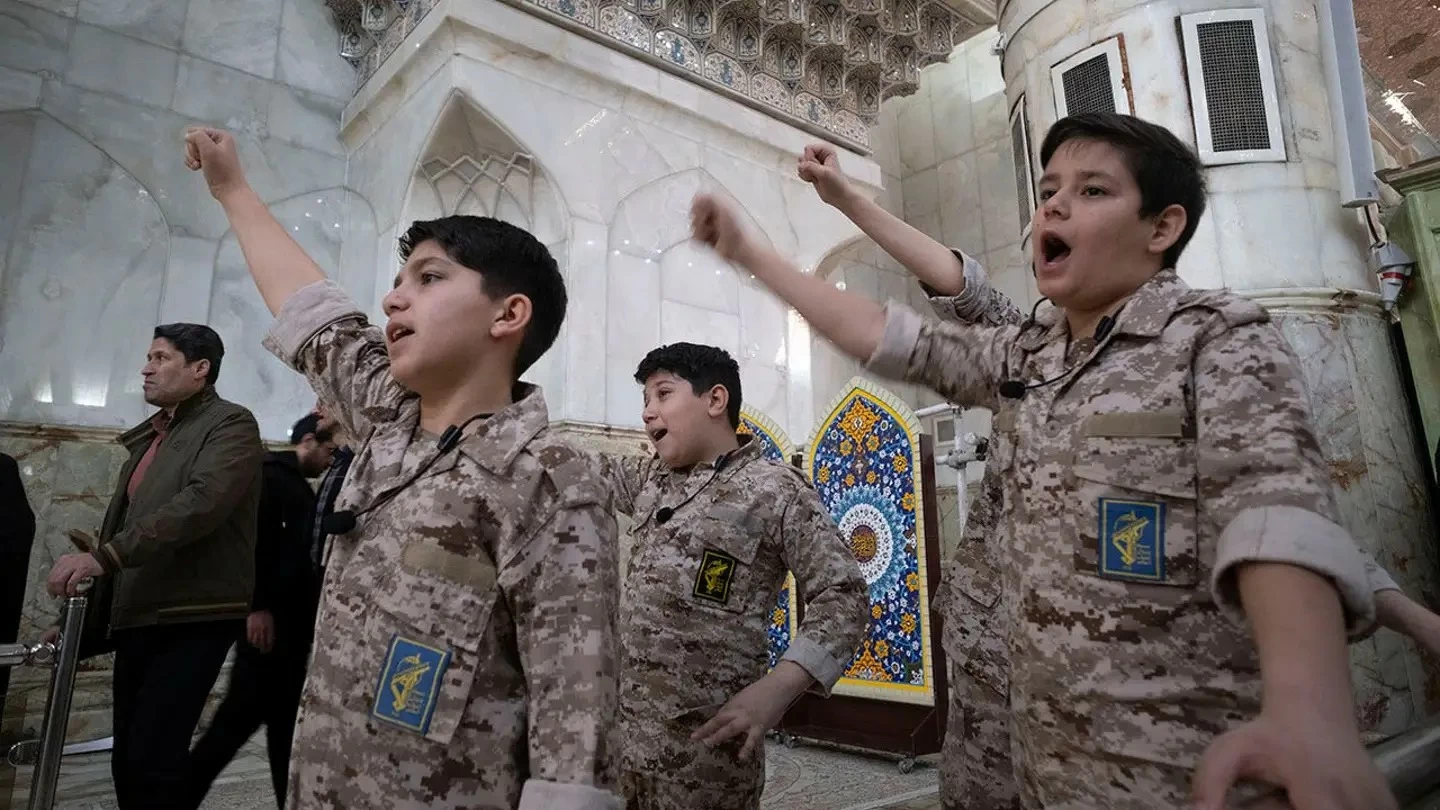
International organizations, including Human Rights Watch and Amnesty International, have called on Iran to stop the recruitment of children into the Revolutionary Guard, where enlistment begins at the age of 12. This demand comes amid escalating military pressures on the country, reflecting a severe shortage of manpower and increasing reliance on paramilitary forces.
Reports indicate that this recruitment reflects the Revolutionary Guard's urgent need to maintain the domestic front, especially with rising military pressures from the United States and Israel. These practices raise the humanitarian cost of the conflict, exposing minors to direct danger and potentially leading to Iran being held accountable for war crimes.
Details of the Event
The Iranian Revolutionary Guard has launched a campaign called “Defenders of the Homeland for Iran”, which has lowered the minimum age for volunteering to 12 years. The campaign encourages children to register at mosques and through the Basij forces, a paramilitary force affiliated with the Revolutionary Guard. The roles that children can take on include supportive tasks, as well as operational patrols and managing checkpoints, putting them in direct confrontation with combat.
Amnesty International reported that recruiting children under the age of 15 constitutes a war crime, providing documented visual evidence and eyewitness testimonies to support this claim. Sixteen images and videos have been analyzed showing children carrying weapons, deployed with Revolutionary Guard and Basij forces in cities such as Tehran, Mashhad, and Kermanshah.
Background & Context
These developments occur against the backdrop of rising military tensions between Iran on one side and the United States and Israel on the other. Iran is seeking to bolster its military capabilities amid increasing pressures from its adversaries. Iranian officials have indicated a strong demand from teenagers to join the forces, reflecting a painful reality amid escalating crises.
In this context, tragic cases have been documented, such as the death of Ali Reza Jafari (11 years old) at a checkpoint in Tehran, highlighting the dangers children face in these circumstances. Testimonies have also shown that children struggle to handle weapons, raising further concerns about their safety.
Impact & Consequences
These practices are a blatant violation of international law, as the United Nations classifies the recruitment of children in armed conflicts as a “serious violation.” International law prohibits the recruitment of children under the age of 15, setting 18 years as the standard for participation in hostilities. Both Amnesty and Human Rights Watch have called on Iranian authorities to immediately stop the recruitment of minors and release those who have already been enlisted.
International concerns about the safety of children in Iran are growing, as these violations raise significant alarm within the international community. Furthermore, these policies could exacerbate humanitarian crises in the region, necessitating urgent action from the international community.
Regional Significance
These developments directly affect security and stability in the Arab region, as issues of child recruitment in armed conflicts raise widespread concerns. The continuation of these policies could lead to the proliferation of child recruitment in other areas, complicating humanitarian crises in the region.
In conclusion, the current situation requires urgent action from the international community to ensure the protection of children from violations and to pressure Iran to halt these practices that endanger children.