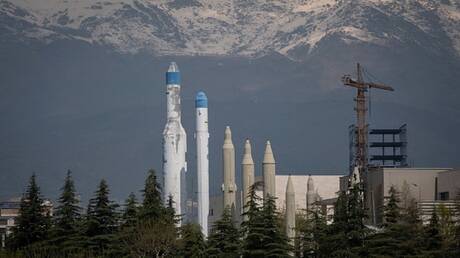
Israeli military data indicates that Iran still retains more than 1000 missiles capable of reaching its territory, reflecting the ongoing threat posed by Tehran to Israeli security. At the same time, estimates suggest that Hezbollah possesses a massive arsenal of up to 10,000 short-range missiles, further complicating the security situation in the region.
This information comes amid escalating tensions between Iran and Israel, as the latter seeks to bolster its defensive capabilities to counter potential threats. Military reports have confirmed that these Iranian missiles include a variety of launchable systems, enhancing Iran's ability to carry out precise attacks.
Details of the Threat
Israeli estimates indicate that Iranian missiles encompass multiple types of weaponry, including ballistic missiles and cruise missiles. These systems are capable of targeting strategic sites within Israel, presenting significant challenges for the Israeli government in terms of air defense.
Furthermore, information regarding Hezbollah's arsenal suggests that the group possesses advanced missiles that can reach most of Israeli territory, reflecting its capability to conduct complex military operations in the event of any conflict.
Background & Context
Historically, relations between Iran and Israel have been tense, with Iran viewing Israel as a primary adversary in the region. These tensions have contributed to Iran's development of military capabilities, including its missile program. In response, Israel seeks to strengthen its alliances with Arab nations to confront this threat.
These developments coincide with rising tensions in the region, as Iran aims to expand its influence in the Middle East by supporting armed groups like Hezbollah. This situation complicates the security landscape and reflects the challenges faced by neighboring countries.
Impact & Consequences
This information is of significant importance to Israeli national security, compelling the government to take urgent measures to enhance its defenses. Additionally, these threats may lead to increased military tensions in the region, potentially impacting regional stability.
Moreover, these developments could affect relations between Arab nations and Israel, prompting some countries to reassess their security and military strategies in light of the Iranian threat.
Regional Significance
These threats directly impact the national security of Arab states, potentially leading to escalated conflicts in the region. The presence of missiles capable of reaching Israel increases the likelihood of new conflicts, threatening stability in the Middle East.
Ultimately, the current situation requires Arab nations to take proactive steps to enhance their defensive capabilities and cooperate with one another to address the growing security challenges.