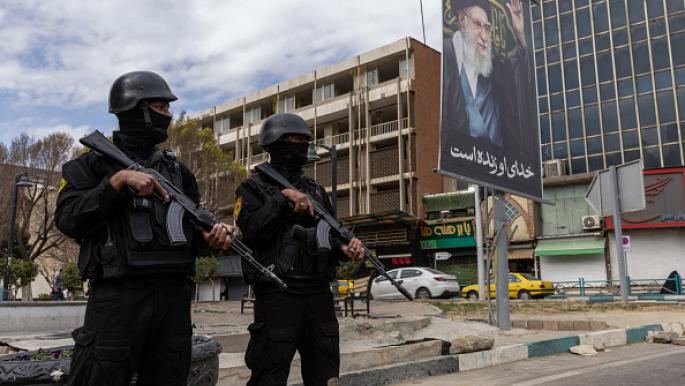
The Iranian judiciary announced today its intention to tighten legal measures against those it refers to as 'enemy followers,' a move that comes amid a continuing campaign of arrests targeting individuals accused of espionage with hostile entities. This escalating campaign raises concerns about human rights in the country.
In related reports, Iranian authorities executed two individuals, reflecting an escalation in the government's repressive policies against dissenters. These actions occur at a sensitive time, as Iran faces increasing internal and external pressures.
Details of the Event
The campaign of arrests in Iran has been ongoing for some time, targeting individuals believed to be connected to the regime's enemies, whether they are political activists or ordinary citizens. Iranian officials have indicated that this campaign aims to protect national security, but many human rights organizations consider these measures a blatant violation of human rights.
Recently, the announcement of the execution of two individuals sparked widespread reactions both locally and internationally. This step is seen as part of the Iranian government's policy to confront any form of opposition.
Background & Context
Historically, Iran has witnessed numerous repressive campaigns against dissenters, especially following the Islamic Revolution in 1979. The Iranian government has used charges related to espionage with enemies as a pretext to justify arrests and executions. In recent years, these campaigns have notably intensified, particularly after the popular protests that erupted in the country.
It is worth noting that Iran faces both internal and external challenges, including economic sanctions and political pressures from Western countries. These factors significantly impact the stability of the regime, prompting it to take harsh measures against any opposition.
Impact & Consequences
These developments indicate an escalation in the repressive policies pursued by the Iranian government, which may exacerbate internal conditions. Such measures are likely to increase public discontent, and the country may witness further protests in the near future.
Moreover, these policies could affect Iran's relations with the international community, as human rights organizations and Western nations closely monitor these developments. Such pressures may lead to the imposition of additional sanctions on Iran, further increasing its international isolation.
Regional Significance
The events in Iran are a source of concern for neighboring Arab countries, as they could impact regional stability. The intensification of repression in Iran may encourage some opposition groups in neighboring countries to take similar actions, increasing instability in the region.
Furthermore, these developments could heighten tensions between Iran and Arab states, especially amid ongoing conflicts in the region. Any escalation in Iran's internal situation could directly reflect on conditions in Iraq, Syria, and Lebanon, where Iran-linked groups are present.
In conclusion, the situation in Iran remains under scrutiny, as these events reflect the significant challenges facing the country. The repressive policies adopted by the government may exacerbate internal crises, raising questions about the future and stability of the Iranian regime.