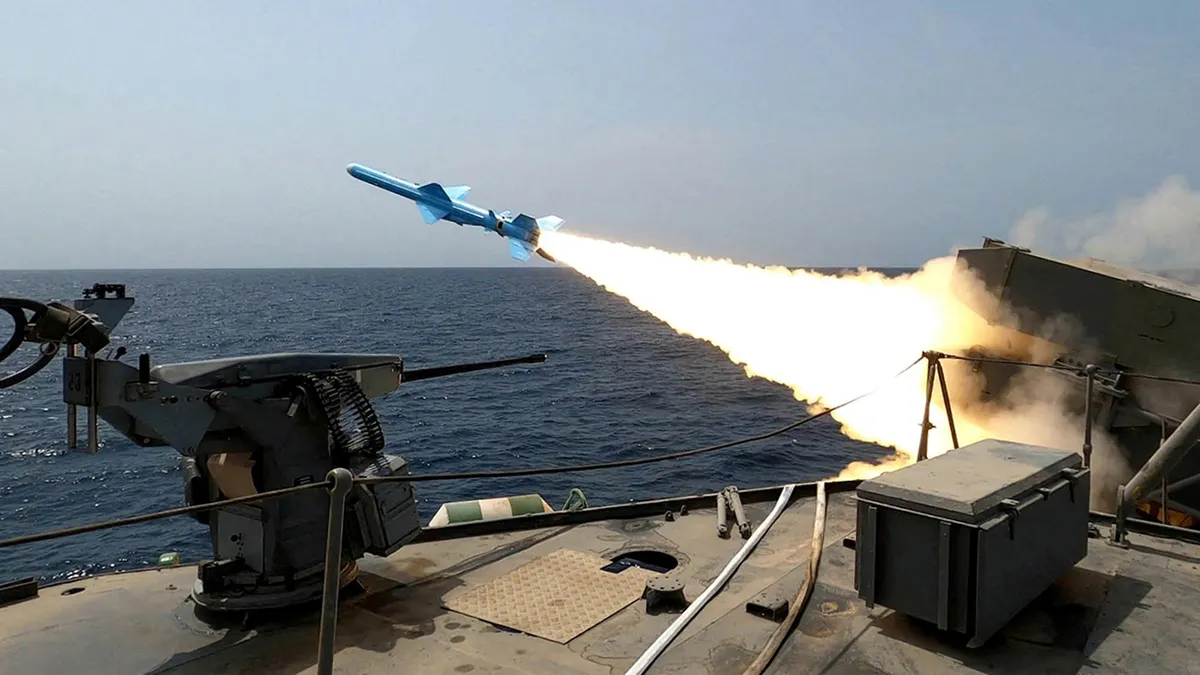
Iran launched missile and drone attacks early Saturday on four Gulf states, resulting in injuries and material damage. The attacks targeted the UAE, Saudi Arabia, and Bahrain, marking a new escalation amid the ongoing conflict between the United States and Israel on one side and Iran on the other.
In the early hours of Saturday, air defenses in Oman, the UAE, and Saudi Arabia intercepted ballistic missile and drone assaults. These attacks resulted in human injuries and damage to several economic facilities and ports.
Details of the Incident
The Omani News Agency reported that the Port of Salalah was targeted by two drones, resulting in moderate injuries to one of the port workers, along with limited damage to one of the cranes. Oman condemned these assaults, emphasizing that it would take all necessary measures to maintain the country's security and the safety of its residents.
For its part, the UAE Ministry of Defense announced that it dealt with missile and drone attacks coming from Iran, confirming that the sounds heard in various areas were due to successful interception operations. In a simultaneous escalation, the Saudi Ministry of Defense confirmed its defense against aerial attacks targeting its territory, reflecting the high state of alert in the region.
Kuwait also witnessed intense aerial assaults over the past 24 hours, with Colonel Saud Abdul Aziz Al-Attoun, the official spokesperson for the Ministry of Defense, confirming the armed forces' full readiness to protect the nation's sovereignty. In Bahrain, a state of security alert was declared to deal with the repercussions of these attacks.
Background & Context
Since February 28, Israel and the United States have been waging a broad war against Iran, resulting in the deaths of hundreds, including Supreme Leader Ali Khamenei and security officials. In response, Tehran has been launching missiles and drones towards Israel, targeting what it describes as American sites and interests in some Gulf and Arab countries.
These attacks come amid rising regional tensions, as Iran seeks to assert its power and influence in the region under the current politically tense circumstances.
Impact & Consequences
Concerns are growing that these attacks could lead to a greater escalation in the regional conflict, potentially affecting the stability of Gulf states. The recent attacks have raised deep concerns among governments and populations in the region, as risks to national security and the economy increase.
Moreover, these assaults could provoke military reactions from the targeted countries, which may heighten tensions and lead to unprecedented escalation in the conflict. Gulf states are expected to take further security measures to protect their territories and interests.
Regional Significance
These attacks are part of the broader conflict in the Middle East, where regional and international interests intersect. Arab countries, especially those in the Gulf, face significant challenges due to these developments, necessitating enhanced security and political cooperation to address common threats.
In conclusion, the region remains on high alert, as recent events suggest that the conflict may escalate further, prompting Arab countries to take decisive stances to protect their interests and security.