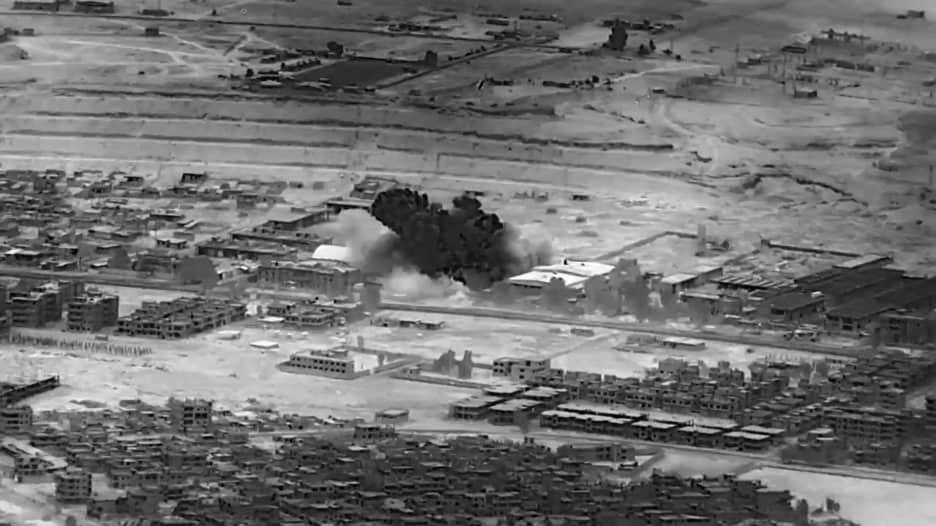
In a surprising military escalation, Iran launched a missile attack on Israel just minutes after a speech by U.S. President Donald Trump, who threatened to destroy Iran. This attack represents Iran's first military move following U.S. threats, raising questions about the potential for further escalation in the region.
The Iranian attack occurred at a sensitive time, as tensions between Tehran and Washington have been rising, particularly after a series of hostile exchanges. Trump's speech has caused widespread concern in political circles, where he emphasized his country's readiness to take strict measures against Iran.
Details of the Incident
According to reports, the Iranian missiles targeted sites in Israel, resulting in the destruction of some military facilities. The human and material damage from the attack is still unclear, but Israeli sources have confirmed that they are treating the situation seriously. This attack follows a period of increasing tensions between the two countries, which has seen a back-and-forth of accusations and threats.
At the same time, Israel responded to the attack by launching counter-missiles, further intensifying the conflict in the region. Images circulated on social media showed the devastation left by the Iranian attack, reflecting the seriousness of the current situation.
Background & Context
Historically, relations between Iran and Israel have been tense for decades, with Iran considering Israel its arch-enemy. Recent years have seen an escalation in these tensions, especially following the U.S. withdrawal from the Iranian nuclear deal in 2018 and the imposition of severe economic sanctions on Tehran.
In contrast, Israel seeks to prevent Iran from enhancing its influence in the region, particularly in Syria and Lebanon. Israel has conducted several airstrikes on Iranian sites in Syria, further heightening tensions between the two parties.
Impact & Consequences
The Iranian attack on Israel could lead to a greater escalation in the conflict, threatening the stability of the region. If military operations continue, international powers may intervene to contain the situation, complicating the political landscape in the Middle East.
This escalation could also impact global markets, particularly in the energy sector, as Iran is one of the world's largest oil producers. Any military escalation could lead to rising oil prices, affecting the global economy.
Regional Significance
For Arab countries, the rising tensions between Iran and Israel may lead to a reevaluation of regional alliances. Many Arab nations fear Iran's influence on their national security, which may drive them to strengthen cooperation with the United States and Israel.
Moreover, the situation could contribute to increasing sectarian divisions in the region, as Iran seeks to bolster its influence among Shia sects, potentially leading to heightened internal conflicts in some Arab countries.
In conclusion, the situation in the region remains tense and requires close monitoring by the international community. The military escalation between Iran and Israel could have far-reaching implications for security and stability in the Middle East.