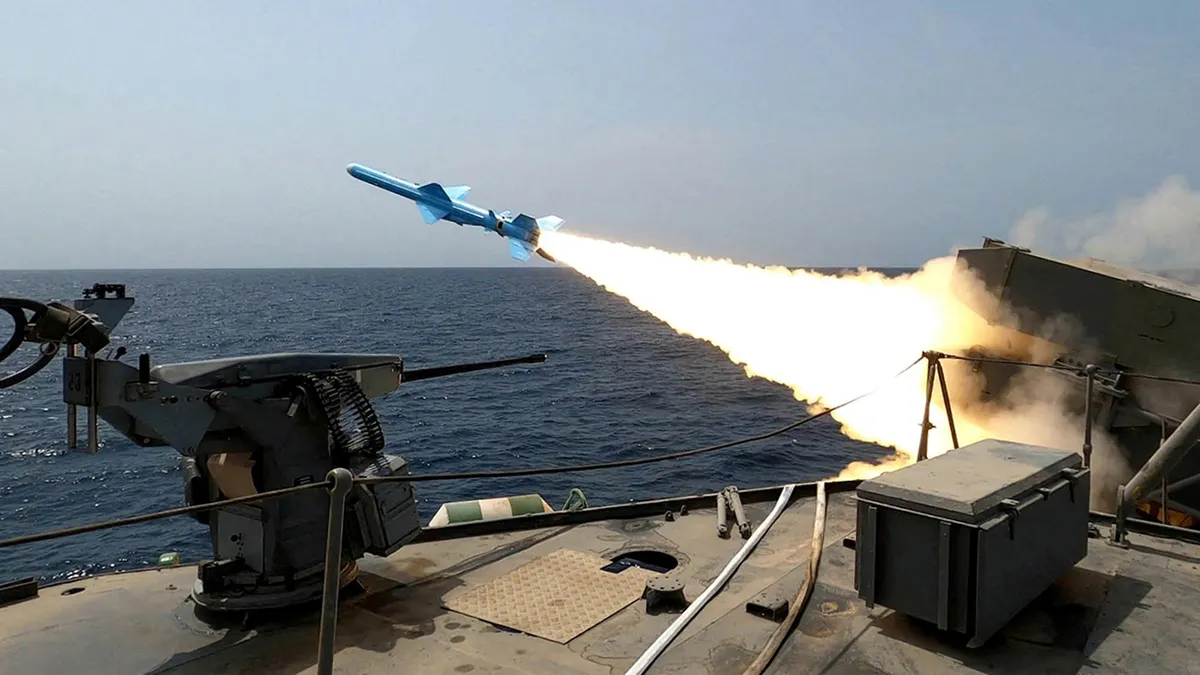
Iran has launched a series of military attacks on multiple sites across the Gulf states on the twenty-ninth day of the ongoing U.S.-Israeli war in the Middle East. The strikes, executed using missiles and drones, targeted Bahrain, Kuwait, the UAE, and Saudi Arabia, raising increasing concerns in the region.
In Bahrain, the Ministry of Interior reported a fire outbreak at one of the facilities due to the Iranian bombardment, with civil defense teams managing to control the blaze. The ministry also activated sirens three times across the country, urging residents to move to safe locations.
Details of the Attacks
In Kuwait, the Ministry of Public Works announced that the infrastructure of the Mubarak Al-Kabeer Port was hit by missile and drone attacks, resulting in material damage but no reported casualties. The spokesperson for the National Guard, Jadaan Fadhel, confirmed that Kuwaiti air defenses managed to shoot down six drones in the past 24 hours.
In the UAE, the Ministry of Defense confirmed early this morning that air defenses and fighter jets responded to missile and drone attacks coming from Iran. The ministry noted that the sounds heard in various areas of the UAE were a result of intercepting ballistic missiles and drones.
In Saudi Arabia, the Ministry of Defense announced the interception of two ballistic missiles out of six that were headed towards the Riyadh area, while the other missiles fell into the Gulf waters and uninhabited areas.
Background & Context
Since February 28, Israel and the United States have been waging a large-scale war against Iran, resulting in the deaths of hundreds, including Supreme Leader Ali Khamenei and security officials. In response, Tehran has retaliated by launching missiles and drones towards Israel, targeting what it describes as American interests in the Gulf states.
These attacks come at a sensitive time, as tensions in the region are escalating, raising fears of a larger escalation that could impact the stability of Gulf countries. The Iranian strikes have not been limited to military targets but have also resulted in casualties and damage to civilian properties, prompting official condemnations from the targeted countries.
Impact & Consequences
These attacks represent a serious escalation in the ongoing conflict, reflecting Iran's capability to simultaneously target Gulf states. This escalation could lead to military responses from the targeted countries, increasing the likelihood of a comprehensive military conflict in the region.
Moreover, these events may affect regional security, as Gulf states might seek to enhance their defensive capabilities, potentially leading to a new arms race in the area. Additionally, the continuation of these attacks could impact the Gulf economy, particularly in tourism and trade sectors.
Regional Significance
These attacks serve as a wake-up call for Arab countries, highlighting the urgent need to unite in facing common security challenges. The military escalation in the Gulf may also affect relations between Arab states and Iran, complicating the political landscape in the region.
In conclusion, the situation in the Gulf remains tense, requiring a swift and effective response from the concerned countries to protect their security and stability. The military escalation between Iran and the Gulf states could have dire consequences on both regional and international levels.