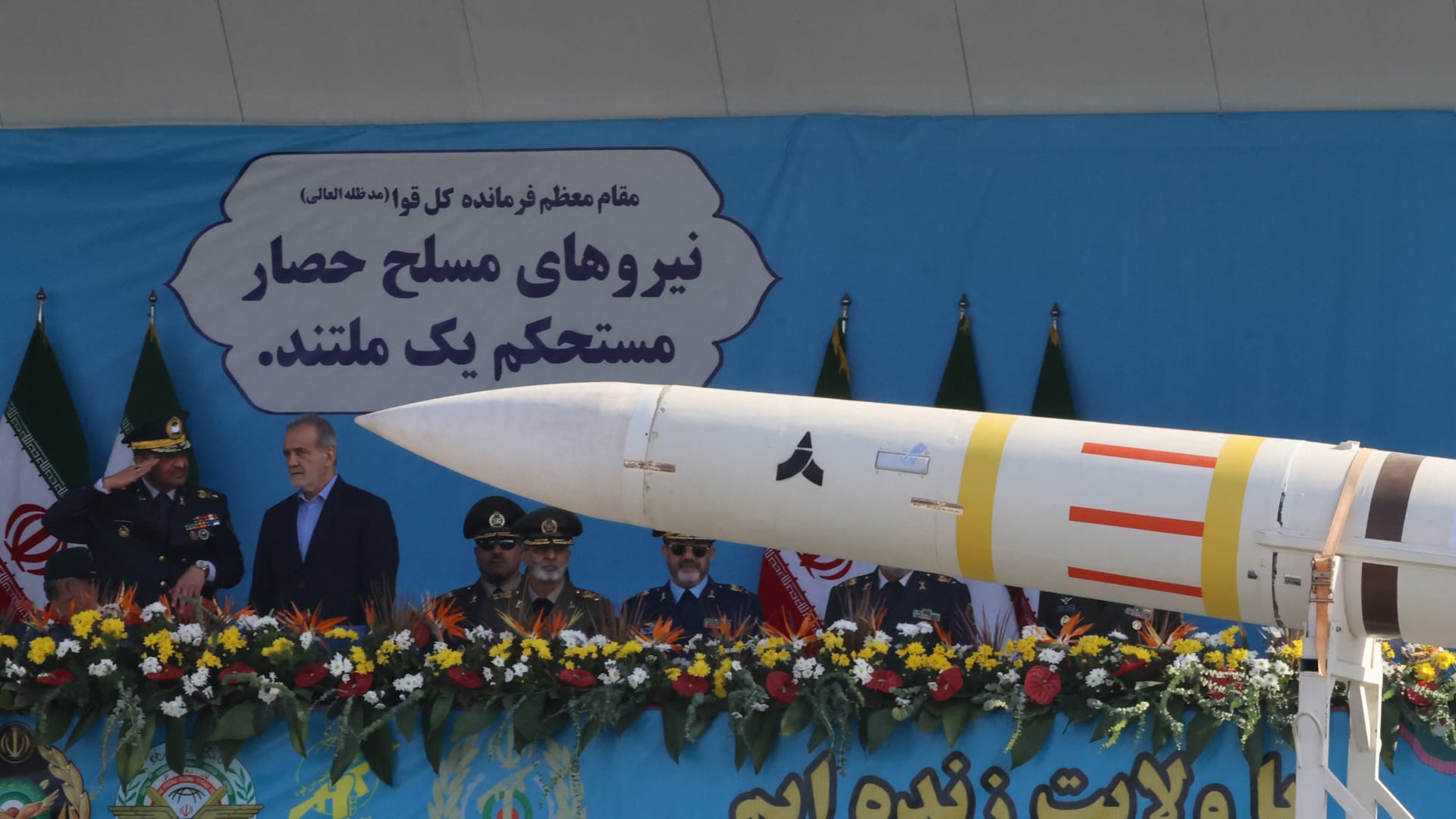
In an unprecedented military escalation, the Iranian Revolutionary Guard announced on Wednesday the launch of guided missiles towards Israel and neighboring Arab countries, including Kuwait, Bahrain, and Jordan. This announcement comes at a sensitive time when the region is witnessing increasing tensions, as Iranian strikes targeted several sites in northern and central Israel, including the capital, Tel Aviv, in addition to two American military bases in Kuwait and another base in Bahrain and Jordan.
Details reported by Iranian state television indicate that the attack was carried out using guided missiles, reflecting Iran's increasing capability to conduct precise military operations. This escalation occurs amid rising tensions between Iran and the United States and its allies in the region, especially in light of the multiple crises plaguing the Middle East.
Details of the Attack
According to reports, the Iranian Revolutionary Guard targeted strategic military sites, reflecting Iran's strategy of using military force as a means to pressure its adversaries. The attack was not limited to Israel but also included Arab countries considered allies of the United States, complicating the security landscape in the region.
This move follows a series of hostile statements from Iranian officials, who have repeatedly affirmed their readiness to respond to any threats against their country. These developments have raised significant concerns in political and military circles, as they are viewed as a step that could lead to greater escalation in the regional conflict.
Background & Context
Historically, relations between Iran and countries in the region have been tense, especially with the rise of Iranian influence in Iraq, Syria, and Lebanon. These tensions increased after the United States withdrew from the Iranian nuclear deal in 2018, leading to harsh economic sanctions on Tehran.
In recent years, Iran has bolstered its military capabilities, including the development of long-range missiles, raising concerns among Gulf states and Israel. These military developments are part of Iran's strategy to assert its regional power, which contradicts the interests of the United States and its allies.
Impact & Consequences
This military escalation could have serious repercussions on regional security, as there are fears it could provoke military responses from the United States or its allies. Additionally, the attack may contribute to heightened tensions between Iran and Gulf states, potentially leading to a comprehensive military escalation in the region.
Moreover, this attack could impact global markets, particularly oil markets, as it may lead to rising oil prices due to concerns over escalating conflict. Any military escalation could also affect maritime navigation in the Gulf, increasing economic risks.
Regional Significance
Considering the potential impact on the Arab region, this escalation may deepen divisions among Arab states, as some may find themselves compelled to take a stance against Iran, while others may adopt a policy of neutrality or even support for Iran. This division could exacerbate the political and economic crises in the region.
In conclusion, this military escalation between Iran and regional countries poses a significant challenge to regional security, requiring Arab states to take clear positions to address these rising tensions. The international community must also intervene to prevent further escalation of the conflict and work towards peaceful solutions to the multiple crises afflicting the Middle East.