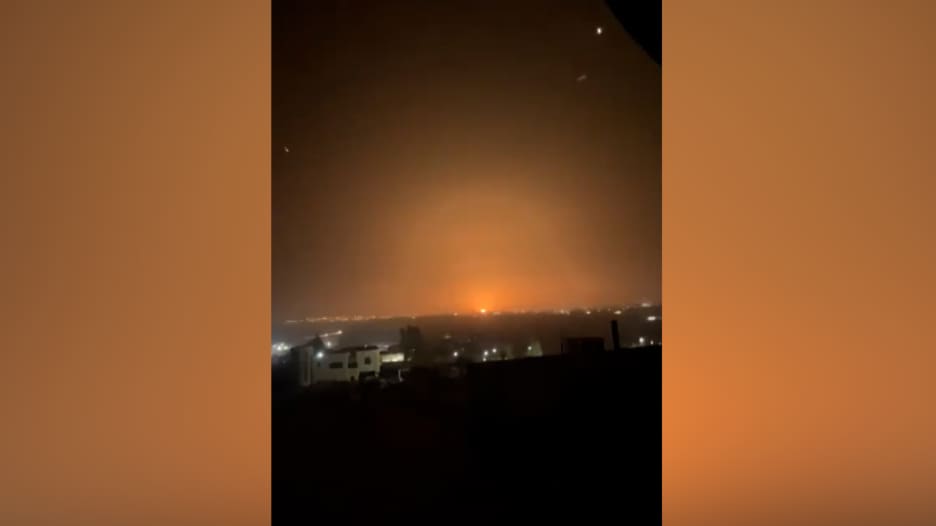
Official Iranian media have reported the initiation of a new series of missile attacks on occupied territories, reflecting a significant escalation in tensions between Iran and Israel. These attacks occur amid growing concerns over the intensification of conflict in the region, as tensions rise between regional and international powers.
The missile strikes, the exact number and type of which have not been clearly specified, follow a series of hostile statements from Iranian officials towards Israel. Iranian officials have confirmed that these operations are part of defending the rights of Palestinians and confronting what they describe as Israeli aggression.
Details of the Attacks
According to reports, the missile attacks targeted various areas in the occupied territories, leading to panic among the residents. Images circulated on social media have shown the devastation caused by these strikes, raising concerns about military escalation in the region.
Some analysts have suggested that these attacks may be a response to recent Israeli military operations against Iranian targets in Syria, further complicating the security situation in the Middle East.
Background & Context
Historically, the relationship between Iran and Israel has been marked by ongoing tensions, with Iran considering Israel a primary enemy in the region. These tensions have intensified in recent years due to Iran's nuclear program and its support for armed groups in Palestine and Lebanon.
In recent years, Iran has sought to enhance its military capabilities, including the development of long-range missiles, which has raised concerns among Western nations and Israel. Additionally, the mutual hostile rhetoric between the two sides has contributed to escalating tensions.
Impact & Consequences
These attacks could lead to a greater military escalation in the region, as Israel is likely to respond to these strikes with expanded military operations. Furthermore, the escalation could affect regional security and increase instability in the Middle East.
Moreover, these events may impact Iran's relations with Western countries, especially amid ongoing negotiations regarding Iran's nuclear program. Any military escalation could complicate these negotiations and heighten international tensions.
Regional Significance
These events are particularly significant for Arab countries, as they may affect security and stability in the region. The escalation between Iran and Israel could lead to increased tensions among Palestinian factions and Arab states, potentially negatively impacting peace efforts in the region.
Additionally, any military escalation could result in an influx of refugees and exacerbate humanitarian crises in neighboring countries, necessitating an urgent response from the international community to address these challenges.
The escalation of Iranian missile attacks on occupied territories reflects a growing state of instability in the Middle East. Under these circumstances, hope remains pinned on diplomacy to resolve conflicts and achieve peace in the region.