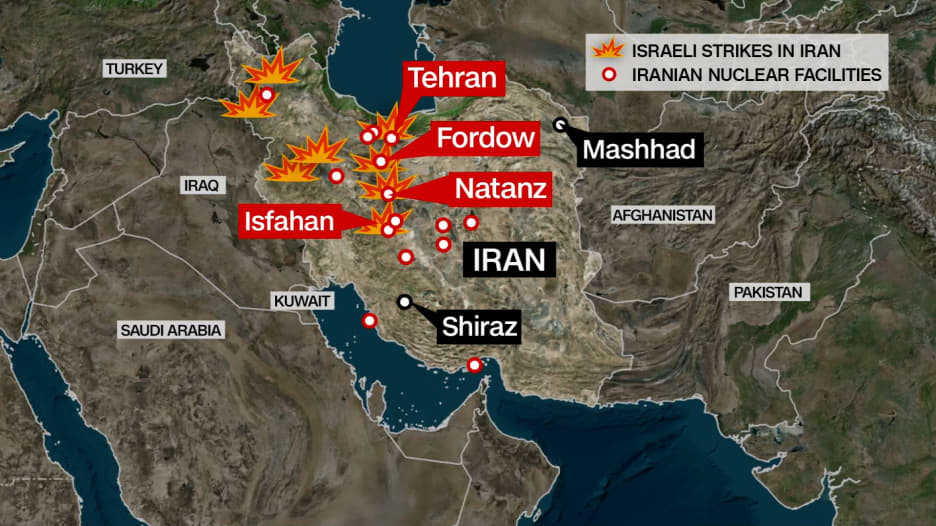
A senior security official expressed concern over Iran's missile capabilities, emphasizing that they still pose a potential threat to Israel, even under the current war conditions. He stated, "If anyone imagines that Iran will not be able to launch missiles at Israel by the end of this war, they are mistaken. Do its capabilities diminish at all? Yes. But think of it as a pot of boiling water. We manage the water, and we also cover the pot so that the impact is limited."
Despite the challenges Iran faces, these statements indicate its determination to maintain its defensive and offensive capabilities. These remarks come at a time when the Iranian regime is suffering from economic and political problems, leading many observers to believe that a change in its military policy is necessary.
Details of the Situation
As Israeli forces continue their military operations, questions remain about the likelihood of Iran conducting missile operations in the coming days. The official's statements reflect growing concern in Tel Aviv, where Israel believes that Iran is still capable of surprising them.
Iranian strategies have included the use of mercenaries and militias in Iraq and Syria to intervene in any conflict with Israel. The Iranian side demonstrates an ability to adapt to the changing variables of war, which should be taken into account when analyzing the future of the conflict in the region.
Background & Context
Historically, the conflict between Iran and Israel is rooted in deep political and religious issues, with Israel continuously asserting that it considers Iran the main enemy in the region. Israel has long targeted Iranian proxies in Syria, seeking to limit its regional influence.
This conflict is exacerbated by ongoing tensions that have persisted for decades, especially following the United States' withdrawal from the nuclear agreement with Iran, which led to heightened tensions. Iran, for its part, continues to develop its missile program, which poses a direct threat to Israeli and regional security.
Impact & Consequences
The ramifications of this situation extend beyond Iran and Israel, as many Western and Arab interests are involved in this equation. Any exchange of fire or military escalation could lead to unforeseen consequences that would affect regional stability.
It is essential for the international community to handle this situation with caution; pressure on Iran should be accompanied by diplomatic measures to prevent the escalation of the conflict, as focusing solely on military aspects will only exacerbate matters.
Regional Significance
Neighboring Arab countries are experiencing increasing tension amid the instability surrounding Israel and Iran. These countries fear that any escalation could drag them into a cycle of conflict, negatively impacting their food, economic, and social security.
Therefore, regional and international dialogue is more necessary than ever to contain tensions and prevent the outbreak of new conflicts that could have catastrophic effects on the peoples and the region as a whole.
In conclusion, the situation in the region remains fragile and requires ongoing attention from all parties involved to avoid any further escalation that could lead to undesirable consequences.